Donkey theft and illegal slaughter are creating serious public health and environmental risks in Kenya, according to a report released by the National Crime Research Centre on July 30, 2026.
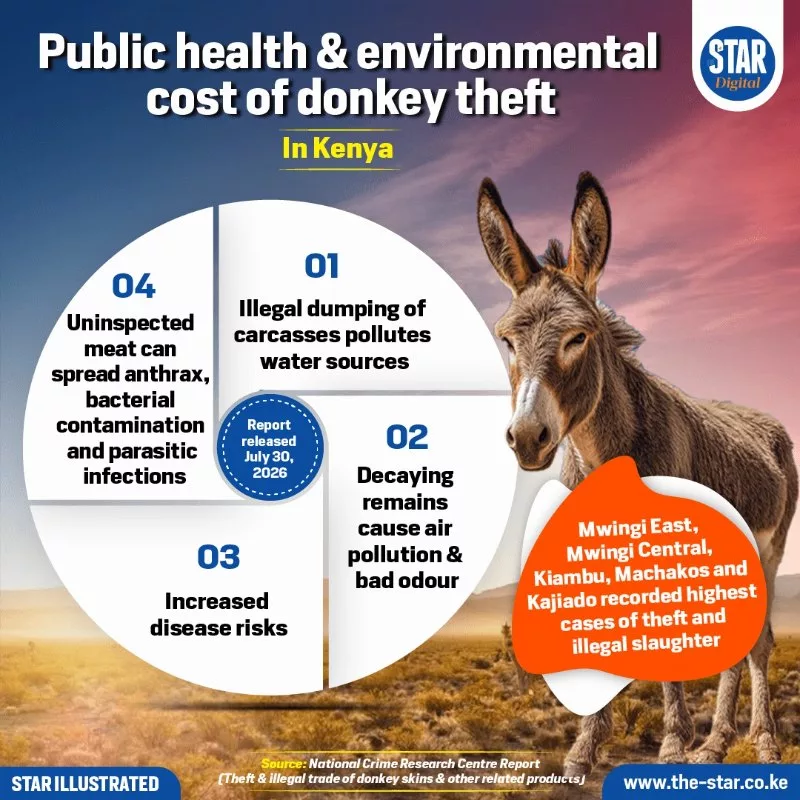
The report warns that the illegal disposal of donkey carcasses is contaminating rivers, streams and other water sources, exposing nearby communities to health hazards.
It also notes that decomposing remains left in open areas contribute to air pollution and produce foul odours, affecting the quality of life for residents.
Beyond environmental concerns, the report highlights an increased risk of disease outbreaks linked to illegal slaughter.
Meat from uninspected animals can enter the food chain without undergoing mandatory veterinary checks, exposing consumers to serious health risks.
The report cautions that consuming such meat may spread anthrax, bacterial contamination and parasitic infections, posing a threat to both human and animal health.
It says illegal slaughter operations often take place outside regulated facilities, making it difficult for authorities to enforce food safety standards.
According to the findings, Mwingi East, Mwingi Central, Kiambu, Machakos and Kajiado recorded the highest cases of donkey theft and illegal slaughter, making them key hotspots in the illicit trade.
The National Crime Research Centre says the environmental damage and public health risks associated with donkey theft extend beyond the loss of livestock, affecting communities through polluted ecosystems, unsafe food and increased exposure to disease.