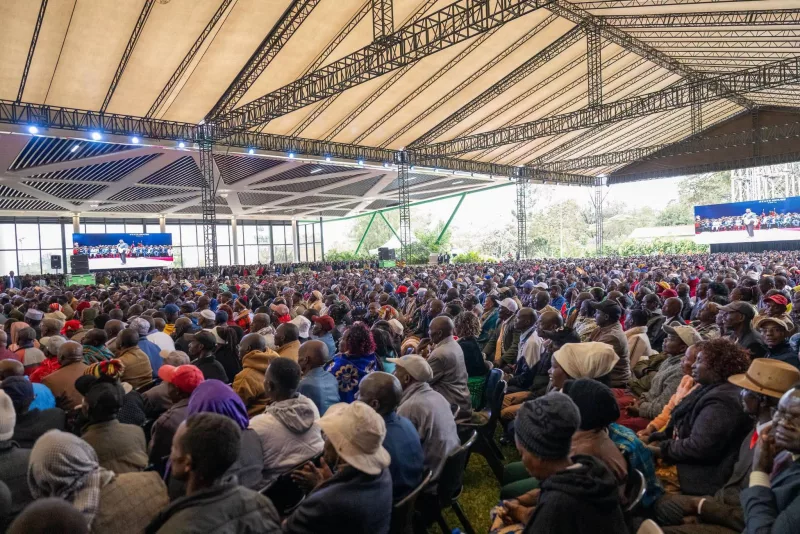
President William Ruto has unveiled a comprehensive welfare package for village elders across Kenya. Speaking at State House to a group of 10,000 representatives, the President detailed five specific measures to support these grassroots leaders.
The new plan aims to formalise the roles of the 106,000 village elders currently working throughout the country. These leaders have traditionally served as the primary link between the government and local communities.
Official Government Recognition
For the first time, the government has established a formal policy to recognise the status of village elders. Ruto told the attendees that they would no longer operate without official standing.
"We now have a policy of government kutambua village elder,” he said.
Monthly Stipends and Training
The President announced that elders will now receive financial compensation for their service. This is a significant shift for a group that has historically workedon a voluntary basis.
“Tumekubaliana kwamba ili kila village elder afanye kazi yake vizuri, kuanzia leo, kila village elder atalipwa marupurupu ya Ksh 3k kila mwezi,” Ruto announced.
Beyond the Ksh 3,000 monthly allowance, the government plans to provide formal training for every elder. This capacity-building effort is designed to help them execute their responsibilities as "multipurpose" leaders more effectively at the local level.
A major pillar of the package is the inclusion of elders in the Social Health Authority (SHA). The President instructed officials to ensure funds are allocated in the upcoming November and December budget cycles.
The health coverage is designed to be inclusive. It will cover the elder, their spouse, and their children. Ruto stated the goal is for all 106,000 elders to be fully covered under the SHA scheme by 1 January.
“Kila village elder, yeye, mke wake ama bibi yake na watoto wao wawekwe katika mpango ya SHA ili tukimaliza hiyo budget, kuanzia tarehe 1 January wote wawe ndani ya SHA na kuendelea na maisha yao.”
Digital Tools for Policing
To modernise local administration, the government will provide elders with smartphones. These devices are intended to help them monitor and report local issues in real-time.
"Mnataka simu ambayo mnaweza kupiga picha mambo ikiendelea vizuri mnatuma mpaka na picha."
Ruto noted that elders can use the phones to document disturbances, such as "Disco Matanga," and send photographic evidence to the relevant authorities.
Despite their importance, they have campaigned for years to receive formal recognition and remuneration from the national government. These new measures represent the first time their role has been integrated into the national budget and official civil service structure.