 Fwamba Nc Fwamba/ FILE
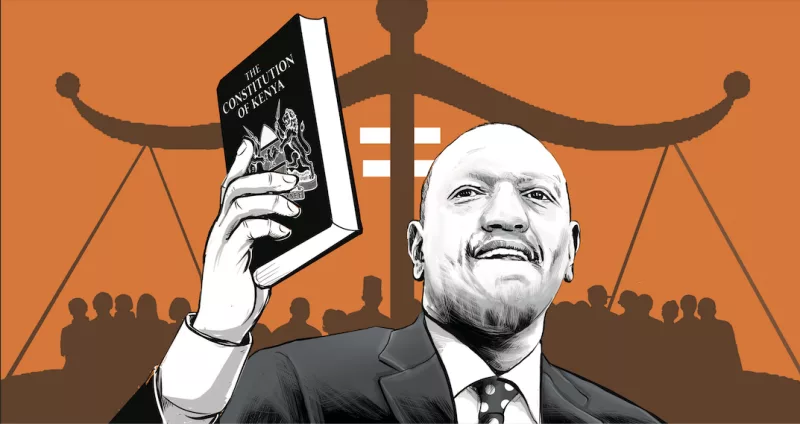
With every election cycle, the question of who should occupy the office of Deputy President inevitably attracts intense public interest, and Kenya has already entered that conversation.
Regional leaders are weighing options, political allies are advancing competing interests, and coalition partners expect influence over the ticket, including suggestions that the Orange Democratic Movement may seek a share of the position.
Facing these competing interests, President William Ruto confronts a decision carrying massive political and constitutional weight.
While several names feature in public debate, assessing the constitutional role of the Deputy President, the demands of effective government, and raw political realities points to one undeniable conclusion: Prof. Kithure Kindiki remains President Ruto's absolute strongest option for 2027 and the road toward 2032.
The Constitution provides a clear and uncompromising starting point. Article 147(1) designates the Deputy President as the principal assistant of the President in executing presidential functions. Article 147(2) provides that the Deputy President performs functions assigned by the President, while Article 147(3) requires acting as President during temporary absence or incapacity.
The office demands absolute trust, unwavering loyalty, strict discipline, and close cooperation with the Head of State, rather than operating as an independent power centre. Consequently, the relationship between the President and the Deputy President matters far more than opportunistic political strength.
A successful presidency depends entirely on confidence, mutual respect, and constant consultation. The Deputy President must complement presidential leadership rather than compete with it, ensuring both offices function as one cohesive team with a singular national purpose.
Professor Kindiki shatters that flawed template by embodying the non-combative and supportive standard envisioned by supreme law. Kindiki operates with strict institutional maturity, recognizing that executive harmony relies on chemistry and complementary execution rather than competing political centres.
His professional temperament shields the presidency from avoidable public fallout, keeping government focus squarely on national development and service delivery.
Retaining Professor Kindiki is anchored on his formidable personal credentials, exceptional academic background, and proven leadership strengths. Professionally, Kindiki is a distinguished professor of law and an accomplished scholar holding a PhD, pairing seamlessly with President Ruto's academic background to form an intellectually grounded executive team capable of managing complex domestic and international policy challenges.
His extensive career in public service—marked by steady, unflappable stewardship of the sensitive Interior docket where he restored national security, law enforcement, and administrative order without resorting to empty public grandstanding—demonstrates a rare, proven capacity for high-level state execution.
Furthermore, Ruto and Kindiki share a long-standing, deeply cordial relationship built on mutual respect that completely eliminates internal executive friction.
Kindiki rejects entitlement and regional aggressive posturing, functioning reliably as a loyal principal assistant focused entirely on state delivery rather than self-aggrandizement.
Opening the running mate position would be a grave strategic miscalculation, immediately triggering intense, unbridled rivalry among ambitious regional kingpins, fracturing the ruling coalition, and fatally diluting administrative focus.
Unhealthy jockeying for the second-highest office forces regional leaders to look inward, distracting from grassroots campaigns for President Ruto's re-election, whereas retaining Kindiki neutralizes this negative energy and preserves total political alignment.
External coalition partners have attempted to lay premature claim to the seat, but keeping Kindiki firmly in place establishes a stable, unyielding boundary against disruptive political bargaining.
While regional kingpins demand heavy concessions, Kindiki provides a steady administrative anchor without holding government hostage to ethnic blackmail or aggressive regional populism. Kindiki’s professional execution of duties respects the separation of roles, acting strictly as the President’s deputy rather than positioning as an alternate political authority.
Retaining the current occupant ensures zero disruption to government programs, development partner forums, and internal state projects, projecting absolute stability to investors and citizens alike.
Finally, securing a predictable, loyal second-in-command creates a smooth political transition process, assuring stakeholders that the administration remains focused on a unified legacy through 2032.
Opening the race creates unnecessary complications and division among aspirants, causing efforts toward campaigning for President Ruto to dip as major political bigwigs and regional leaders rally their people around competing bids.
Since the seat is singular, any unhealthy competition over the deputy position risks triggering permanent political fallout if one faction is favored and others are dismissed.
The most neutral, secure, and effective position is maintaining Professor Kindiki in his office. The argument for retaining him rests on unshakable stability, strict constitutional fidelity, and supreme strategic pragmatism.
Preserving the Ruto-Kindiki ticket safeguards internal harmony, honors the true spirit of the executive structure, and secures a disciplined, tested partner uniquely dedicated to Kenya's national transformation.