
Every weekday before dawn, Thomas Otieno leaves his home in Nairobi's Tena estate carrying the same backpack—but not the same budget.
Until a few months ago, the office worker spent about Sh140 on a return matatu trip to work, translating to a monthly transport budget of roughly Sh3,500.
Today, that budget has ballooned to between Sh5,000 and Sh6,000 as fares continue rising, forcing him to rethink household spending.
Morning fares that averaged Sh70 one way now cost at least Sh100, with commuters paying even more during rainy days or peak traffic hours.
"My income has not changed, only my expenses," Otieno says. "Transport alone is taking a much bigger share of my salary. When you add food, electricity and other household bills, there is very little left."
His predicament mirrors that of millions of Kenyan households grappling with rising living costs despite official data showing inflation remains relatively subdued.
For Jacinta, another Nairobi resident, the pain is most evident in electricity bills.
Where Sh1,000 previously bought enough prepaid tokens to comfortably last several weeks, the same amount now purchases fewer units following adjustments to electricity tariffs and monthly pass-through charges.
"I have had to ration electricity at home," she says. "We switch off appliances more often because tokens are getting finished much faster."
Recent changes implemented by the Energy and Petroleum Regulatory Authority and Kenya Power increased base electricity tariffs while raising pass-through charges, including foreign exchange adjustments, fuel energy cost charges and the Water Resources Management Authority levy.
Those increases came on top of higher fuel costs that have pushed up public transport fares by between 25 and 50 per cent across many routes.
While households are already feeling the pinch, economists and industry leaders warn that the worst may not yet be over.
Fresh military escalation involving the United States and Iran, continued Houthi attacks in the Red Sea and renewed fighting around the Black Sea are disrupting some of the world's busiest shipping corridors, threatening to keep global energy and commodity prices elevated for months.
The Strait of Hormuz, through which about one-fifth of the world's oil passes, has become increasingly volatile following renewed hostilities in the Gulf.
At the same time, attacks on commercial vessels in the Red Sea continue forcing shipping lines to reroute cargo around the Cape of Good Hope, significantly increasing voyage times, fuel consumption and insurance costs.
In the Black Sea, intensified attacks on ports and grain export facilities have once again disrupted wheat and agricultural commodity shipments from Russia and Ukraine, two of the world's largest grain exporters.
The combined effect has been a sharp increase in global freight charges, insurance premiums and commodity prices, costs that eventually find their way into Kenyan supermarkets, fuel stations and manufacturing plants.
Brent crude oil prices climbed above $90 per barrel last month, raising fresh concerns that fuel prices could remain elevated in the coming months. For Kenya, which imports all its refined petroleum products and a significant share of wheat, fertiliser, edible oils and industrial raw materials, these developments pose a serious threat to household budgets and business operations.
The irony is that these pressures are emerging just as Kenya's macroeconomic indicators began showing signs of recovery.
Official data indicates inflation remains within the Central Bank of Kenya's target range, interest rates have eased following successive Monetary Policy Committee decisions, while private sector activity has improved, suggesting the economy is gradually regaining momentum.
Yet beneath those encouraging numbers lies a different reality—one in which global conflicts are fuelling a fresh wave of imported inflation that is steadily eroding the purchasing power of Kenyan consumers.
Kenya's manufacturing sector was among the first to feel the effects of global supply chain disruptions, and industry leaders warn that households will inevitably bear part of the burden as companies grapple with rising production costs.
The Kenya Association of Manufacturers says every escalation around the Red Sea and the Middle East sends shockwaves through local industries by increasing shipping costs, delaying imports of raw materials and raising fuel expenses.
KAM chief executive officer Tobias Alando says the Red Sea crisis has become one of the biggest external risks facing manufacturers.
"Any crisis around the Red Sea leads to a myriad of challenges for local manufacturers. We have seen increased shipping charges, including insurance premiums, loss of delivery timelines due to shipping disruptions and supply chain challenges because the Middle East is a major source of key raw materials and a global transshipment hub," he said.
"The high cost of fuel has a ripple effect on the cost of doing business in Kenya, which is ultimately transferred to mwananchi. Exporters to Europe also have to route cargo through the longer Indian Ocean-Atlantic route, resulting in longer transit times and higher logistics costs."
Manufacturers depend heavily on imported industrial chemicals, machinery, packaging materials, metals, plastics and fuel, meaning any increase in global freight charges eventually feeds into the prices consumers pay for locally manufactured goods.
The disruptions have also complicated regional trade, with exporters taking longer to deliver goods to European and Asian markets while importers wait weeks longer for raw materials to arrive.
The shipping industry paints an equally worrying picture.
The Shippers Council of Eastern Africa says continued attacks on vessels in the Red Sea and uncertainty surrounding the Strait of Hormuz are increasing the cost of transporting goods into East Africa while reducing the competitiveness of Kenyan exports.
SCEA chief executive officer Agayo Ogambi says businesses are facing longer transit times, higher insurance costs and expensive freight charges that are cascading through the economy.
"A peaceful world is good for business and economic activity. Continued geopolitical tensions are increasing freight costs, extending transit times for Kenya's imports and exports and creating serious economic disruptions," Ogambi said.
"Unless governments intervene through measures such as tax relief or targeted subsidies, higher fuel prices will continue pushing inflation upward."
Shipping lines serving the port of Mombasa have already adjusted schedules to avoid high-risk zones, with many vessels opting for the much longer route around the Cape of Good Hope instead of passing through the Red Sea and the Suez Canal.
Although safer, the detour adds thousands of nautical miles to every voyage, increasing fuel consumption, vessel operating costs and insurance premiums that importers ultimately absorb.
For Kenya, whose economy relies heavily on imports of petroleum products, wheat, fertiliser, edible oils and industrial inputs, the consequences are immediate.
The Petroleum Institute of East Africa says global crude oil prices remain the biggest determinant of local pump prices because Kenya imports all its refined petroleum products.
With Brent crude climbing above $90 (Sh11,606) per barrel, petroleum marketers expect continued pressure on pump prices if geopolitical tensions persist.
Higher fuel costs do not only affect motorists.
They increase transport expenses across every sector of the economy—from agriculture and manufacturing to logistics and retail—making almost every commodity more expensive to produce and distribute.
The impact is already evident in farming. Earlier this year, fertiliser shortages linked to global supply disruptions forced many North Rift farmers to buy inputs from private dealers at nearly double the subsidised government price.
Calcium Ammonium Nitrate that was expected to retail at Sh1,950 under the government's subsidy programme was unavailable in several National Cereals and Produce Board depots, forcing farmers to purchase the same product from private dealers for around Sh2,800 per bag.
Commercial fertiliser prices outside the subsidy programme have remained significantly higher, increasing production costs for maize, wheat and horticultural crops.
The renewed conflict in the Middle East also threatens global fertiliser markets because a significant share of the world's ammonia, urea and phosphate fertilisers passes through the Persian Gulf.
According to the United Nations Conference on Trade and Development, continued military escalation is disrupting shipping through one of the world's most strategic maritime corridors, with consequences extending far beyond the region.
"Higher energy, fertiliser and transport costs—including freight rates, bunker fuel prices and insurance premiums—may increase food costs and intensify cost-of-living pressures, particularly for the most vulnerable," UNCTAD has warned.
The Black Sea conflict presents another challenge. Russia and Ukraine account for more than 30 per cent of global wheat exports, and repeated attacks on ports and grain infrastructure continue to disrupt supplies, driving up international wheat prices.
For Kenya, which imports large quantities of wheat every year, the disruptions increase the cost of bread, flour and other wheat-based products while raising production costs for food manufacturers.
Combined with expensive fertiliser and fuel, the result is mounting pressure on food prices even when domestic inflation remains relatively contained.
The continued rise in global commodity prices has prompted consumer groups to urge the government to put in place long-term measures to cushion households from external shocks rather than relying on short-term interventions.
The Consumer Federation of Kenya says the latest geopolitical tensions have exposed the country's vulnerability to imported inflation, particularly because of its heavy dependence on imported fuel, wheat and industrial inputs.
Cofek has proposed greater transparency in the management of the Petroleum Development Levy, urging the government to publish real-time information on how the fund is used to cushion consumers from global fuel price shocks.
"We need transparency on the Petroleum Development Levy so Kenyans know how long the current cushion will last and what happens once the funds are exhausted," the lobby said.
The consumer lobby is also calling for expansion of Kenya's strategic petroleum reserves to provide a buffer against global supply disruptions instead of relying on emergency interventions whenever international oil prices spike.
Other recommendations include diversifying crude oil sourcing away from vulnerable shipping routes where possible, and maintaining the reduced Value Added Tax on fuel through legislation instead of temporary administrative measures.
Strengthening strategic grain reserves through the National Cereals and Produce Board and requiring government agencies to issue timely public advisories whenever international fuel or food prices rise sharply has also been listed among the solutions.
For policymakers, the challenge is becoming increasingly complex.
On one hand, Kenya's domestic economy has shown encouraging signs of resilience.
Inflation has remained within the Central Bank of Kenya's target range of 2.5 to 7.5 per cent for several months, helped by exchange rate stability, improved food supplies and prudent monetary policy.
Private sector activity has also strengthened, with the Purchasing Managers' Index (PMI) remaining in expansion territory, reflecting improving business confidence, stronger customer demand and rising output across key sectors of the economy.
The Central Bank of Kenya has also gradually reduced its benchmark lending rate over recent months as inflationary pressures eased, lowering borrowing costs for businesses and households in an effort to stimulate investment and economic growth.
The World Bank has similarly projected that Kenya will remain among the fastest-growing economies in Sub-Saharan Africa, supported by agriculture, services, infrastructure investment and easing macroeconomic pressures.
However, economists warn that these gains remain vulnerable to external shocks.
A sustained increase in global crude oil prices would not only raise Kenya's fuel import bill but also widen the country's trade deficit, increase demand for foreign currency and place renewed pressure on the shilling.
Higher freight costs would equally increase the landed cost of imported goods, feeding directly into inflation and eroding consumers' purchasing power.
Trade and Investments Cabinet Secretary Lee Kinyanjui acknowledges that the Red Sea remains one of Kenya's most critical maritime trade routes and that continued instability poses significant risks to regional commerce.
"The Red Sea is a critical maritime trade corridor for Kenya and East Africa. Disruption in the smooth flow of cargo across the Red Sea has the potential to upset trade equilibrium across the region. It will affect maritime insurance costs and supply chain disruptions, leading to higher costs of production," Kinyanjui said.
"We remain hopeful that a diplomatic approach will be achieved to reduce the impact on trade and livelihoods."
The government has nevertheless stepped up efforts to shield the agricultural sector from rising global input prices.
President William Ruto recently announced an allocation of Sh18 billion in the 2026-27 budget to sustain subsidised fertiliser prices, saying affordable farm inputs remain critical to increasing food production, lowering production costs and improving farmers' incomes.
The programme is expected to cushion farmers from global fertiliser price volatility while supporting national food security.
Yet analysts caution that fertiliser subsidies alone cannot offset the broader effects of rising fuel prices, expensive shipping and global supply chain disruptions.
Kenya imports virtually all its petroleum products and a significant share of wheat, edible oils, industrial chemicals, machinery and manufacturing inputs. Any disruption along major international shipping routes therefore reverberates across nearly every sector of the economy.
The latest conflict has also pushed up marine insurance premiums, forcing shipping companies to pay higher war-risk surcharges before vessels can transit through affected waters. Those additional costs are ultimately passed on to importers, manufacturers, retailers and finally consumers.
For businesses, the outlook remains uncertain.
Manufacturers face shrinking profit margins as they absorb higher energy and logistics costs while trying to remain competitive.
Importers are grappling with expensive freight and delayed deliveries, while exporters risk losing overseas markets because of longer transit times and higher shipping charges.
For ordinary Kenyans, the consequences are far more personal.
Every increase in pump prices means higher matatu fares. Every rise in electricity fuel-cost adjustments translates into more expensive power bills.
Higher fertiliser prices increase food production costs, while disruptions to global wheat supplies threaten the price of bread and other household staples.
The result is that although Kenya's economic fundamentals are improving, many families are yet to feel the recovery in their pockets.
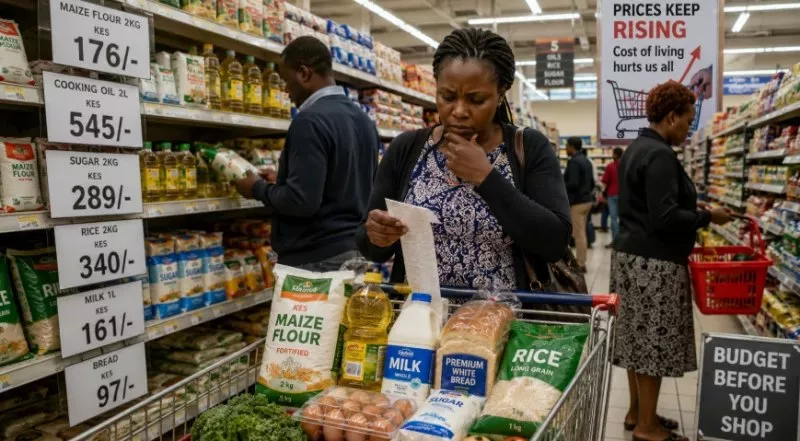
Wars and geopolitical tensions thousands of kilometres away are increasingly determining how much Kenyans pay for a bus ride, electricity tokens, cooking oil and a loaf of bread.
Martin Chomba, the chairman of Petroleum Outlets Association of Kenya, said global conflicts have become kitchen table issues for millions of Kenyan households.
"As attacks on commercial shipping intensify in the Red Sea, uncertainty persists around the Strait of Hormuz following renewed hostilities involving the United States and Iran, while the Black Sea remains disrupted by the Russia–Ukraine war, the world’s most important trade routes are once again under immense pressure," he said.







