It is not very often that you hear a Kenyan investor in the hospitality sector, using a press conference to urge foreign tourists to stay away from the country.
But that is precisely what the former Deputy President, Rigathi Gachagua, stated for the record.
Gachagua’s family owns or operates a number of prime hospitality sector properties mostly in the Mt Kenya tourism circuit, but also – reportedly – in Nairobi.
Yet it is that very sector which he sought to bring to its knees. The response was swift in coming. The governors of all the tourism-dependent coastal counties issued a joint statement to condemn what Gachagua had said. And so did the officials of various tourism stakeholder organisations.
What was being contested here was whether or not the recent political rallies and demonstrations – some of which turned violent – were proving to be politically destabilising.
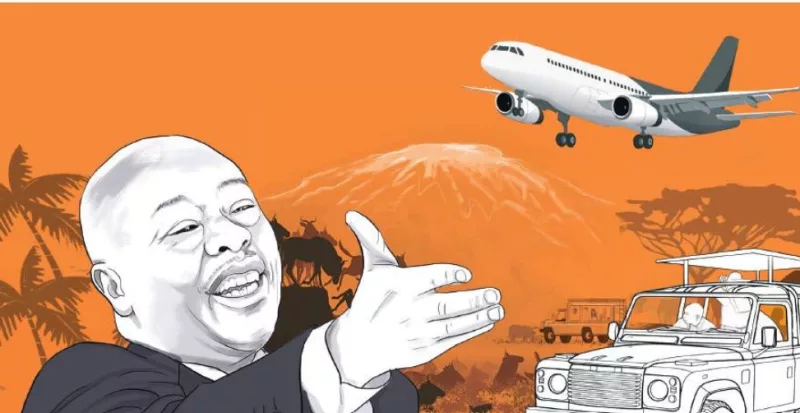
To give some background to this, the iconic wilderness experience of East Africa, which is the wildebeest migration from Tanzania to Kenya, takes place between July and October every year, with the peak of this spectacle usually taking place in August and September.
And foreigners wishing to visit Kenya, will often do so at just about this time, so that they can see with their own eyes, this famous wildebeest migration that they will usually have watched many times on TV. We therefore speak of this period as the “peak high season” as it also coincides with the global summer vacations.
So Gachagua was effectively proposing that Kenya cancels the 2026 peak high season for tourism, which is when most of the tourism revenues flow into the country.
But the governors from the coastal counties need not have worried that any international visitors may take Gachagua seriously. Even if they learned of his remarks it would not influence their behaviour one bit.
The kind of thing which can lead to cancellations in the Kenyan “tourist-class” hotels, is the travel advisories issued from time to time by the diplomatic missions here in Nairobi, mostly those from Europe and North America.
Such advisories, however elaborately phrased, basically state the same thing Gachagua said: This is not a good time to visit Kenya.
The trigger for these travel advisories is usually that Kenya has suffered a terrorist attack. But prolonged street violence, and deadly clashes between demonstrators and Kenyan security forces, can also lead to such travel advisories.
Typically, the local response to travel advisories is an explosion of fury from Kenyan elected leaders as well as tourism stakeholders.
Some leaders predictably demand that Kenya in turn issue “reciprocal” travel advisories against visiting New York, or Paris or London or any other capital city of a country which has dared suggest to its citizens that it is unsafe to visit Kenya.
All this points to one of the benefits that Kenya has received from having a well-established tourism sector.
Tourism can only thrive where there is political stability: and those who lead countries with tourism-dependent economies know this.
A country which has an economy purely dependent on agriculture or manufacturing, can withstand a certain amount of visible political instability. The farm produce won’t wither or rot overnight; and factories often have enough raw material for a few months.
But if your economy depends on tourism to any extent, a perception of political instability could ruin your prospects.
The tourists who came to enjoy “the holiday of a lifetime”, will be evacuated from your country in next to no time. Your fancy hotels can empty out in just a week or so.
And once tourists leave ‘en masse’, it will take many months, or even years, to persuade them to return.
Ordinary Kenyans might possibly be indifferent to the prospect of global media images of a mass of tourists at our international airports fleeing our country. But our elected leaders know better: and recognise the looming economic disaster that this portends.
Given our tourism-dependent economy, the mere mention of the words “This will make tourists stop coming to our country” is all it takes to get them to start taking remedial measures.
Wycliffe Muga is a columnist