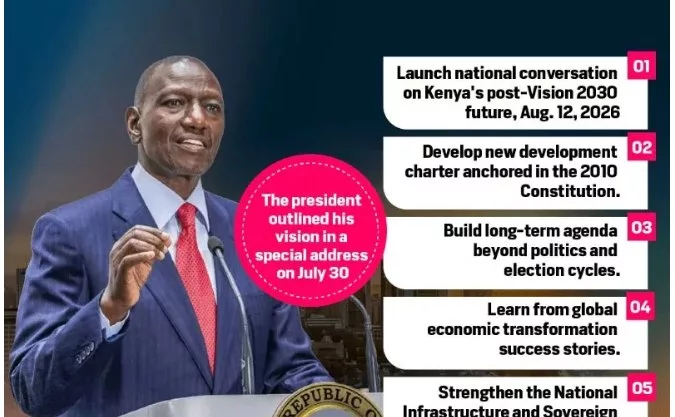
As Kenya embarks on a national conversation to define its development path beyond Vision 2030, the country finds itself at a crossroads. The discussion is not simply about drafting another ambitious blueprint. It is about confronting a difficult but necessary question: why did Vision 2030, despite its bold promises and transformative aspirations, fall short in several critical areas? Unless this question is answered honestly, Kenya risks repeating the same mistakes under a different name.
Launched in 2008, Vision 2030 sought to transform Kenya into a globally competitive and prosperous middle-income nation. It envisioned modern infrastructure, quality healthcare, industrial growth, efficient public services and improved standards of living. Nearly two decades later, there are achievements worth celebrating. Major highways have been constructed, access to electricity has expanded significantly, digital services have improved government efficiency and infrastructure development has reshaped many parts of the country.
Yet these successes tell only part of the story.
For many Kenyans, daily life remains defined by high unemployment, rising living costs, corruption, insecurity and unequal access to quality public services. The economy has grown, but many citizens feel excluded from its benefits. This disconnect between national progress and personal experience raises important questions about how development has been measured and who has truly benefited.
The challenge was never the absence of a vision. Kenya has consistently produced impressive policy documents and long-term development plans. The greater challenge has been implementation. Projects have often been delayed, budgets mismanaged, and accountability undermined by corruption and political interference. Election cycles have frequently shifted priorities, leaving some flagship projects incomplete while new administrations introduced fresh agendas before existing commitments had matured.
This is the lesson that should shape the conversation beyond Vision 2030. A country does not achieve development through ambitious documents alone. Progress depends on institutions that deliver, leaders who remain accountable and citizens who actively monitor implementation rather than waiting until election season to demand results.
The proposed national conversation therefore presents an opportunity to change not only what Kenya plans to achieve but also how those plans are executed. Citizens should insist that any new development blueprint contains measurable targets, publicly available progress reports and independent oversight mechanisms. Success should not be judged solely by the number of roads built or projects launched, but also by improvements in education outcomes, healthcare quality, job creation, food security and public trust in government institutions.
Another important lesson from Vision 2030 is that development cannot succeed without public ownership. Many Kenyans know little about the goals of Vision 2030 despite living through its implementation. National development plans should not remain documents discussed only by policymakers and experts. They should become living agreements that every citizen understands and feels responsible for protecting.
Equally important is the need to separate long-term national development from short-term political competition. Every election introduces new promises, yet many challenges remain unresolved because policies change with political leadership. Kenya requires a development agenda that transcends individual administrations and reflects shared national priorities rather than partisan interests. Continuity is essential if meaningful transformation is to occur.
The national conversation should also provide space for voices that have often remained on the margins. Young people, small business owners, informal workers, farmers, persons with disabilities and communities in underserved regions should not merely endorse decisions already made. They should help shape the country's future from the outset. A truly inclusive process will produce a stronger and more legitimate national vision.
Kenya does not lack ambition. It does not lack talent or potential. What has often been missing is consistent execution, transparent governance and sustained accountability. As the country looks beyond Vision 2030, the greatest opportunity is not to write another inspiring blueprint. It is to build a culture in which promises are matched by performance and every national plan becomes a contract that leaders are expected to fulfil.
The future Kenya seeks will not be created by the elegance of a new document. It will be determined by the courage to learn from the unfinished journey of Vision 2030 and the commitment to ensure that the next chapter delivers not only hope but tangible results for every Kenyan.
Writer is a political analyst