In the advanced democracies of Europe, for example, leading political parties will, during their campaigns, pledge to finally resolve the challenge posed by “migration”. Yet once in power, you find that they have barely made a dent in the total numbers of illegal immigrants inside their countries.
But immigration is not an emotive political issue here in Kenya, where we seem to have always had immigrants, peacefully living among us, going back to the days (late 1970s up to 1980s) when Ugandans fled their country in droves, to escape from the madness of the Idi Amin regime.
More relevant to our Kenyan situation though, is the perennially emotive issue of “land”. And our founding president, Jomo Kenyatta, famously promised to “resettle” all the landless Kenyans, mostly those in Central and the Rift Valley whose land had been taken over by the colonial government to pave way for the cash-crop-based plantations, owned by the white settlers.
There was indeed some degree of resettlement. But not nearly enough.
The early independence leaders soon realised that when you take a large and scientifically managed farm and divide it into smallholder “peasant-sized” parcels, for settling indigenous populations, the new landowners may be grateful, but you do real harm to your country’s capacity to export high-value cash crops.
And we have since had the example of Zimbabwe under former President Robert Mugabe, to instruct us on what happens when you engage in haphazard “land reform”.
I still have a “one trillion” Zimbabwean banknote, a souvenir of the Mugabe administration, given to me by a Zimbabwean friend who assured me it would not buy a loaf of bread in his country at that time (roughly 20 years ago).
The next big promise we were to hear came from our third President, Mwai Kibaki, during his swearing-in ceremony in 2002. Kibaki made the ringing declaration that “corruption will cease to be a way of life”.
Well, we all know how that turned out.
I could finally mention Kibaki’s successor, President Uhuru Kenyatta, promising “a laptop for each child”.
Did we really see those laptops, in the hands of all our school children?
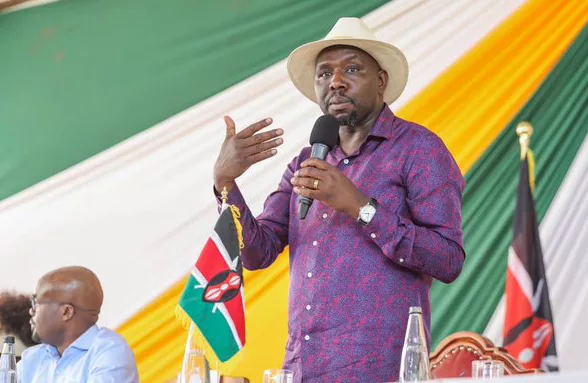
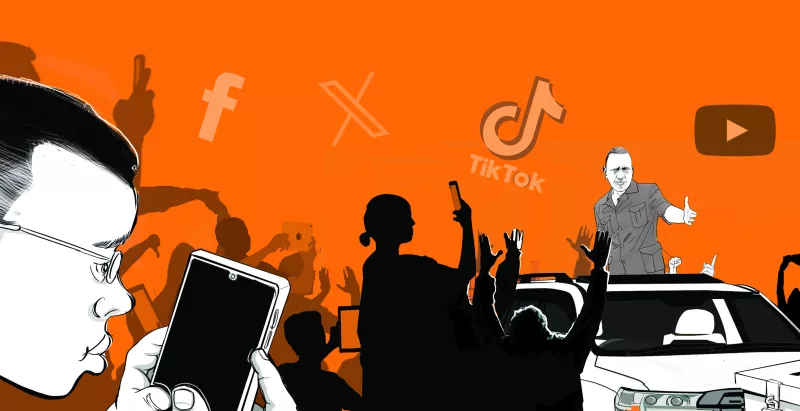
I mention all this just to provide a background to the fact that our current President William Ruto, seems to be facing an incredible flow of social media posts, dedicated to reminding us all, of just how many promises he made when campaigning – and how few of them have been kept.
It would seem that in the age of social media, making the usual reckless promises at public rallies, is not such a good idea. For in doing so, you give your political rivals just the kind of material they will need to mock you when you seek reelection.
And it would also explain why the President is currently trying to invite voters to gaze towards a distant horizon and consider what might yet come to pass if he gets a second term in office.
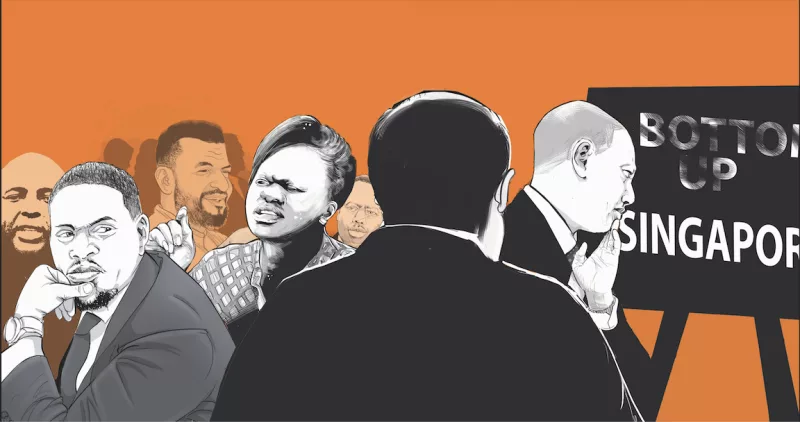
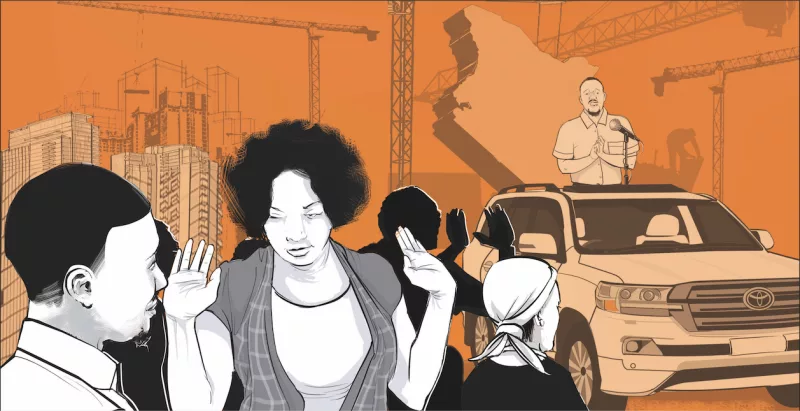
First, there was the pledge to make Kenya “the next Singapore” which basically consisted of asking Kenyans to cast their eyes at the gleaming towers of that fabulous city-state and dream of a similar fate for Kenya.
More recently (and more realistically) the president has launched a vision for the year 2060.
Both these are a rather different prospect from his pledge during the 2022 general election campaigns, when his stated objective was to bring about a “bottom-up” economic dispensation.
Many who believed this promise, now find that they are still very much at the “bottom”, with little prospect of ever rising “up” anytime soon.
My point then is that, viewed rationally, political promises are best seen as works of fiction – no matter who makes these promises.
And we should perhaps be grateful that the accountability tools made available by social media, will in time make it very imprudent for any leader to make such promises.