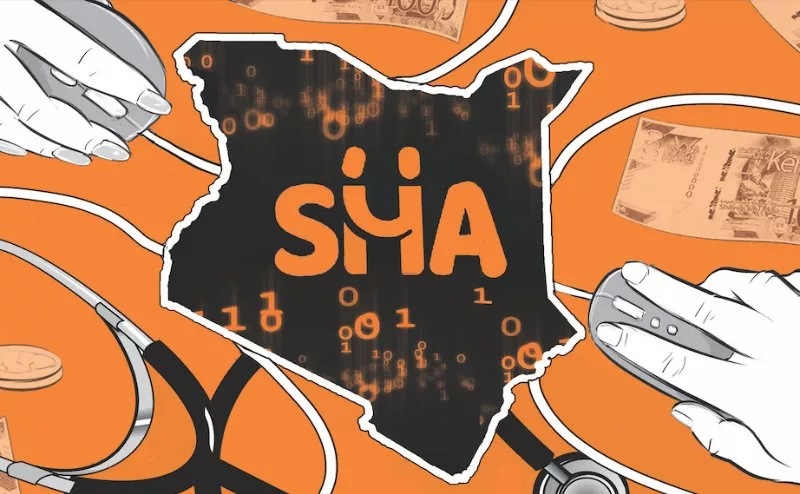
In April this year, a doctor processing claims at an SHA-accredited facility noticed something in the remittances: a two per cent deduction on every claim, labelled a HIMS System Utilisation Fee. He wrote to the Social Health Authority, the Digital Health Agency, the Ministry of Health and the National Treasury asking for its legal basis. None of them provided one. It took a newspaper investigation and a constitutional petition to force an answer.
When my mother passed, I wrote about the lesson she left me. An English teacher and ministry official, she walked government corridors where corruption was normalised, and she refused to participate. Colleagues called her naive and warned she would never advance. She advanced, and many of them eventually faced consequences she never had to fear.
Her lesson was never that honesty is nice. It was that integrity functions as load-bearing infrastructure. It is not decoration on a structure; it is what holds the structure up. Remove it, and everything collapses.
I have been thinking about her lesson because Kenya is building its largest structure in a generation, and the skeleton is digital. Credit where it is due: the four health Acts of 2023 gave the reforms a legal spine.
Over 100,000 Community Health Promoters carry smartphones running eCHIS. More than three million fake beneficiaries inherited from NHIF have been purged. By June, the ministry reported 31.39 million Kenyans registered and Sh147 billion paid in claims. This is architecture most countries at our income level have not attempted, and parts of it are genuinely working.
But digital systems carry one unsparing honesty: software encodes exactly the values of its designers. You can build integrity into the code, or you can build its absence in. Either way, the system will faithfully execute what you gave it.
So back to the fee. In August, after the press pressed, the Cabinet secretary confirmed it exists, funds the Digital Health Agency, was gazetted in April 2025 and is capped at Sh5,000 per transaction. The answer contradicts itself: two per cent of any claim above half a million shillings exceeds that cap, and facilities handling complex care deal in such claims routinely. Petitioners estimate more than Sh1.2 billion collected against roughly Sh60.7 billion disbursed. The High Court is now seized of the matter.
A system fee is not inherently scandalous. Digital infrastructure costs money to run, and there is a legitimate conversation about how to fund it. But notice the sequence. Providers did not learn about the fee from their contracts. They discovered it in their remittances, and when they asked, the institutions went quiet until forced.
That is what integrity failing as infrastructure looks like in the digital age: not a bribe in an envelope, but a deduction in the code, discovered rather than disclosed.
And it sits within wider barriers between honest work and payment for it. The Controller of Budget reported that SHA owed county health facilities Sh26.87 billion at the end of March, more than triple the figure three months earlier.
The four counties chosen to pilot the Digital Health Superhighway, Mombasa, Kirinyaga, Embu and Nandi, have been reported among the hardest hit by persistent non-payment of primary care reimbursements. The showcase counties are where the promise rings hollowest.
A facility running on unpaid receivables cannot restock medicines or retain staff, so it starts demanding cash from patients who have contributed faithfully. Every cash demand teaches a household that the cover is not real. Contributions fall, the fund starves, payments slow further. Corruption compounds. So does distrust.
The repair is constructive, because this reform is worth saving, and integrity also compounds when it is structural. Put every deduction in the contract, the gazette and the remittance advice, stated identically in all three. Give the payer a published payment clock with the same automated enforcement providers face on claim submission.
Publish the claims funnel monthly: submitted, approved, rejected with reasons, paid, on the same dashboards that announce registration milestones. None of this requires new technology. It requires deciding that transparency is load-bearing, then coding it.
Clever manipulation of statistics does not substitute for honest interest in the well-being of the people we are working for. Dashboards can be made to say almost anything. Patients cannot.
A reform this important deserves leaders who serve Kenyans the truth rather than sell them a narrative. My mother did not leave me wealth. She left me a framework for building things that last. This reform will last on the same terms, if we build integrity into the code.