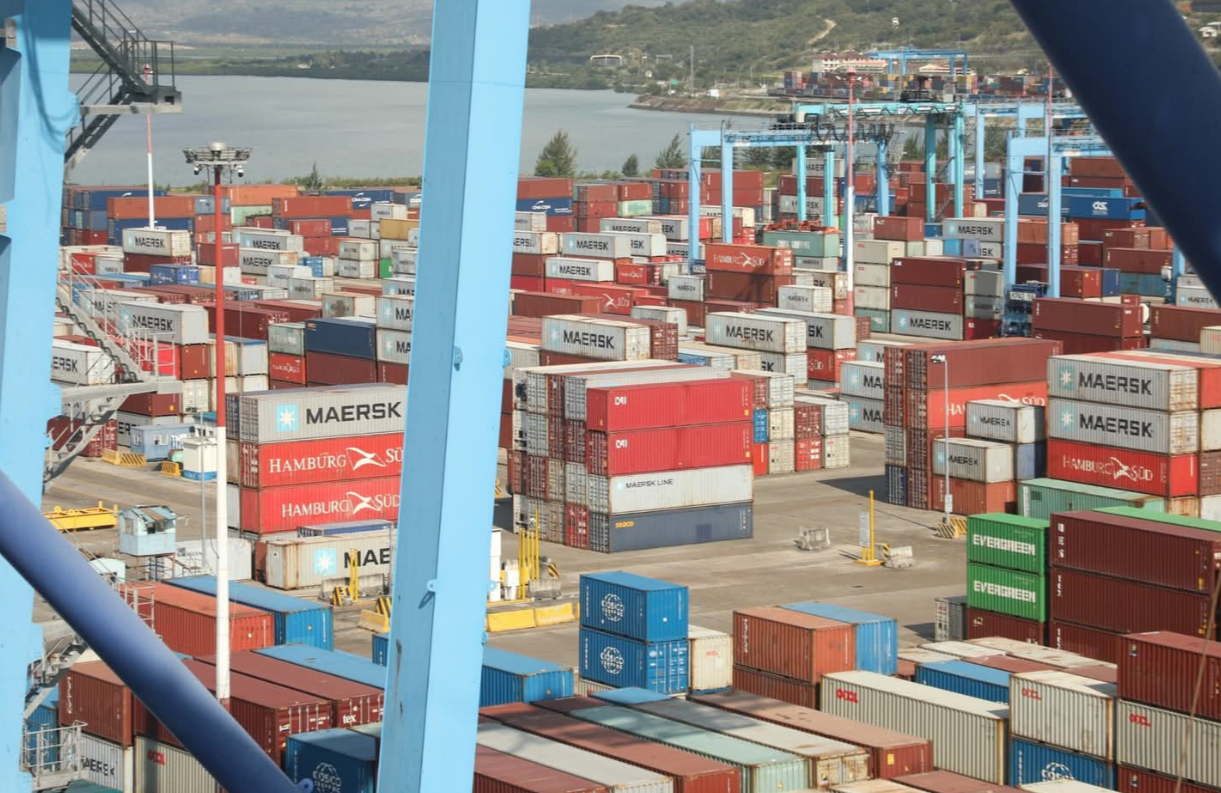
 A section of the Port of Mombasa.
 For decades, the international system revolved around a familiar pattern. Developing countries looked to advanced economies for investment, technology, aid and policy direction. Today, that pattern is changing.
A new wave of cooperation among countries in Africa, Asia, Latin America and the Middle East is steadily redefining global politics and economics.
South-South cooperation is no longer an ideal discussed at international conferences. It has become one of the most significant forces shaping the emerging global order.
Unlike traditional donor-recipient relationships, South-South cooperation is founded on mutual development, shared experiences and common interests.
Countries facing similar challenges are increasingly working together to exchange technology, expand trade, finance infrastructure and coordinate positions on global issues. The result is a more balanced international system where developing nations are becoming active architects rather than passive participants.
Trade provides one of the clearest illustrations of this transformation. Commerce among developing countries has expanded dramatically over the past two decades.
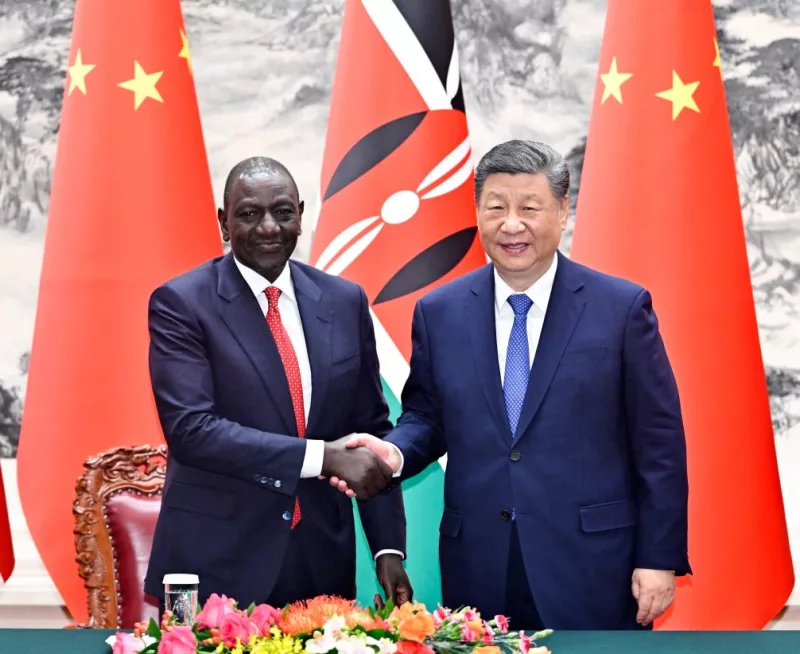
China has become Africa's largest trading partner, while India, Brazil, Türkiye, Indonesia and Gulf nations have significantly increased their economic engagement across the Global South.
African exports are finding new markets in Asia, while Asian manufacturers continue investing in industrial parks and production facilities across the continent.
The African Continental Free Trade Area (AfCFTA) is another milestone. Once fully implemented, it will create the world's largest free trade area by the number of participating countries, connecting more than 1.4 billion people.
Instead of relying primarily on overseas markets, African economies are seeking to strengthen regional value chains, stimulate manufacturing and encourage intra-African trade. This represents an important shift toward economic self-reliance.
Infrastructure development has also become a defining feature of South-South cooperation. Across Africa, roads, railways, ports, power stations and industrial zones financed and constructed through partnerships with fellow developing nations are improving regional connectivity.
Kenya's Standard Gauge Railway has enhanced cargo movement between Mombasa and Nairobi, while the Addis Ababa-Djibouti Railway has strengthened Ethiopia's access to maritime trade.
These projects are not simply engineering achievements. They are helping lower transport costs, facilitate commerce and promote industrialisation.
Technology cooperation is equally transformative. Digital innovation is no longer confined to Silicon Valley or Europe.
Mobile payment systems pioneered in Kenya have inspired similar financial technologies elsewhere in Africa. Chinese companies have expanded affordable digital infrastructure, cloud computing services and telecommunications networks across developing regions.
India has shared digital public infrastructure models that simplify access to government services. Brazil continues collaborating with African countries on tropical agriculture, helping improve food production under similar climatic conditions.
Healthcare has become another important pillar. During the Covid-19 pandemic, developing countries increasingly relied on one another for vaccines, medical equipment and pharmaceutical cooperation.
Partnerships involving vaccine production, disease surveillance and medical research demonstrated that the Global South possesses growing scientific and manufacturing capabilities capable of supporting global public health.
The expansion of multilateral institutions further illustrates the changing landscape. The Brics grouping has evolved from an economic forum into a platform carrying greater international influence.
Its recent expansion reflects growing interest among developing countries in diversifying partnerships and amplifying their voices on global governance. Similarly, the New Development Bank provides an additional source of development financing for infrastructure and sustainable projects, complementing rather than replacing existing financial institutions.
Climate action also reveals the practical value of South-South cooperation. Many developing countries contribute relatively little to global emissions but bear a disproportionate share of climate-related disasters.
Through knowledge sharing, renewable energy partnerships and joint adaptation initiatives, countries are helping each other strengthen resilience.
Morocco's investments in solar energy, for example, offer valuable lessons for other sun-rich nations seeking cleaner energy sources, while several African countries are exchanging expertise on climate-smart agriculture.
Kenya exemplifies how strategic engagement with multiple partners across the Global South can support national development. Investments in transport infrastructure, energy projects, digital connectivity and manufacturing partnerships have expanded economic opportunities while strengthening Kenya's position as a regional commercial hub.
Similar stories can be found in Indonesia's industrial transformation, Vietnam's export-driven growth and the United Arab Emirates' expanding investments across Africa and Asia.
Critics sometimes portray South-South cooperation as a geopolitical contest. Such interpretations miss its broader significance.
The central objective is not to replace one dominant power with another but to broaden choices available to developing countries. Greater competition among partners enables governments to pursue development strategies that better reflect national priorities rather than external prescriptions.
The growing confidence of developing nations is also changing international diplomacy. Whether negotiating climate finance, reforming multilateral institutions or addressing global trade rules, countries of the Global South are increasingly coordinating positions and advocating reforms that better reflect contemporary economic realities. Their collective influence is becoming more difficult to ignore.
The future global order will almost certainly be more multipolar than the one that emerged after the Cold War.
Economic influence is becoming more widely distributed, technological innovation is emerging from multiple regions and political leadership is increasingly shared among a broader group of nations.
South-South cooperation is accelerating this transition by creating new networks of trade, investment, finance and innovation that reduce dependence on any single centre of global power.
Far from being a temporary trend, South-South cooperation represents a long-term structural shift.
It is demonstrating that development can be driven by partnership rather than dependency, by shared prosperity rather than hierarchy, and by mutual respect rather than unequal influence.
As these partnerships continue to mature, they will play an increasingly decisive role in shaping a more inclusive, balanced and representative global order.