Read Also
The Kenya Wildlife Service (KWS) has asked the Pest Control Products Board (PCPB) to investigate farms suspected of using cyanide-linked pesticides.
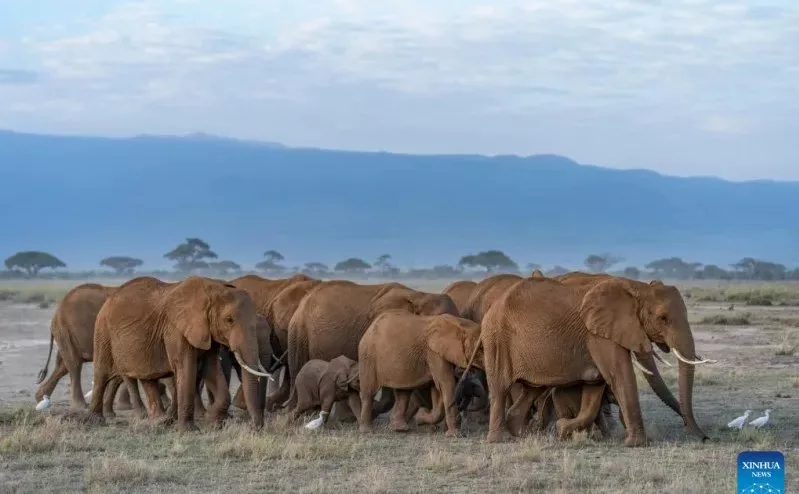
This follows the deaths of 15 elephants in the Amboseli ecosystem.
KWS director general Erustus Kanga said he had formally requested the PCPB to lead a multi-agency investigation to establish the source of the toxic substance and identify those responsible.
"I have expressed the urgency of the matter to my counterpart at the PCPB. The board will lead the multi-agency team and invite other relevant agencies," Kanga told the Star on Thursday.
The move follows preliminary findings indicating the elephants died after ingesting toxic substances believed to have originated from pesticides used on nearby tomato farms.
Kanga said preliminary laboratory analysis of samples collected from the carcasses detected evidence consistent with cyanide poisoning.
The deaths occurred between June 24 and July 24 in Amboseli National Park, Kimana Sanctuary and the Kuku Ranch area.
According to KWS, 10 of the elephants displayed similar symptoms, including partial paralysis that left them unable to stand before dying within one to two days.
The remaining five carcasses were too decomposed or had been scavenged, making it difficult to determine the cause of death.
Most of the affected animals were adult females and their calves, with only one adult male among the fatalities.
After the first cases were reported, KWS dispatched veterinarians from Nairobi, Tsavo and Amboseli to investigate the deaths, treat affected elephants, conduct postmortem and collect samples for laboratory analysis.
The samples were submitted to the University of Nairobi, the Government Chemist and other specialised laboratories for toxicological and pathological analysis.
KWS said preliminary findings from the University of Nairobi detected a potentially toxic substance in several samples.
Further quantitative analysis is underway to determine its concentration and significance.
Tests conducted by the Government Chemist were negative for the substances initially screened, although additional analysis for other possible toxins is continuing.
Investigators are also analysing water sources and other environmental samples from the affected areas to establish whether the elephants were exposed to a common source of contamination.
Surveillance has since been intensified across the Amboseli ecosystem to monitor the health of elephant populations and detect any further cases.
The Pest Control Products Board is the statutory agency responsible for regulating the importation, manufacture, distribution, sale and use of pesticides and other pest control products in Kenya.
The investigation comes at a sensitive time, with Kajiado county and KWS engaged in discussions over the proposed transfer of the management of Amboseli National Park to the county government.
Amboseli is home to one of Africa's best-studied elephant populations, providing decades of scientific data on elephant behaviour, ecology and conservation.
According to the Wildlife Research and Training Institute's 2025 national wildlife census, Kenya's elephant population increased from 36,280 in 2021 to 41,952 in 2025, reflecting gains made through anti-poaching measures and habitat protection.
Elephants remain one of Kenya's flagship wildlife species and are central to the country's tourism industry.
They also play a critical ecological role by dispersing seeds, shaping vegetation and maintaining habitats that support other wildlife.
Despite the recovery in elephant numbers, conservationists continue to face challenges, including human-elephant conflict, habitat loss and emerging environmental threats such as poisoning.
Kenya has significantly reduced elephant poaching since the major poaching crisis that affected Africa between 2008 and 2014 through stronger law enforcement, improved intelligence gathering and sustained anti-poaching campaigns.
The investigation into the Amboseli deaths is expected to determine whether agricultural chemicals were responsible and recommend measures to prevent similar incidents in the future.