For decades, Tuskys Supermarkets was more than just a retail chain; it was a Kenyan success story. From humble beginnings in Rongai, Nakuru County, the family-owned business grew into the country’s largest supermarket chain, employing thousands of Kenyans and serving millions of shoppers.
At its peak, Tuskys operated more than 60 branches across Kenya and Uganda, with annual revenues running into billions of shillings. Many believed it was simply “too big to fail.”
Yet, in just a few years, the retail giant collapsed, leaving empty shelves, unpaid workers, frustrated suppliers, and one of the biggest corporate failures in Kenya’s history.
So, what really happened?
Read Also

A Family Business That Outgrew Its Structure
Tuskys remained largely a family-controlled business despite its massive expansion. While family ownership helped drive its early success, it eventually became one of its biggest weaknesses.
Following the death of founder Joram Kamau in 2010, disagreements among family members reportedly intensified over the management and direction of the company.
Leadership wrangles made decision-making increasingly difficult at a time when the business needed strong, unified leadership.
Without clear corporate governance, internal conflicts began affecting day-to-day operations.
Expanding Faster Than the Business Could Sustain
Success encouraged aggressive expansion.
Tuskys opened new branches across Kenya at a rapid pace while also entering the Ugandan market. Expansion required significant investment in rent, inventory, staffing, logistics, and financing.
Unfortunately, revenues did not always keep pace with the growing operational costs. Some branches reportedly struggled to generate enough sales to justify the investment, placing enormous pressure on cash flow.
Instead of strengthening existing stores, the company stretched itself too thin.
Mounting Debt Became Impossible to Ignore
One of the biggest contributors to Tuskys’ downfall was its growing debt burden.
The retailer accumulated billions of shillings in obligations to suppliers, banks, landlords, tax authorities, and other creditors.
As debts mounted, suppliers increasingly demanded upfront payment before delivering stock.
This created a vicious cycle:
- Fewer products reached supermarket shelves.
- Customers found empty aisles.
- Sales declined.
- Cash shortages worsened.
- Suppliers lost even more confidence.
The cycle became increasingly difficult to reverse.
Suppliers Pulled the Plug
Supermarkets depend on strong supplier relationships.
Customers walking into stores encountered empty shelves where popular products had once been displayed.
Unsurprisingly, many switched to competitors such as Naivas, Quickmart, Carrefour, and other retailers that consistently kept their shelves stocked.
The loss of customer trust accelerated the decline.
Payroll Problems Hurt Staff Morale
As financial problems deepened, employees reportedly experienced delayed salaries, unpaid statutory deductions, and uncertainty about their future.
Low staff morale inevitably affected customer service and store operations.
Workers protested on several occasions over unpaid wages, bringing even more negative publicity to the struggling retailer.
Poor Financial Management
Analysts have pointed to weak financial controls as another major factor.
Questions were raised over:
- Cash-flow management.
- Inventory control.
- Debt management.
- Corporate governance.
- Financial transparency.
Without effective financial discipline, the company struggled to respond to mounting challenges.
Increased Competition Changed the Retail Landscape
The Kenyan retail industry became far more competitive during the 2010s.
Competitors invested heavily in:
- Modern shopping experiences.
- Better technology.
- Efficient supply chains.
- Customer loyalty programmes.
- Competitive pricing.
As rivals improved, Tuskys appeared to struggle to keep pace with changing consumer expectations.
COVID-19 Was the Final Blow—Not the Original Cause
Many people assume the COVID-19 pandemic caused Tuskys to collapse.
In reality, the retailer was already facing severe financial difficulties before the pandemic arrived.
COVID-19 simply worsened existing problems by reducing foot traffic, disrupting supply chains, and placing even more pressure on an already fragile business.
By then, the company had little room to recover.
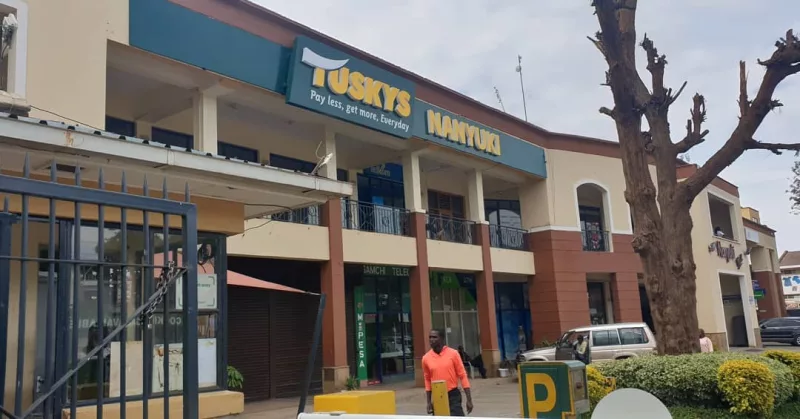
The Painful End
By 2020, many Tuskys branches had closed their doors.
Administrators were appointed to oversee the company’s affairs, but efforts to rescue the retailer proved unsuccessful.
Employees lost jobs, suppliers were left chasing unpaid invoices, landlords lost tenants, and customers watched one of Kenya’s most recognisable brands disappear.
The collapse marked the end of an era in Kenya’s retail sector.