Read Also
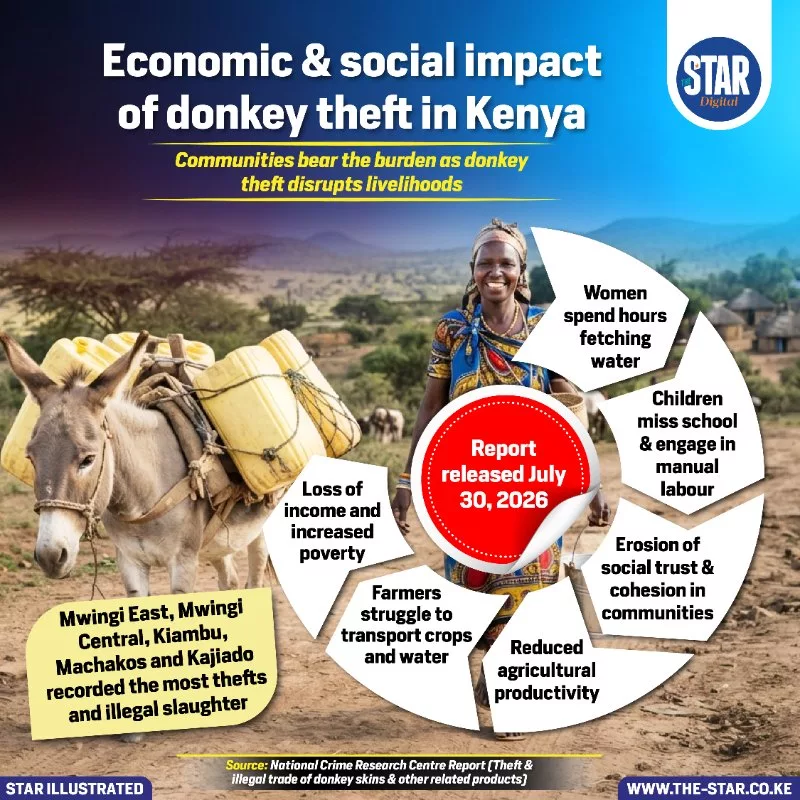
Donkey theft is taking a heavy toll on households and rural economies, with women spending more hours fetching water and farmers struggling to transport crops and water.
The losses have reduced agricultural productivity, cut household incomes and pushed more families into poverty.
Children are also affected, with some missing school to help with manual labour after donkeys are stolen.
Beyond the economic impact, the crime is eroding social trust and cohesion in affected communities.
According to a National Crime Research Centre report released on July 30, 2026, Mwingi East, Mwingi Central, Kiambu, Machakos and Kajiado recorded the highest cases of donkey theft and illegal slaughter linked to the trade in donkey skins and related products.