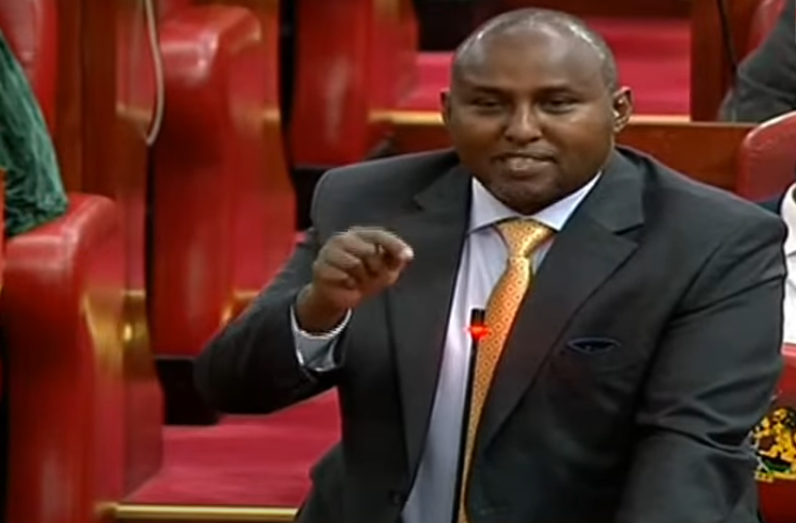
 Former CS Raphael Tuju when he appeared before the Finance Committee and Planning on July 28, 2026 /DOUGLAS OKIDDY
Former Cabinet
minister Raphael Tuju has raised concerns over proposed amendments to the law
governing the East African Development Bank (EADB), warning some provisions
could create loopholes for abuse.
Tuju, a former lawmaker, took issue with a clause in the proposed amendments that requires Parliament to approve Kenya’s subscription to the bank within 30 days, failure to which the subscription would be deemed to have been approved.
He cautioned that the provision could be abused by allowing important financial decisions to take effect without Parliament having substantively considered them.
“There is a provision that Parliament has to approve whatever is asked for within 30 days; failure to which it is deemed to have been approved,” Tuju said.
“What happens if Parliament is in recess or is dissolved? The mischief that it has to be done within 30 days must be corrected.”
The former CS also raised issue with the immunity the bank employees – directors, officers, alternates - enjoy from any legal process except in cases where it has expressly waived its immunity in writing.
He was appearing before the National Assembly’s Finance and Planning Committee on East Africa Development Bank (Amendment) Bill 2026.
Tuju said the deemed-approval provision was particularly problematic because it could effectively remove Parliament’s oversight role by allowing a subscription to proceed simply because the 30-day period had elapsed.
“Such mischief are by technical people in the Treasury ministry; that is what happened with Goldenberg and Anglo-Leasing scandals,” he said.
He also raised questions about the wider accountability framework for EADB, arguing that the proposed amendments do not adequately provide for oversight of the regional bank.
According to the former minister, EADB does not operate under the regulatory framework of the Central Bank of Kenya, raising questions about the safeguards governing its operations and financial activities in the country.
He further pointed to the absence of auditing by the Auditor-General as another gap that needs to be addressed.
“EADB does not report to anyone and is not regulated; that is something we can look at,” he said.
The former minister argued that without clear provisions for independent scrutiny, Parliament and the public could have limited visibility over the bank’s financial affairs, despite Kenya being a shareholder in the institution.
Tuju’s concerns come as Parliament considers changes to the legal framework governing Kenya’s participation in EADB, with the proposed amendments seeking to have MPs approve the country’s subscription and obligations to the regional lender.
The debate has brought renewed focus on the operations of the regional bank, with members questioning the opaque manner in which EADB has been operating.
Kitui Central MP David Mboni, while calling for transparent scrutiny of the bank’s books of accounts, wondered how it has failed to declare any dividends despite receiving billions of taxpayers’ money.
“Whom does EADB report to? EADB has never declared any dividends, but the bank has, however, paid millions to law firms,” Mboni said.
Homa Town MP Opondo Kaluma called for a deeper scrutiny of the regional bank for the larger interest of the country.
“We need to look at the EADB Act beyond the bill so as to secure the interest of this country,” Kaluma said.
Committee chairperson and Molo MP Kuria Kimani said his committee will invite the bank directors not only to give their views on the bill but also to understand its operations.