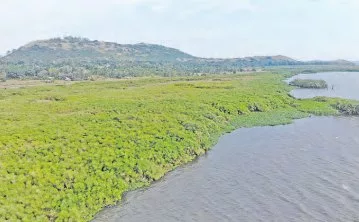
 Yala Swamp /NATURE KENYA
World heritage sites are among key biodiversity areas that are under growing threat in Kenya.
The world’s largest conservation partnership organisation warns that mining and agricultural expansion remain the major threats.
“Across Africa, key sites including world heritage sites, zero extinction sites, and ramsar sites - some of which are protected areas - face serious threats from damaging development,"BirdLife International said.
Between 2015 and 2025, Africa lost about 29.6 million hectares of forest, while over 30 per cent of its grasslands face severe degradation.
BirdLife
International marked 15 years of its African Site Casework on Emerging Threats
Taskforce (ASCET), a continent-wide initiative of BirdLife Partner
organizations which aims at saving sites facing threats from damaging developments.
BirdLife is the world’s largest conservation partnership with over 10 million members and supporters, and over 123 national partners worldwide (27 in Africa).
The
partnership strives to conserve birds, their habitats, and global biodiversity,
working with people towards sustainability in the use of natural resources.
The African Site Casework on Emerging Threats Taskforce (ASCET) has helped safeguarded 35 major sites from damaging developments since 2010.
The 2025 Global Wetlands Outlook Report shows that the world has lost about 22 per cent of wetlands since the 1970s, with some of the steepest declines happening in Africa.
Since its establishment in 2010, ASCET has stopped or slowed down damaging threat at more than 35 sites in Africa, covering 79,889 square kilometres, approximately the size of Sierra Leone.
BirdLife International's policy and communications coordinator for Africa Ken Mwathe said socio-economic development is an imperative for residents.
“However, development that threatens Africa’s iconic and natural places is inherently destructive and must be challenged,” he said.
Mwathe said over the past 15 years, BirdLife Africa Partners working through ASCET, have harnessed the Power of Many to champion sustainable development: growth that balances human progress with the urgent need to protect Africa’s last wild places, which serve as crucial biodiversity refuges, water sources, and carbon sinks.
Regional Director for Africa, BirdLife International Kariuki Ndang’ang’a, said protecting sites is not a one-time event.
“It takes deliberate planning and collaboration amongst partners, local communities, and government agencies. ASCET in its 15 years has demonstrated that consistency, focused leadership and simplified workflows play a key role in achieving success.”
ASCET coordinates action through providing a platform for raising partner advocacy, information exchange, and flexible financial support for emergency site action.
Over the past 15 years, the forum has evolved from a reactive site casework unit to an early warning unit that tackles threats.
ASCET now provides flexible financial support for early-stage threats- based surveillance and rapid emergency site interventions.
This has enhanced capability, enabling timely responses to emerging conservation threats, thus helping safeguard critical ecosystems and biodiversity before threats strike.
ASCET has been instrumental in tracking the roll-out of KBAs and KBA-National Coordination Groups (NCGs) in Africa.
NCGs enhance coordination of KBAs conservation efforts at the national level by bringing together government and non-state actors.
Currently, there are 15 NCGs established across the continent, including in Uganda, the Republic of Congo, Tanzania, South Africa, Nigeria, Malawi, Kenya, Liberia, Madagascar, Ghana, Guinea, Gabon, Egypt, Democratic Republic of Congo (DRC), and Sierra Leone.
ASCET has also been instrumental in shaping policy by engaging with various Multilateral Environmental Agreements (MEAs) in addition to regional, national and subnational policy frameworks.
Central to ASCET’s success has been engagement of local communities living alongside these protected and ecologically sensitive sites. Hundreds of stakeholders, including community members and local authorities’ officials, in various countries, have been trained in advocacy efforts.
ASCET has raised awareness about its work through various platforms, with more than 10 million people reached through Social Media platforms, TV, Radio shows, and on-the-ground advocacy initiatives.
BirdLife International said it together with Nature Kenya helps protect the Yala Swamp, Kenya’s largest swamp in 2025 after securing the revocation of a title deed allocated to a private developer for 7,249 hectares of the swamp, among other threatened sites in various countries.