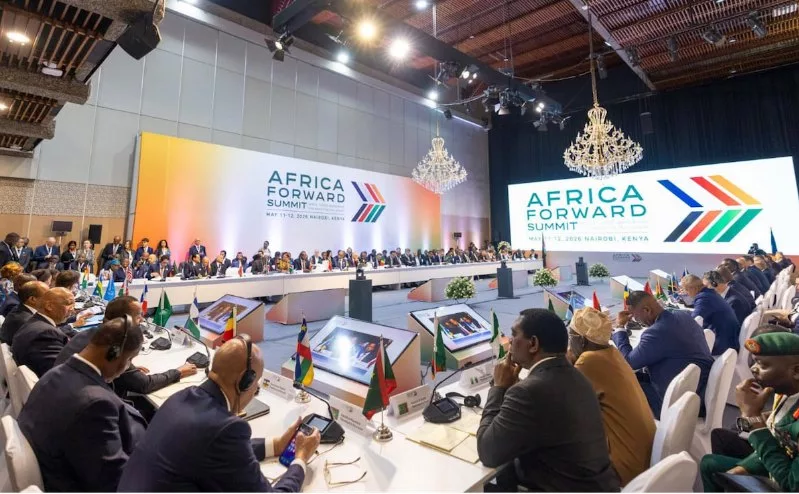
Last month, more than 30 African Heads of State and Government gathered in Nairobi alongside investors, entrepreneurs, development institutions and representatives of the French private sector.
The significance of the gathering was not the event itself. It was what it revealed about where influence is shifting in a rapidly changing world.
The ability to convene has become one of the most important currencies in contemporary international affairs.
Military power and economic size remain important. Yet increasingly, influence is measured by a country's capability to bring diverse actors together around shared interests, build coalitions and create pathways for cooperation.
In these times of geopolitical fragmentation, economic uncertainty, climate pressures and technological disruption, countries that can build bridges are becoming more valuable than ever.
This helps explain why Nairobi's importance has grown steadily over the past decade. The city has become a site of convergence for diplomacy, finance, innovation, climate action and multilateral engagement.
As host to major United Nations agencies, a regional hub for global business and a technological powerhouse, Nairobi has established itself as one of Africa's most important centres for international dialogue.
Its significance, however, goes beyond infrastructure or geography.
Nairobi increasingly represents something often in short supply in global affairs: trust. It is a place where governments, investors, development partners, innovators and civil society can come together to address shared challenges and identify common opportunities.
That role matters because the defining challenges of our time require unprecedented collective action.
Whether the issue is artificial intelligence, food security, climate adaptation, energy transition, health resilience or economic growth, the solutions demand broader cooperation and stronger partnerships. No country, regardless of size or wealth, can navigate these challenges alone.
Africa sits at the centre of many of these conversations.
The continent is home to the world's youngest population. It possesses resources critical to the global energy transition. Its cities are among the fastest growing in the world. Its entrepreneurs are developing solutions in finance, agriculture, healthcare and technology. Its markets are becoming increasingly important to global growth.
Yet for too long, conversations about Africa have often been framed elsewhere. That dynamic is changing.
Africa is moving from the margins of global conversations to the centre of them. It is no longer simply seeking inclusion in agendas designed elsewhere. Increasingly, it is helping shape those agendas. The Africa Forward gathering in Nairobi reflected that reality.
One of its most important features was the prominence of business leaders, investors and entrepreneurs. This matters because Africa's future will be determined as much by private capital and innovation as by public policy.
Governments create enabling environments. Entrepreneurs create jobs. Investors provide capital. Innovators develop solutions. Sustainable growth requires all of them.
The prominence of the private sector in Nairobi signalled a growing recognition that Africa's economic future will be built through partnerships grounded in investment, enterprise and shared opportunity.
This reflects a broader evolution in how Africa engages with the world.
The old language of dependency is gradually giving way to a new language of partnership. Increasingly, the conversation is about co-investment rather than assistance, mutual benefit rather than one-sided hierarchical relations and long-term opportunity rather than short-term intervention.
This is not simply an African aspiration. It reflects a changing global reality. The world needs Africa's talent, markets, resources and innovation. Africa needs investment, technology, finance and partnerships that accelerate development. The interests are increasingly shared.
That is why convening power matters. It creates the space where ideas can be tested, partnerships can be formed and practical solutions can emerge.
The real significance of Nairobi therefore lies not in what happened during two days in May. It lies in what those two days suggest about the future. As the international system becomes more complex, countries that can bridge divides, build trust and convene diverse interests will play an increasingly important role.
Kenya has steadily positioned itself as one of those countries. The question is no longer whether Africa deserves a seat at the table. The more important question is who is helping shape the agenda. Increasingly, Africa is.
Principal Secretary, State Department for Foreign and Diaspora Affairs, Republic of Kenya