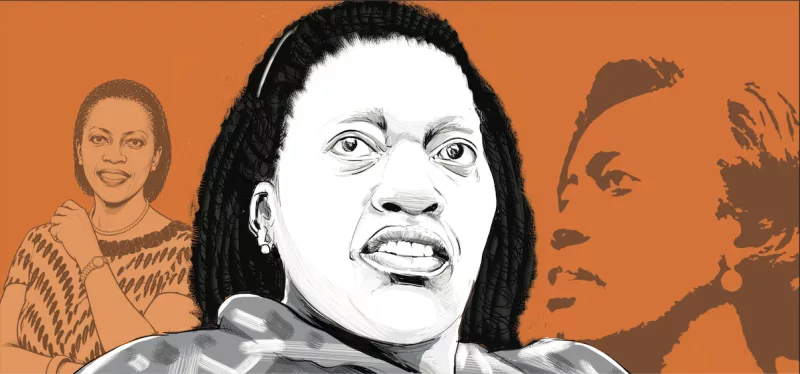
For those of my generation who regaled in Margaret Ogola’s The River and the Source for high school read, certain lines remain permanently seared in our memory.
In the closing chapters, a formidable matriarch, the last of a generation of women who defined the river, dies. Elizabeth Awiti Okumu Sigu closes the first chapter of a family that began in the smoky hut of Aketch in Yimbo.
In the book, Ogola soft-lands the family’s grief with a time-tested truth: “The dead have no use for the living, who eventually have to collect themselves so that the business of life might somehow continue.”
Elizabeth was laid to rest beneath her favoUrite groove of purple bougainvillaea. Nearby was her daughter Becky’s grave. In less than a year, Elizabeth’s husband, Mark Anthony Oloo Sigu, followed them.
The tragedy of the Sigus is not unique to them. It is an ordinary spectre of modern families as disease, accident and old age ravage us. Death is always stalking us through our struggles, achievements and even rest.
In the last few years, people have literally been dropping dead like flies. I have heard conspiracy theorists say it has got something to do with the vaccines that we received during the Covid-19 period.
Unlike before when we buried our dead in simple, dignified, often unmarked graves, we have taken up to grandiose, imposing structures that scream back at us, mock at our human hypocrisy and grab our dwindling spaces.
Historically, tombstones, headstones and mausoleums were reserved for the notable royalty, important clergy or significant historical figures. This conception has since been liberalised, albeit with reckless abandon.
Across our ancestral lands, beautifully engraved tombstones are routing out hitherto unmarked graves in the same way gypsum ceilings are replacing ordinary ceiling boards in our sitting rooms.
In the process, a new form of socioeconomic discrimination is emerging. From the hereafter, our long-dead kin are watching us as we step on their resting places while putting up memorial shrines for our recent dead.
The well-to-do members of the family are erecting ostentatious, miniature palaces for their dead ones while the other less-endowed members of the same family are left to rest in anonymity a few feet away.
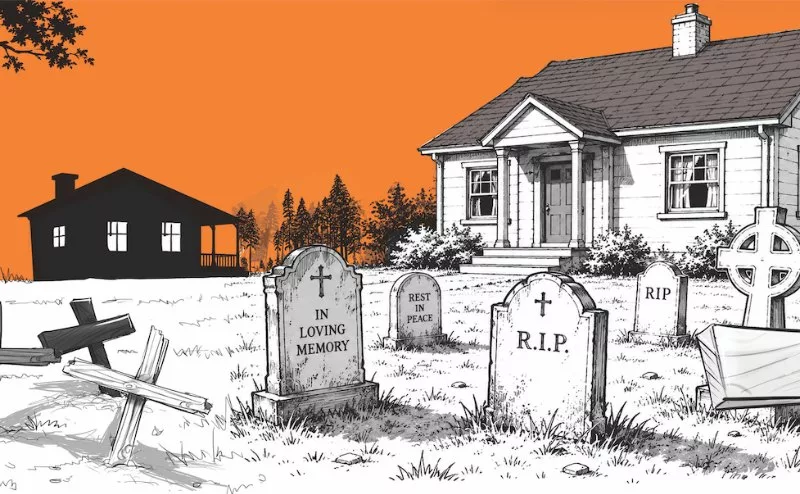
Our rural homes are now architectural crime scenes. They are littered with engraved structures of one kind or another – some quite frankly ugly – competing with each other for attention in height, texture and sheer audacity.
In most cases, there is neither order nor geometry to them. The handiwork of the unmatched village genius, they clash against each other in no particular angle, size or shape.
In the attempt to appease the dead, against our own scriptures which teach us the dead have no further reward, we have upset the aesthetics for the living.
Our ancestral spaces now look like mini-cemeteries which scream death to strangers entering our homes. Thanks to these permanent markers, you can now tell which home is most visited by the angel of death.
It is common knowledge that in some communities, the dead are deeply connected with the living. In others, there is little reverence for the dead and the living dispense with the business of the dead swiftly.
Given the current spatial anarchy and gravesite elitism plaguing our ancestral lands, it is about time for county governments to step in and regulate this space.
They can begin by tabling clear proposals on public cemeteries, possibly in every ward or constituency, and subjecting those proposals to robust public participation before enacting the law.
It is not tenable for us to turn every arable rural plot into a permanent graveyard. The dead have no business locking our valuable agricultural or commercial properties for eternity. The living, certainly, have no business aiding in this celestial land grab.
The time has come to permanently separate the living quarters from the resting grounds by ending the menace of ancestral home burials.
Furthermore, both national and county governments should ignite a bold national conversation on how we handle our departed. Clean, smart and forward-looking alternatives, such as cremation and donation of bodies to medical research institutions, should be encouraged.
Musau, an Advocate of the High Court, is a Senior Project Manager with the Friedrich Naumann Foundation. The views expressed here are his own.