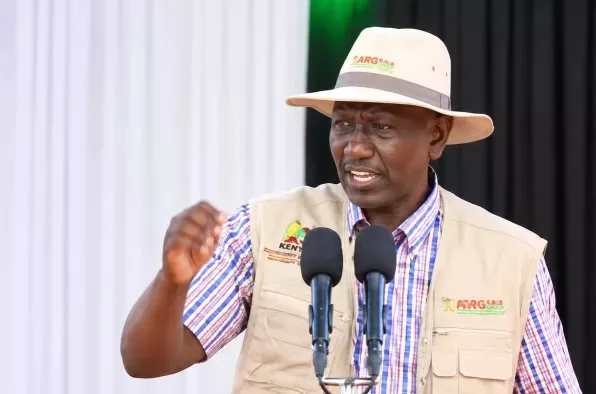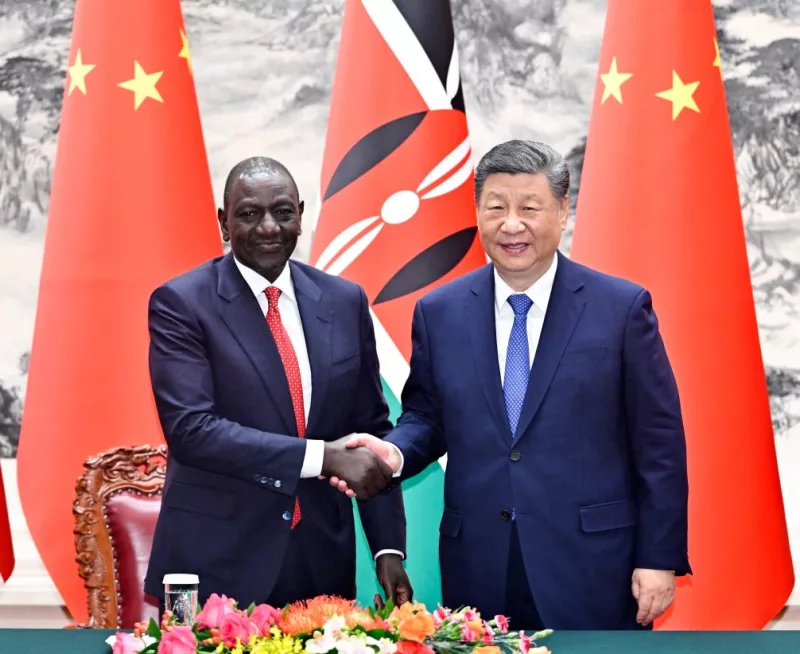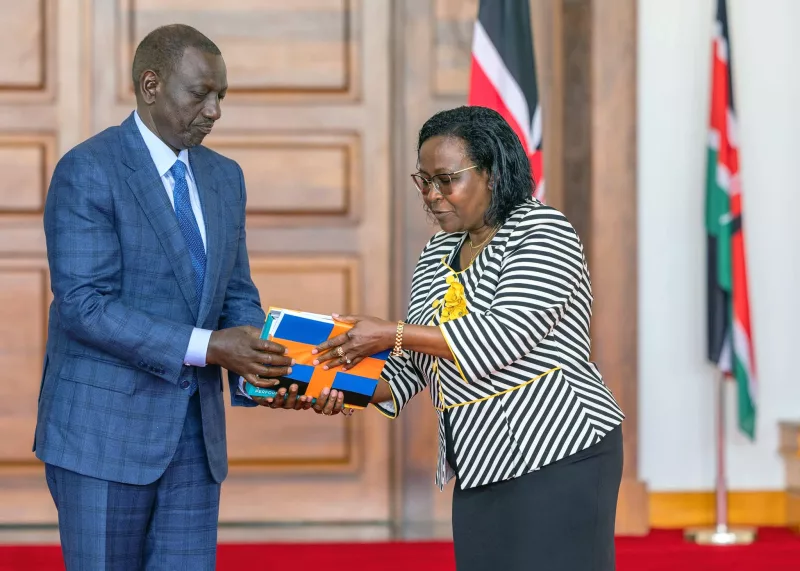
Since taking power in September 2022, President William Ruto has issued multiple executive orders from State House, Nairobi.
These orders have fundamentally structured and restructured government design or organisation, management, operations, public service and reorganised national institutions. And launched a number of presidential task forces, among other measures.
Of particular note is that some of these orders have been quashed by theHigh Court. For example, Executive Order No. 3 of 2024, which purportedly rearrangedparastatals, was quashed by the Milimani High Court that called it unconstitutional forusurping constitutional powers of the Public Service Commission.
Of special significance to this commentary is Executive Order No. 2 of 2023 thatoutlines the current organisation of the government of and assignsfunctions across state ministries, departments and agencies.
In that order, Rutopurportedly instructed that the Independent Policing Oversight Authority (Ipoa)be placed under the direction of the Ministry of Interior and Coordination despite provisions of itsConstitutive Act as an independent organ!
This is commentary is about this order, but of course, other independent but related institutions have alsobeen affected severely by such orders.
To demonstrate, was the Executive Order No. 7 of 2024, which purportedly facilitated critical transitionswithin top homeland security agencies, including the National Police Service and Kenya PrisonsService.
Further still, some of the actions in State House include the recently establishedNairobi Metropolitan Police frameworkand sanctioned the deployment of specialised General Service Unit and RapidDeployment Unit units to curb crime in Nairobi county, among others.
Our problem
This commentary thesis is simple: we have a major problem with what, how, when and why State House has become the headquarters of changing the constitution and itssubsequent laws, through unconstitutional, illegal and unlawful means!
While these andmany more actions through, or even without orders, have been happening at State House,the president (as commander-in-chief) and his Cabinet Secretary for Interior have beenunable to reign in the ongoing terrorism by goons all over the country!
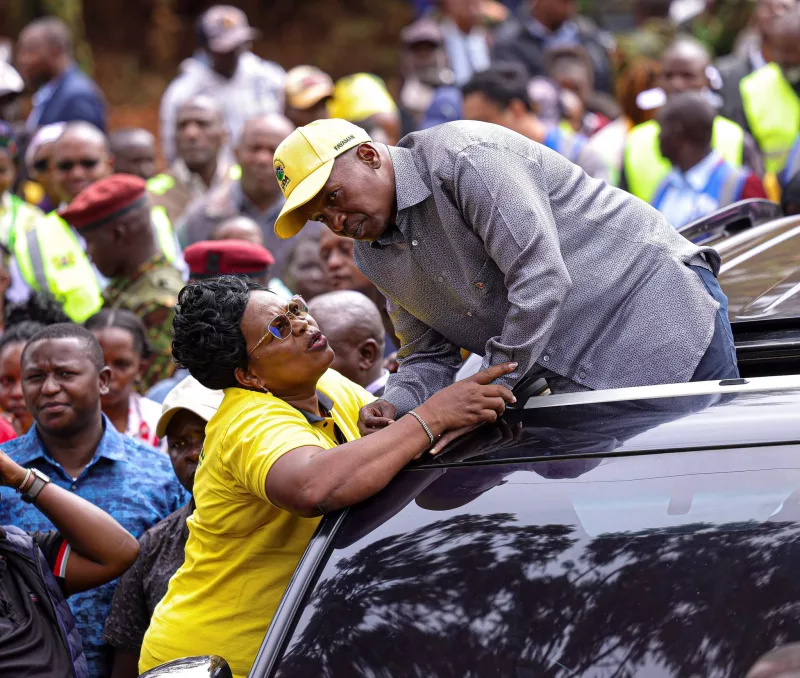
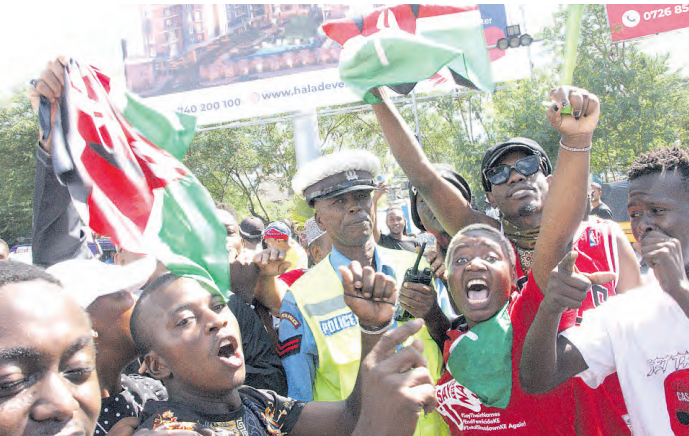
The country is undercomplete siege by marauding gangs, walking along police and stopping each and everyperson from not just conducting their daily activities but more so, enjoying theirconstitutionally guaranteed fundamental freedoms and human rights!
Now, let us deal with Ipoa, and let me begin
by disclosing that I served as one of the sevenfounding board
members between June 2012 and May 2018, led by chairman Macharia Njeru.
To trace the origins of Ipoa is not important here, but suffice it to mention the idea was created even before the constitution was drafted and completed,through a proposal by human rights groups to various task forces following the post-electionviolence of 2007-08.
Therefore, Ipoa was a response to what Kenyans have witnessed fromthe “police force” over the years, including all the ills that are currently going on, even if the“police service” was created under the constitution!
Some of these egregious abuses of human rights by the “police force”, such as extrajudicialkillings, arbitrary arrests, enforced disappearances, abductions, and more have again beendocumented in a report by Kenya National Commission on Human Rights handedover to President Ruto in June.
Just last month! And the government is currentlyproviding reparations for the same serious ills, and while these reparations are ongoing, the“police force” is busy undertaking more violations!
Ipoa an independent state organ
Section 4 of the Ipoa Act provides succinctly that the institution is an independent organunder no direction of any authority. Any purported order by any other state organ such asthe presidency is null and void, ab initio!
Therefore, the purported order to have Ipoabecome an appendage under the ineffective CS of Interior ¾ who has shown neither capacity nor capability of dealing with(in)security in the republic of Kenya ¾ has been quashed by the court!
Courtesy of the above Executive Order No. 2 of 2023, Ipoa and some patriotic Kenyans went to the Judiciary, to seek remedy for this, away from the Executive overreach.
In the petition (Jonathan Obwogi vs Independent Policing Oversight Authority and CS Interior and Coordination of national government and five others), on Tuesday, July 14, the High Court in Milimani pronounced itself by granting the secondprayer in the petition, before the hearing and determination of the entire Petition.
In the words of theJudge David Mburu:“ …A conservatory order is hereby issued staying, suspending and/or restraining the first andsecondrespondents, their agents, assigns, servants or anyone acting under their direction or ontheir behalf from implementing, enforcing, giving further effect to, or in any other wayacting upon the provisions of the Executive Order No. 2 of 2023 insofar as those provisionspurport to place the Independent Policing Oversight Authority (third respondent) under orwithin the Ministry of Interior and National Administration, pending the hearing and finaldetermination of this petition.”
Enforcement of the order
Following this pronouncement, and similar to others before it, and as shown by this government thus far, there is a possibility of defiance and hence, vigilance has to be taken a notch higher.
Enforcement of this court order has to be done by both Ipoa and all the persons (juristic and natural) involved in the Petition. From what I can perceive, there is the possibility of not obeying this order for obvious reasons that I explain here.
First, Ipoa and petitioners should seek protection and enforcement from the legislature,through the Departmental Committee in the National Assembly to which Ipoa reports,especially with regard to its current budgetary allocation in the Appropriations Act(2026) under the recurrent number: R2151 amounting to Sh1,561,610,040.
This is Sh1.56billion, and if the ministry were to target Ipoa, it could be targeting appropriating itselfthese monies against what Parliament has already passed into law.
The second strategy is to the third and current board of Ipoa. I think, and to be honest,today’s “commissioners” are largely absent from many forums, whether by state or non-state actors, and they are not as visual and verbal as the first board was.
There is need toscale up high-level advocacy through partnering with like-minded organisations both inAfrica and the world.
Institutions such as Ipoa cannot be taken under the Executive arm ofgovernment, since the government already controls through policy or otherwise the “policeforces” and hence any attempt to do so would be literally kill Ipoa completely.
Further, there is need to assert this independence fully by, for example, not appearing alongside the “police force” or “ministry officials” unless it is extremely necessary. Honestly, one should not hang out with people they are overseeing.
Third, I think there has been a deliberate effort to wind up independent institutions by thisregime, especially before the 2027 general election.
This mission must
be stopped dead in its tracks.Ruto seems to loathe independent institutions, or has disdain for them.
Solidarity across all independent institutions of the state, especially those in Chapter 15, is anecessary strategy to protect the constitution and also the mandates of theseinstitutions, since they were created to counterbalance the Executive, Judiciary andParliament.
What is shocking is that the “police force” who were literally asking forindependence at the beginning of this regime and were even granted “financial autonomy”seems to be crawling back to the Executive arm of government, which is raiding all of theirindependence as seen in the above executive orders!
Finally, Ipoa and all independent institutions have allies within civil society and within thediplomatic community.
These two partners would be willing to even arrange some forum ora conference to discuss the ongoing happenings in the country, in which better and moreconcrete strategies would be formulated, agreed upon and implemented.
For example, thesubject of goonisation of electoral politics is affecting all independent institutions but noneseems to know how to respond.
Only the National Cohesion and IntegrationCommission shows concern on television but without local, regional and nationalstrategies to deal with the matter squarely being floated.
Indeed, I end by challenging Ipoato rally all the other independent institutions to come together and have a nationalconversation very soon on this matter of goonisation of electoral politics (as visiblypresent today).
That’s because this is a serious violation of Article 244, where the “police force” arelacking professionalism. Thesegangs must be nipped in the bud! Now, not tomorrow before we lose our country ahead of the2027 general election.
The writer is a political scientist and human rights defender