 Africa’s richest man Aliko Dangote.
Plans by Nigerian billionaire Aliko Dangote to build a giant oil refinery in Lamu are facing resistance from environmental groups.
This is even as supporters say the project could transform Kenya into a major fuel hub for East Africa.
Read Also
The proposed refinery, expected to cost between Sh2.2 trillion and Sh2.6 trillion, would be built in Lamu and process about 700,000 barrels of crude oil a day, making it the largest refinery in East Africa and one of the biggest in Africa.
Construction is expected to take about three years once all approvals are secured.
However, climate and environmental campaigners have warned that the project could threaten the fragile coastal ecosystem and the heritage status of Lamu Old Town.
In a statement, environmental lobby Power Shift Africa described the project as "an extraordinary act of environmental recklessness and economic short-sightedness".
"It would place one of Africa's largest fossil fuel developments in one of the continent's most ecologically sensitive and culturally significant coastal regions," its director Mohamed Adow said.
He argued the world was moving towards electric transport and renewable energy, warning the refinery risked becoming a stranded asset before recovering its investment costs.
Dangote Industries says the refinery would supply Kenya and neighbouring countries with petrol, diesel and jet fuel, reducing the region's heavy dependence on imported fuel products.
Kenya currently imports nearly all its refined petroleum products following the closure of the former Kenya Petroleum Refineries plant in Mombasa.
The project is expected to benefit from Lamu's deep-water port and its location along the Lamu Port-South Sudan-Ethiopia Transport (LAPSSET) Corridor, which was designed to turn northern Kenya into a regional trade and transport gateway.
However, Adow said Lamu's mangrove forests, coral reefs and fishing grounds support thousands of livelihoods and should not be treated as empty coastlines waiting for industrialisation.
"The refinery's supporters will argue that it is about development. But development for whom? Nearly 600 million Africans still lack access to electricity. Their greatest challenge is not the availability of refined petroleum products but the absence of affordable, reliable power," he said.
The government says the project represents a different kind of opportunity.
It is expected to create thousands of jobs during construction and operation, boost shipping activity at Lamu Port, and attract related industries such as petrochemicals, storage facilities and transport services.
The refinery would also strengthen energy security in East Africa by reducing dependence on fuel imported from Asia and the Middle East, where supplies can be disrupted by conflicts or shipping delays.
Recent tensions in the Middle East have highlighted the risks of relying entirely on imported refined products.
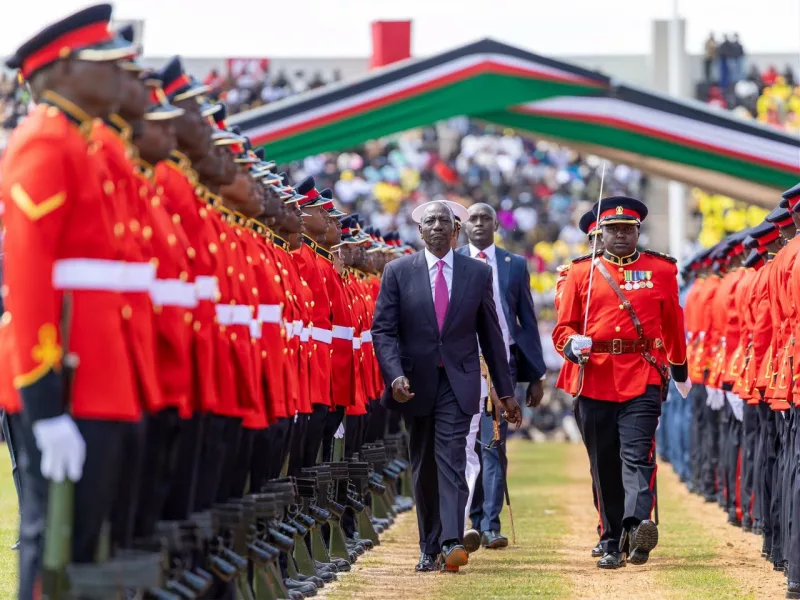
President William Ruto's administration has already signalled strong support for the project, with Deputy President Kithure Kindiki appointed to lead a government team working with investors and agencies ahead of implementation.
Dangote, Africa's richest businessman, successfully completed a similar refinery in Lagos, Nigeria, which began operating in 2024 and has since become one of the world's largest refining facilities.
The Kenyan project would be his biggest investment outside Nigeria.
Environmental activists previously led a successful campaign against the proposed Sh200 billion Lamu coal power plant at Kwasasi.
The courts eventually cancelled the project's environmental licence after finding flaws in the approval process and inadequate public participation.
The campaign, led by groups including Save Lamu, became one of Africa's best-known environmental victories and demonstrated the growing influence of local communities in major infrastructure decisions.
INSTANT ANALYSIS
Plans to build a Sh2.2–Sh2.6 trillion oil refinery in Lamu by Nigerian billionaire Aliko Dangote have sparked a clash between economic ambitions and environmental concerns. Supporters say the refinery would create jobs, strengthen East Africa's energy security and position Kenya as a regional fuel hub. Environmental groups warn it threatens Lamu's fragile ecosystem and cultural heritage while risking becoming a stranded asset as the world shifts to cleaner energy. The government backs the project, citing its strategic economic benefits.