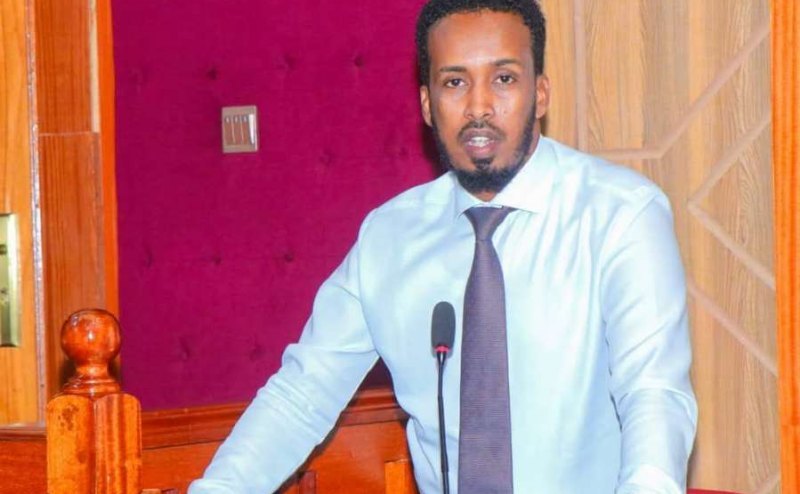
 Hussein Mohamed Dagane, Minority Leader, Garissa County Assembly and MCA, Garissa Township. /HANDOUT
Kenya has made significant strides in nation-building over the decades, overcoming periods of political tension, economic uncertainty, and social division. Yet one of the greatest threats to the country's progress remains the persistence of divisive politics that place political interests above national unity.
When political competition shifts from healthy democratic engagement to hostility, tribal mobilisation, and organised disruption, the consequences are felt by ordinary citizens who bear the cost of instability.
A strong democracy requires an active opposition that holds the government accountable, scrutinises policies, and offers alternative solutions.
However, opposition politics becomes problematic when it crosses the line into actions that deepen ethnic divisions, undermine public confidence in institutions, or encourage confrontation rather than constructive engagement.
Kenya's history has repeatedly demonstrated that tribal politics can be a dangerous force, capable of tearing apart the social fabric that binds communities together.
The growing tendency by some political actors to frame national issues through ethnic lenses risks reversing years of progress in fostering national cohesion.
Rather than encouraging citizens to identify first as Kenyans, divisive political narratives often encourage communities to view one another with suspicion. Such rhetoric may generate short-term political gains, but it weakens national unity and creates long-term challenges for peace and development.
At a time when the country requires collective effort to address unemployment, rising living costs, infrastructure gaps, and economic transformation, political tensions can easily distract attention from these pressing priorities.
Development projects thrive in stable environments where leaders, communities, and institutions work together. When political confrontations dominate public discourse, development initiatives often become casualties of political competition.
Equally concerning is the growing culture of political intolerance that sometimes manifests itself through the disruption of public meetings, attacks on development forums, and interference with peaceful gatherings.
Regardless of political affiliation, no group should seek to silence others through intimidation or violence. Democratic societies flourish when ideas compete freely, not when opponents are shouted down or threatened.
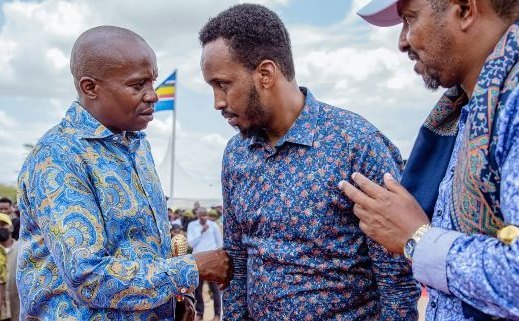 Deputy President Kithure Kindiki with Hussein Mohamed Dagane, Minority Leader, Garissa County Assembly and MCA, Garissa Township. /HANDOUT
Attempts to drag religious spaces into political battles or to disrupt worship undermine values that many Kenyans hold dear. Respect for religious institutions should remain above partisan interests, ensuring that places of worship continue to unite rather than divide communities.
Reports of organised groups being used to disrupt events, intimidate opponents, or create public disorder should concern every Kenyan. Political violence, whether direct or indirect, damages the country's reputation, discourages investment, and creates fear among citizens. Young people, in particular, should not be exploited as instruments of political conflict. Instead, they should be empowered through education, entrepreneurship, and employment opportunities that contribute positively to national development.
Leadership, whether in government or opposition, carries a responsibility to promote peace and respect the rule of law. Political leaders must condemn violence unequivocally and ensure that their supporters engage peacefully.
The pursuit of power should never come at the expense of national stability. Elections come and go, governments change, and political fortunes rise and fall, but the nation remains.
President William Ruto has repeatedly emphasised national unity, economic transformation, and inclusive development as key pillars of his administration.
Supporters argue that such efforts require cooperation across political, regional, and ethnic lines. Whether one agrees or disagrees with government policies, meaningful criticism should be grounded in facts, policy alternatives, and constructive debate rather than disruption and division.
Kenya's future depends on the ability of its leaders and citizens to rise above tribal politics and embrace a shared national vision. Political competition is essential in a democracy, but it must be conducted responsibly. The country cannot afford to sacrifice peace, development, and social cohesion for short-term political advantage.
While continuing its journey toward prosperity, all political actors must place national interests above partisan ambitions. The path forward lies not in division, intimidation, or disruption, but in dialogue, respect, accountability, and a commitment to building a stronger and more united nation for future generations.
The writer is the Minority Leader, Garissa County Assembly, and MCA Garissa Township.