The number of children being diagnosed with autism has been steadily increasing across the country, prompting discussion among parents, educators, healthcare professionals, and policymakers.
1. Institutional Preparedness and Resources
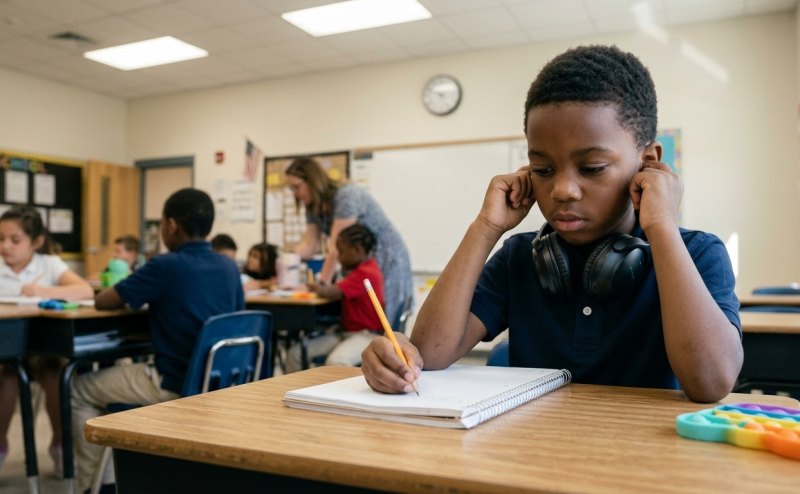
The critical need for these specialized environments becomes clear when considering the daily, real-world experiences of individuals navigating the classroom. As one student or individual on the spectrum shares:
"I often have sensory issues with crowds and noise due to being on the autism spectrum. I need to plan daily tasks so I can function at my best. Crowds and noise may not bother everyone, but it can be a lot for me and maybe others."
2. Public Perception and Societal Awareness
Different perspectives exist regarding the behaviors associated with autism. Some viewpoints attribute these behaviors to a lack of parental discipline or correction.
For instance, on June 16th, @AlooterC tweeted, "Restrain your children...teach them manners not to jump on visitors... Watoi nowadays hawana adabu" (Children nowadays lack manners).
In many communities, awareness and understanding of autism remain limited, which contributes to unfamiliarity with the condition and its characteristics. Without adequate information, behaviors associated with autism—such as

difficulty communicating, avoiding eye contact, repetitive actions, or challenges with social interactions—are sometimes misinterpreted as stubbornness, rudeness, or a lack of discipline.
Sharing a personal perspective on living with the condition, @ufufu_9 stated:
"I’m on the autism spectrum. I understand other people’s feelings and how to connect with them, but sometimes I miss the simpler world I lived in before I understood those things."
3. Long-Term Support and Developmental Needs
To address these challenges, structured support systems and equitable educational opportunities are required to meet the specific needs of children on the autism spectrum. Trained personnel are essential to ensure that the learning and developmental needs of individuals are properly evaluated and addressed in environments such as schools and care settings.
Furthermore, these needs extend beyond childhood, as highlighted by @be_like_ice:
"People seem to forget that autistic kids do actually become autistic adults. It's not something that goes away when you get older."