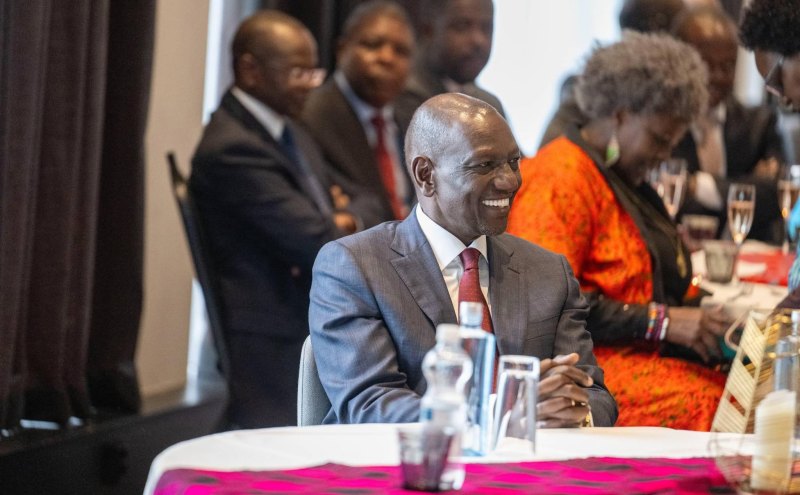
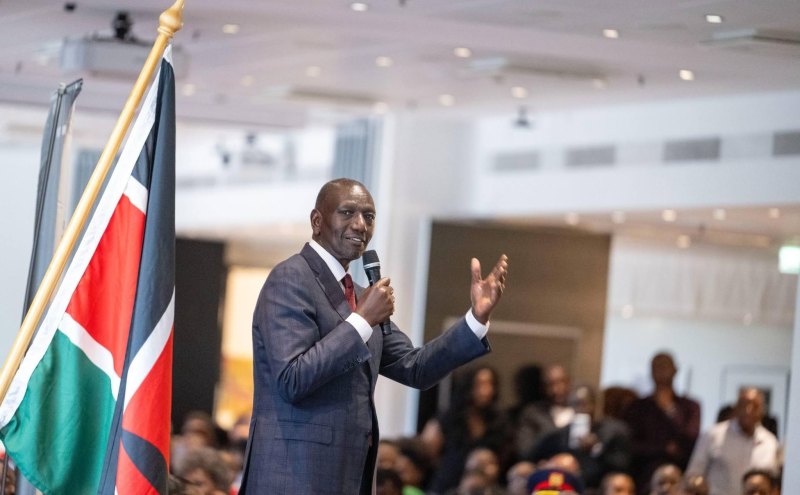
President William Ruto has set a bold seven-year deadline to transform Kibera, Nairobi’s most famous informal settlement, into a modern residential area. Speaking at a town hall meeting in Helsinki, Finland, the President told Kenyans living in Scandinavia that the days of Kibera being a symbol of poverty are numbered.
For decades, Kibera has been known globally as one of Africa's largest slums. However, the President told the diaspora audience that the area is already undergoing a radical makeover.
He noted that instead of showing international guests the "largest slum," he now takes them to see the progress of affordable housing projects in the same area.
"Many of you know Kibera; give us another seven years, and you will not find a slum in Kibera. That is what is called transformation. Forget about the nonsense in social media. We are going to change our country and shame the guys on social media,” President William Ruto pledged.
The president also called out people who always take foreign visitors to Kibera to show them Kenya’s largest slum, terming the idea as retrogressive.
A New Skyline for Nairobi
The President’s plan involves replacing shanties with high-rise apartments. He reported that buildings of 20, 28, and even 30 floors are now changing the city’s skyline. In Nairobi alone, nearly 100,000 housing units are currently under construction.
Across the country, the scale of the project is even larger. There are roughly 300,000 houses being built nationwide. Work is also progressing in cities like Kisumu, where 5,000 units are underway, and in regions as far-reaching as Wajir, Mandera, and Mombasa.
“When I tell you guys it's possible to move Kenya from a third world country to a first world country in one generation you don't need a miracle you just need to have a good plan and you can do it.”
A key part of the President’s message was how Kenya is paying for these homes. He revealed that the national housing fund has already generated $9.3 billion in investment.Crucially, he stated that this money was not borrowed from international lenders like the World Bank or the IMF.
Instead, the President described it as domestic resource mobilization. He explained that using Kenyan money allows the government to avoid the long delays and strict conditions often attached to foreign loans.