
Earl Karanja has spent nearly two decades navigating the world of high-end machinery. Starting as a teenager blogging on Blogspot in 2007, he has evolved into a prominent automotive journalist and car trader.
Recently, Karanja sat down with Nick Kwach on the Feast with Friends podcast to pull back the curtain on the true cost of owning a luxury vehicle in Kenya and why most high-performing vehicles are prone to accidents on Kenyan roads.
Skills vs. Horsepower
A growing concern for Karanja is the gap between vehicle capability and driver skill. Modern cars can hit 100km/h in seconds, but many drivers still rely on skills learned in basic driving schools using older, slower vehicles.
He noted that high-performance cars are crashing frequently in Nairobi because drivers do not understand how to handle them when traction fails.
“Look at the number of crashes in Nairobi right now. High performance cars are crashing left and right because the skill does not match the ability of the car. The skills are still from back then.”

In Kenya, buying a car is rarely about what a driver wants. Instead, it is about what their wallet can endure. Karanja noted that import taxes are crazy insane. These levies often force buyers to spend three-quarters of their earnings just to get behind the wheel.
“In Kenya, it’s not what you want, it’s what your pocket wants. Here, the taxes we have on cars are crazy insane, such that you want to have a nice car because you are making nice money, but then you realize you want to spend ¾ of your money on a car, thenit’snot making any sense. It's your pocket that's going to decide,” he said.
For those looking at the top tier, the prices are staggering. A high-spec Lexus LX600 F Sport can cost roughly 40 million shillings. Even a new Toyota Crown, once considered a standard middle-class sedan, now fetches around 7 million shillings.
Why Kenyans Buy 'Uniforms'
Karanja observed a "copycat mentality" in Kenyan car culture. Drivers often choose popular models like the Mazda CX-5 or Toyota Harrier because they trust their neighbours more than professional reviewers.
This creates a "uniform" on the roads. People stick to these models because the spare parts ecosystem is established. They are willing to be in a community that has figured it out to avoid the risks of the unknown.
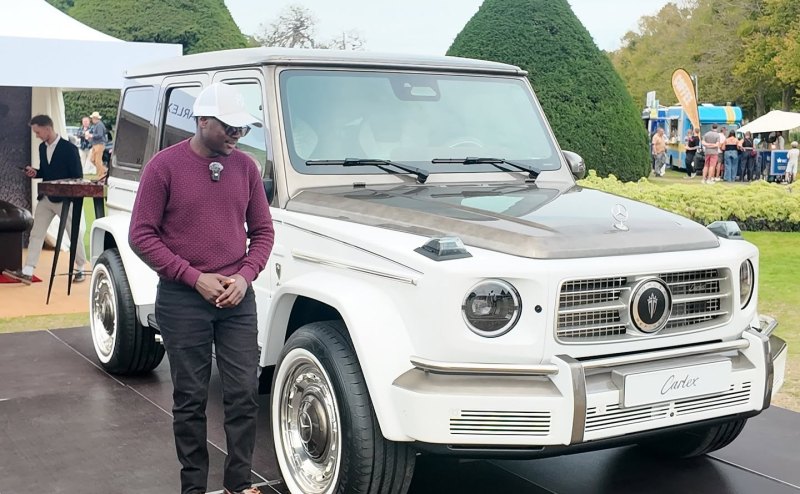
While many aspire to European brands like Mercedes-Benz, BMW, or Volvo, Karanja warned of the "post-warranty" trap. He compared these cars to two-month-old babies that cannot survive without constant, expensive care.
"The moment they step out of the warranty, they are scared... the problems that will come are only covered by warranty; they’re so expensive."
In contrast, a Toyota engine might die at home after years of service. A replacement engine can be found for 60,000 shillings, and the car is back on the road. For European owners, a failing AC compressor or electronics issue can lead to safe-mode failures that drain bank accounts.
Karanja's message is clear: in Kenya, you don't just buy a car; you buy the engineering, the taxes, and the eventual maintenance bill.