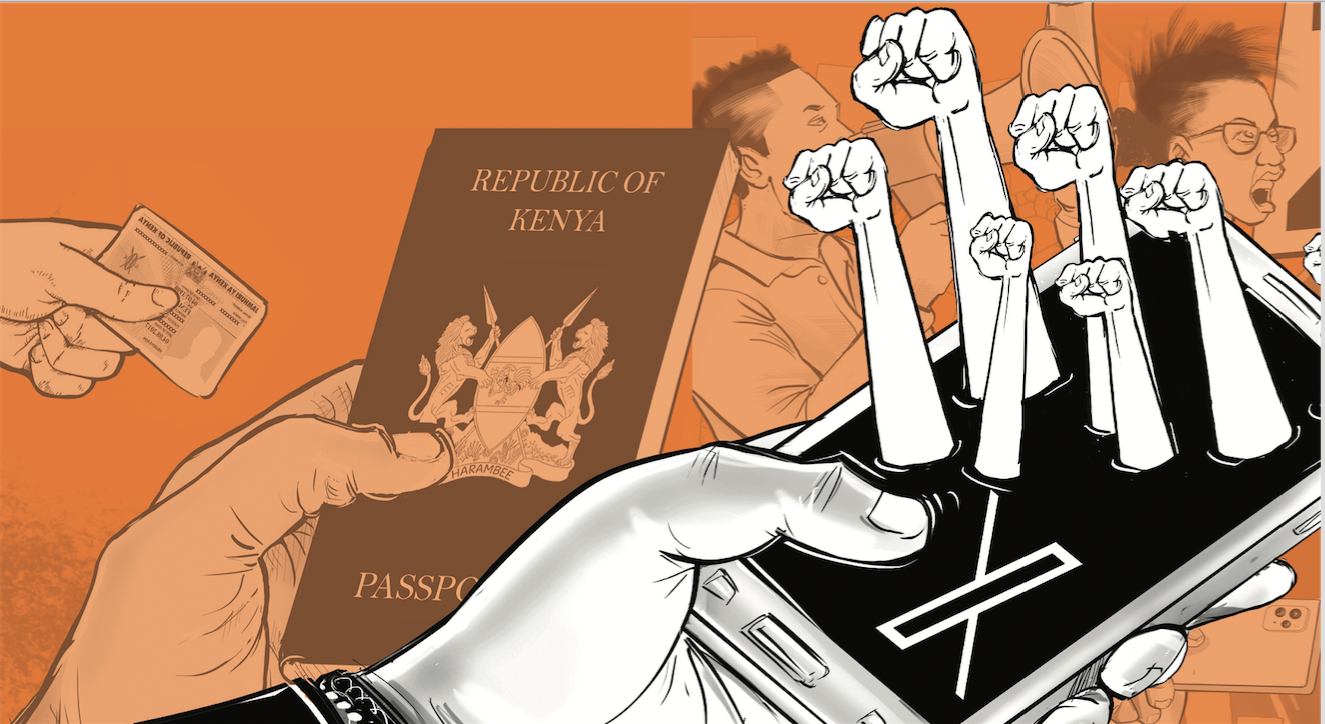
For a month now, the government has said nothing regarding the revelation that Algoney Hamdan Dagalo Musa, the youngest brother of Mohamed Hamdan ‘Hemedti’ Dagalo, has been travelling using a Kenyan passport. The two brothers are among individuals under US and EU sanctions over their role in atrocities against civilians in Sudan and the genocide in Darfur.
There has also been no response to the exposé that controversial Zimbabwean businessman and socialite Wicknell Chivayo is among the hundreds of foreigners issued with Kenyan passports under questionable circumstances.
The public and the media have asked, pressed, probed and persistently sought answers, but the government has remained unforthcoming. In public communication, silence is not neutral. It is a response– and a powerful one. But in this case, that response has been poorly managed, inadvertently exposing the highest office to scrutiny and placing President William Ruto at the centre of questions he may not directly control.
Silence, when used deliberately, can be one of the most effective tools in public communication. First, it can be a strategy or a statement. Sometimes, non-response is deployed as a strategic delay to allow decision-makers to assess a situation before responding. In this sense, silence buys time.
Second, silence can allow rumours or public anger to dissipate. Like radioactive decay, sometimes public outrage gradually loses intensity over time, and silence can accelerate this process.
Third, silence can condition public behaviour. Much like repeated personal failures can make individuals give up trying, as explained by the Theory of Learned Helplessness, persistent non-response to public grievances can condition people to stop expecting answers from those in authority. Over time, repeated frustration in demanding reforms and accountability in governance and political processes can lead to apathy and normalisation.
If there is one uncomfortable truth about us, Kenyans, it is this: we forget quickly. The speed with which we accept and move on from scandals, assassinations, extrajudicial killings, crises and broken promises is striking.
Predictably, outrage erupts, dominates headlines for a few days or weeks, and then slowly fades – often without clear answers or closure. Those in positions of authority, from whom we expect answers and accountability, understand this. Silence, more often than not, produces exactly this outcome. Yet in doing so, it shifts public frustration upward, concentrating scrutiny and political cost at the very top.
From the Kroll report and WikiLeaks to the Narc government’s outrageous expenditure on luxury cars, the pattern is familiar. Allegations of KDF troops engaging in illegal charcoal and sugar trade in Somalia and the Auditor General’s damning reports on public expenditure only add to the list. It is a long and troubling record.
These are just some of the many instances where those responsible have escaped scrutiny or accountability simply by responding with silence – often leaving the burden of public backlash to be carried by the highest office.
Not to mention the many scandals and reports by commissions of inquiry that have quietly been shelved – left to gather dust while the public waits for action that never comes. That is the power of silence.
But silence is also a risky strategy. It is inherently ambiguous – and ambiguity breeds suspicion. Non-response can fuel speculation, erode public trust and escalate the very crisis it seeks to avoid. It often reads as a confession of guilt, or worse, indifference – perceptions that rarely stop at the level where the silence originates, but instead travel upward to define the government as a whole.
In the absence of explanation, people fill the silence with their own conclusions. Worse still, in our case, responding to less critical issues while ignoring the passport fiasco has further eroded public trust.
Under the prevailing circumstances, the same questions remain: who authorised the issuance of these passports, and through what process? Were due diligence and background checks conducted, and if so, how were they bypassed? Who within the system knew, and who chose to look away?
If top leaders weren’t briefed on this, are our intelligence and oversight systems truly up to the task, or are they failing at the most basic level? And if they were aware, why the silence? And if no one is willing to answer, what does that say about the system itself? The longer the silence persists, the louder these unanswered questions become.
In many political contexts, silence is read in darker ways. It is often interpreted as guilt, arrogance or indifference, especially when there is no clear evidence to the contrary. In short, silence provides ambiguous cover, leaving people to guess.
We also live in an age where news – whether accurate or not – spreads faster than ever. In this environment, silence or delayed response becomes a liability. By staying mute, the government has ceded control of the narrative to the media, the opposition and even rumour-mongers – allowing others to frame the story in ways that have inevitably drawn the presidency into the centre of public criticism.
Whether this silence is prudence or avoidance, its effect is clear: it has deepened the mystery and stoked distrust – ultimately projecting that distrust onto the presidency itself. In moments like this, even a measured statement can provide clarity and restore confidence. Without it, silence becomes the loudest message of all – and not in the government’s favour.
Public communications specialist