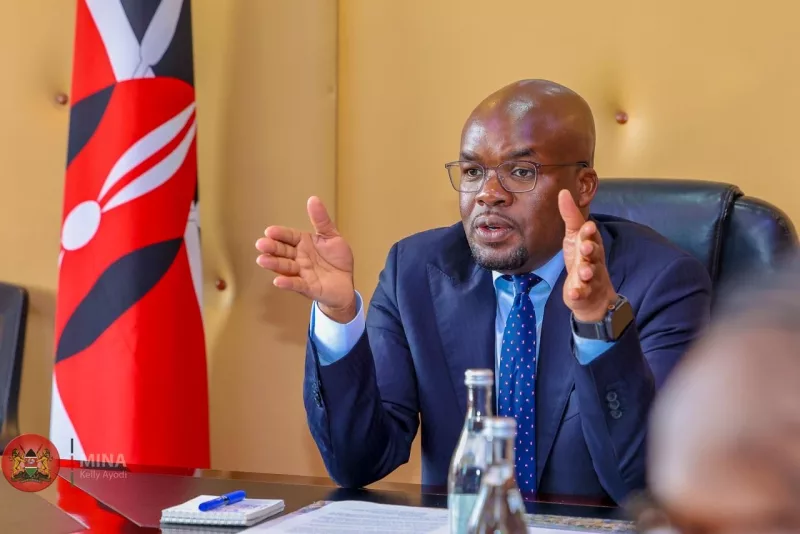
At the National Conference on Workplace Protection held at the Kenya School of Government, Lower Kabete, from May 25–26, 2026, delegates resolved to push for amendments to the Employment Act 2007 and the development of sector-wide standards on prevention, reporting, investigation and redress to strengthen workplace protection systems.
Appropriately themed 'Evidence to action for safe and decent workplaces in the public sector ', the conference reaffirmed Kenya’s commitment to revitalise workplace protection and advance ratification of ILO Convention 190.
Representatives from government institutions, development partners, civil society organisations, academia, employers’ and workers’ organisations and the private sector explored practical solutions for creating safer and more inclusive environments.
Dr Jane Kere Imbunya, Principal Secretary for Public Service and Human Capital Development, while officially opening the conference, underscored government’s resolve to protect workers as both a moral responsibility and a strategic investment to ensure a people-centred public service grounded in professionalism and respect for human dignity.
KSG Director General Prof Nura Mohamed described workplace protection as a governance, leadership and institutional performance imperative that has now moved to the centre of public sector reform discourse.
“Safe and decent workplaces are fundamental to institutional performance, influencing productivity and trust in leadership,” he said.
According to ILO Regional Chief Advisor, Caroline Njuki, global and local statistics show the widespread impact of workplace violence and harassment. A recent study estimates that gender-based violence and harassment cost Kenya’s private sector approximately Sh95.5 billion annually from low productivity and reduced working days.
Delegates reflected on Article 28 of the constitution, which guarantees every person the right to human dignity, and Article 29, which protects every individual from any form of violence, cruel, inhuman or degrading treatment, principles that remain central in addressing workplace sexual harassment and abuse.
Justice Njoki Ndung'u, a speaker at the Conference, stressed that harmful workplace behaviour thrives where silence, fear, retaliation and weak reporting systems exist. Mental health, employee dignity, trauma-informed reporting systems and domesticating ILO Convention 190 within Kenya’s legal and institutional framework must be prioritised.
Betty Gachire, Director, Institute of Gender and Social Development, an institute at KSG, admits that while women continue to face disproportionate exposure to various forms of abuse, men too experience psychological violence and intimidation that often go unreported. Creating safe spaces calls for deliberate shifts in institutional cultures that promote dignity, respect, fairness and inclusion for all.
Resolutions include stronger partnerships, greater investment in survivor support services, enhanced accountability, sustained public awareness and continued research and monitoring to promote safer and more inclusive workplaces across Kenya.
The conference was made possible through KSG’s MK Institute for Gender and Social Development in collaboration with partners, including Beyond Zero, International Labour Organization, International Finance Corporation (IFC), Oxfam and Coalition on Violence Against Women (Covaw).