In every functioning republic, there are offices that transcend the men who temporarily occupy them. The presidency is one such office. You may disagree with the president. You may oppose his policies. You may mobilise politically against him and vote him out. That is democracy. But the moment a nation begins normalising security breaches around its Head of State, it begins playing recklessly with national stability itself.
While Ruto remains the sitting president of the Republic of Kenya, I want him alive, secure and properly protected. Not because of who he is as an individual, but because of what the office represents.
The President of Kenya is not merely a politician. Under Article 131 of the Constitution of Kenya, the president is the Head of State and Government, and “a symbol of national unity.” The office also carries the constitutional responsibility of safeguarding the sovereignty of the Republic. In security doctrine, the protection of such a figure is not optional theatre; it is a strategic necessity. The collapse or compromise of presidential security sends dangerous signals internally and externally. It weakens state confidence, emboldens hostile actors and undermines public trust in national security institutions.
The Constitution itself anticipated this responsibility. Article 239 establishes Kenya’s national security organs as the Kenya Defence Forces, the National Intelligence Service and the National Police Service. Article 244 further obligates the National Police Service to strive for the highest standards of professionalism and discipline while preventing corruption and promoting accountability. The National Police Service Act establishes specialised formations mandated to protect state leadership, strategic installations and constitutional order. Standing Orders and VIP Protection doctrines globally are built around one principle: preservation of continuity of government.
That is why the repeated and publicly visible security breaches surrounding President Ruto should alarm every Kenyan, including his fiercest critics.
The latest incident in Kilifi is not isolated. Over the last three years, Kenyans have witnessed an uncomfortable pattern of near misses, crowd breaches, uncontrolled access points and questionable operational responses around the president. These are only the incidents captured publicly. The more frightening question is: how many close calls never make it to the public domain?
At some point, observant Kenyans noticed visible adjustments in presidential protection architecture, including changes in escort formations, operational posture and security vehicles. Such adjustments usually happen when security agencies recognise elevated threats, operational weaknesses or changing threat environments. Internationally, specialised presidential protection units often adopt layered security models involving advance teams, counter-surveillance, intelligence fusion, rapid extraction capability, perimeter control and crowd-dominance formations. Yet despite visible operational adjustments, the incidents continue.
That should worry the country.
Globally, presidential protection is treated as a “zero-failure mission.” The United States Secret Service, the MI5 and elite close-protection doctrines used across NATO-aligned states all emphasise concentric security rings, behavioural threat assessment, route sanitisation and advance intelligence coordination.
The Israeli Shin Bet doctrine similarly treats leadership protection as inseparable from national stability itself. In elite security doctrine globally, the one assignment that cannot repeatedly fail is the protection of the Head of State. If breaches become frequent, mature security systems ordinarily trigger command-level reviews, operational restructuring, redeployments or resignations because the stakes are too high for excuses.
Recent changes within the Presidential Escort Unit, including the transfer of Noah Maiyo and the appointment of William Sawe to lead the PEU, suggest that concerns around presidential security have already been acknowledged internally at the highest levels. But leadership changes alone are not enough. Serious accountability questions must still confront the entire senior security architecture surrounding presidential protection. The Inspector General of Police, the two Deputy IGs and the leadership of the National Intelligence Service cannot continue treating repeated public breaches as routine embarrassment rather than strategic warning signs. A state cannot continue exposing its president to avoidable vulnerabilities while those tasked with protecting him retain business-as-usual comfort.
This conversation is uncomfortable because Kenyans often reduce politics to tribal passion, online mockery and partisan celebration. But presidential security is not a meme. It is not a campaign slogan. It is not about whether one likes or dislikes William Ruto.
History repeatedly demonstrates that attacks on heads of state can trigger profound national instability. The assassination of Archduke Franz Ferdinand triggered the World War I. The shooting down of Juvénal Habyarimana’s plane ignited the Rwandan genocide and destabilised the Great Lakes region. Burundi’s political instability has repeatedly revolved around contested power transitions and attacks on state authority. Once the office of the presidency becomes physically vulnerable, nations can descend into chaos with terrifying speed.
Kenya is approaching a high-stakes election cycle. Political temperatures are rising. Economic frustration is deepening. Public anger is becoming more volatile. This is precisely the moment when security institutions should be tightening presidential protection, not appearing overwhelmed by elementary operational failures.
And there is a larger question ordinary Kenyans must ask themselves: if our security agencies cannot adequately secure the single most protected individual in the Republic, what confidence should wananchi have in their own protection?
That question alone should shake the establishment.
Protecting the president is not support for his politics. It is support for the constitutional order and national stability. We can oppose him democratically while insisting that no harm comes to him physically.
Because once a country starts gambling with the security of its Head of State, it may soon discover that the joke was never funny at all.
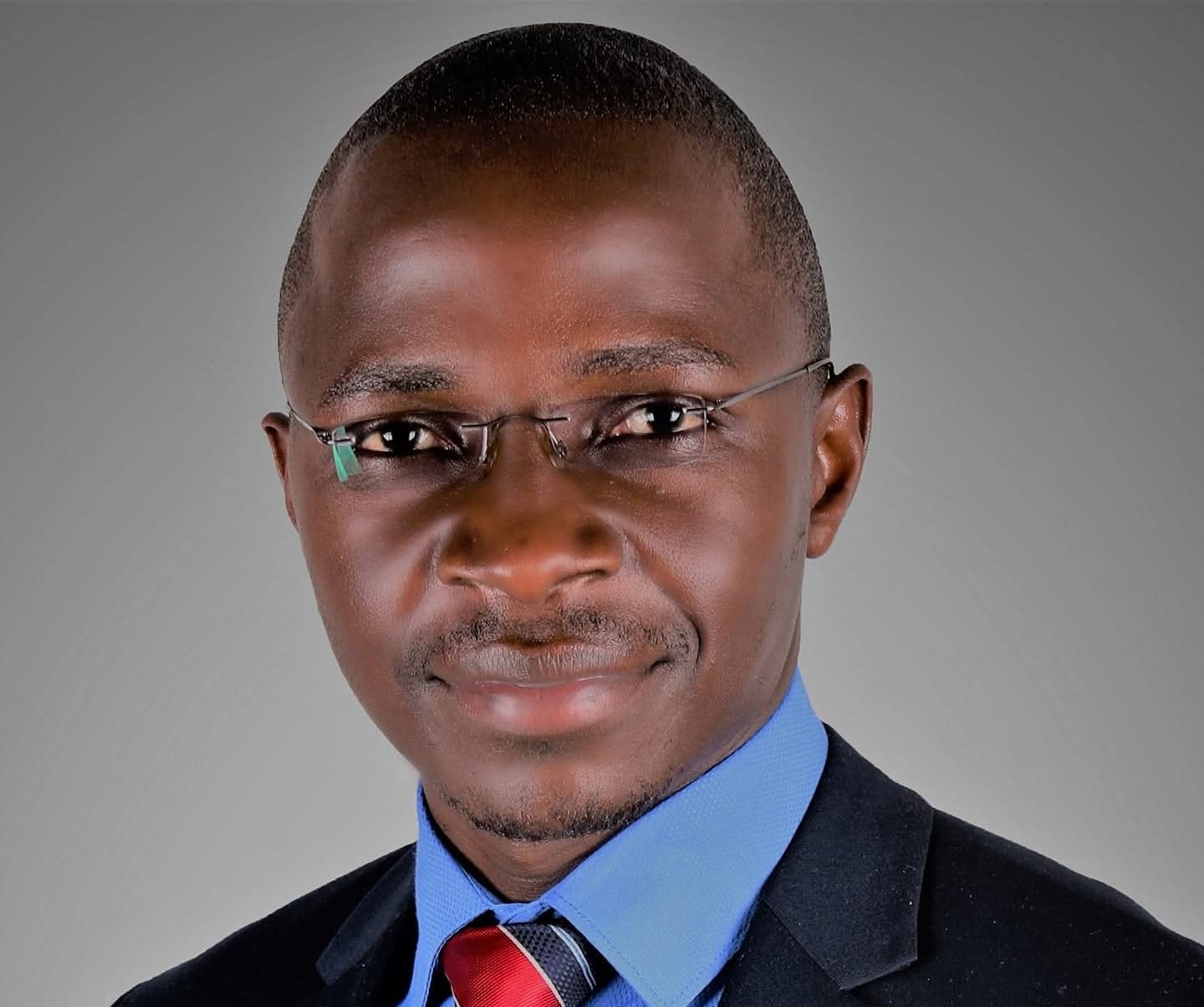
Maliba Nyajayi is the Executive Director, Open Future Hub (OFH). X: @MalibaArnold.