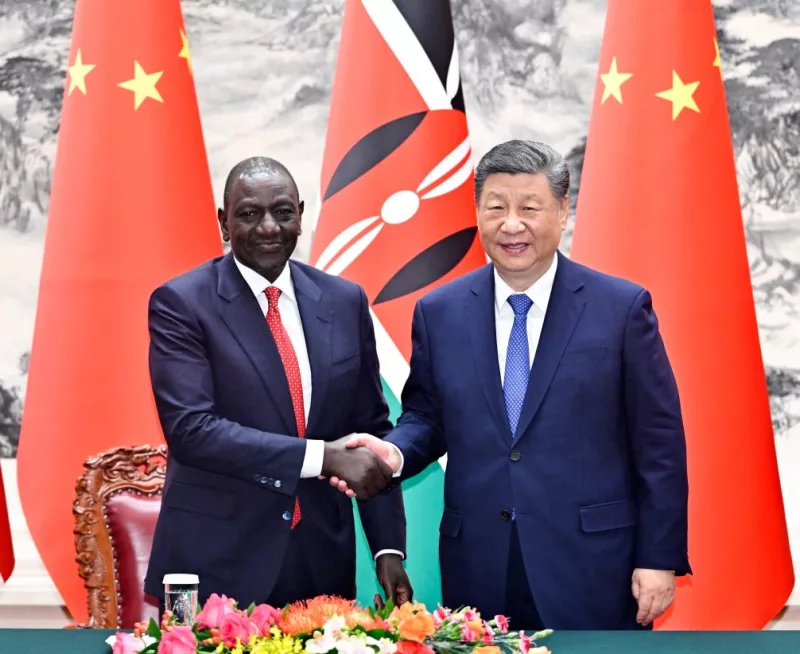
When President William Ruto presided over the 120th anniversary celebrations of Maseno School, he assured Kenyans the education sector was not in crisis.
He pointed to several policy and implementation interventions introduced by his administration as evidence of a government committed to reforming education and improving learning outcomes.
Yet beyond the optimism of official speeches and policy pronouncements lies a painful reality: Kenya’s education sector is in deep crisis. This crisis is not solely the making of the current administration.
It is the product of decades of policy inconsistency, chronic underfunding, weak governance, political interference and reforms implemented without adequate institutional preparedness.
Successive governments expanded access to education without matching that expansion with sufficient investment in infrastructure, staffing, research and institutional sustainability.
The introduction of free primary and subsidised secondary education dramatically increased enrolment but exposed systemic weaknesses that were never fully addressed.
Universities multiplied rapidly across the country, often driven more by political symbolism and regional balancing than by strategic national planning. The result has been overstretched institutions, declining quality, mounting debts and graduates entering a shrinking and highly competitive labour market.
However, while the Kenya Kwanza administration inherited a fragile sector, some of its reforms have intensified rather than resolved the existing challenges.
The new university funding model is a prime example. Introduced as a fair and needs-based financing mechanism, the model has instead generated confusion, anxietyand operational uncertainty.
Students and parents remain unsure about scholarships, loans and fee obligations, while universities themselves cannot predict revenue streams with certainty. A financing model that was intended to create equity has instead produced instability and mistrust.
Public universities today are in severe distress. Many institutions struggle to pay salaries, remit statutory deductions, maintain infrastructure, or support research and innovation. Delayed salaries and unimplemented collective bargaining agreements have triggered recurring tensions between university staff and management.
Yet one of the most overlooked dimensions of the university crisis lies in governance —particularly the composition and conduct of university councils. The President, through the Cabinet Secretary for Education, continues to appoint council members who are often out of their depth with the running and management of universities.
Many lack the academic, governance, financial, or institutional experience necessary to oversee complex higher education institutions. Instead of providing strategic oversight and safeguarding institutional integrity, some councils have become centres of interference, micromanagement, and political patronage.
This environment creates instability in institutional leadership. Vice-chancellors spend more time navigating council politics and defending themselves from interference than providing academic and strategic leadership.
Decisions on recruitment, procurement, promotions and institutional priorities become vulnerable to political pressure and personal interests. Ultimately, students, lecturers, researchers and the broader public bear the cost of this governance dysfunction.
A serious review of university councils is therefore urgently needed. Kenya must rethink the qualifications, appointment procedures, composition and rules of engagement governing university councils.
Membership should be based on demonstrable expertise in higher education, finance, law, research, governance, public administration, or industry leadership. Council positions should never become rewards for political loyalty or retirement packages for politically connected individuals.
The crisis extends beyond universities. The implementation of the competency-based education has exposed serious gaps in planning and resource allocation. While CBE’s philosophy is progressive, its implementation has been rushed and uneven.
Schools lack adequate classrooms, workshops, laboratories and trained teachers. Parents continue to shoulder hidden costs despite promises of affordability.
Similarly, the digital learning agenda remains disconnected from the realities of many rural schools that still lack electricity, internet access, and basic infrastructure.
At the centre of the education crisis is the absence of predictable and sustainable financing. Education institutions have monthly obligations — salaries, electricity, water, internet services, examinations, maintenance and statutory remittances — yet government disbursements remain irregular and haphazard.
University managers, principals and school heads operate in perpetual uncertainty, unable to plan effectively because funding arrives late, inconsistently, or below budgetary expectations.
Kenya’s chaotic and unpredictable education financing system has entrenched a culture of crisis management across learning institutions, particularly public universities.
Universities are increasingly unable to meet basic obligations such as paying salaries, supporting research, maintaining infrastructure and sustaining academic programmes because government disbursements are irregular and unreliable. Consequently, educational leadership has been reduced to constant firefighting instead of focusing on innovation, planning, and quality improvement.
To reverse this decline, Kenya requires a comprehensive reset of the education sector. Educational reforms must be guided by long-term national consensus rather than shifting political interests.
The university funding model should be reviewed transparently and inclusively to restore trust and sustainability. Public universities also need governance reforms that emphasise professionalism, competence, accountability and institutional autonomy, while improving the welfare of lecturers through timely remuneration and research support.
Most importantly, the government must adopt a structured and legally enforceable funding disbursement framework to ensure predictability, stability, and effective institutional planning.
Mr President, acknowledging that the education sector is in crisis is not an admission of failure. It is the beginning of honest reform.