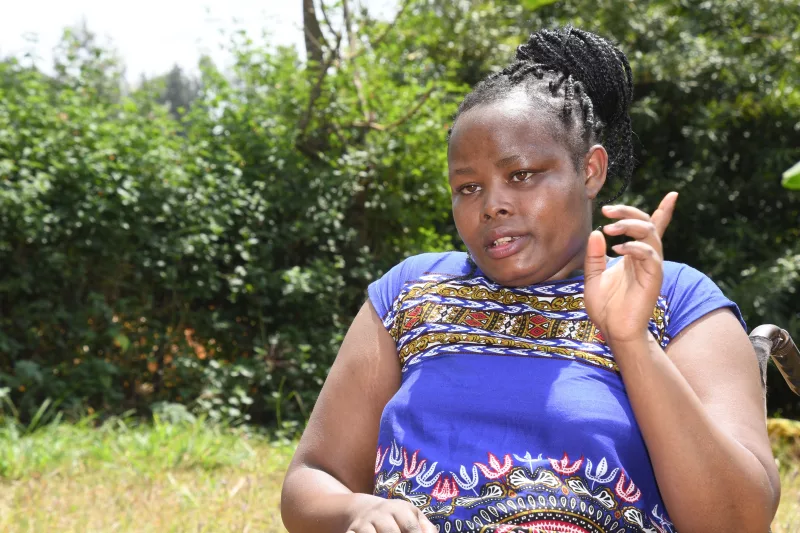
 Matome Mbata, Africa Market Manager at Wines of South Africa (WoSA) and Sylvia Karanja, founder of Sip&Savour Atelier and East Africa lead for WoSA during the There's Sunshine Inside Wines of South East Africa Tour held in Nairobi on May 15-16 /HANDOUT
Something is shifting on the Kenyan drinks scene. Wine, once considered a niche indulgence for the well-travelled or the well-heeled, is increasingly becoming the drink of choice for a new generation of urban Kenyans who are just as likely to pair a Chenin Blanc with a weekday lunch as they are to reach for a spirit on a Friday night.
Wine registered moderate volume growth in Kenya in 2024 and 2025, with over 3.1 million litres in imports of South African wine. Industry insiders say the more significant impact is not just how much wine Kenyans are drinking, but how they are drinking it, with curiosity, discernment, and a growing fluency in grape varieties, terroir, and food pairings that would have been unthinkable a decade ago.
Bringing it on May 15, 2026, at Nairobi’s Social House, champagne flutes were barely set down before the conversation started. The air was warm with a particular kind of excitement, the kind that comes not from obligation but from genuine discovery.
Sommeliers in crisp linen, hotel buyers with notebooks, lifestyle influencers cradling Chenin Blancs, and seasoned importers swapping business cards with producers from Cape Town and Stellenbosch. Wines of South Africa (WOSA) had come to Kenya, and by all accounts, Kenya had been waiting.
This was the inaugural WOSA East Africa showcase, a full-day affair, that moved through three distinct registers. The morning opened with a business-to-business session, bringing South African producers face-to-face with Kenyan trade representatives for commercial conversations. The afternoon pivoted to a masterclass, with two of South Africa's most storied grapes, Pinotage and Chenin Blanc, under the spotlight. By evening, the event had opened its doors to hoteliers, lifestyle partners, and consumers eager to taste wines both already on the Kenyan market and those still waiting to make their debut.
"It was an incredible event. It was successful," said Sylvia Karanja, founder of Sip & Savour Atelier and WOSA's East Africa Lead, her tone measured but clearly pleased. "We got very positive feedback and were very excited to just have more of this kind of event."
An African wine, for African palates
At the heart of the day's programme was Pinotage, a grape as singular as the continent it comes from. Developed in 1925 at the University of Stellenbosch by viticulturist AI Perold, Pinotage is a cross between Pinot Noir and Cinsault, and it grows nowhere else on earth with the same cultural or agricultural weight. It is, quite literally, Africa's own grape.
For Karanja, this is more than a talking point. It is personal.
"Pinotage is African, so we need to drink Pinotage," she said, with the quiet conviction of someone who has made this argument many times and intends to keep making it. "We need to talk about it; we need to learn more about it and enjoy it. It is a signature African grape, grown first in Africa, for Africans."
Flanking Pinotage on the masterclass programme was Chenin Blanc, South Africa's most planted grape variety. Originally from France's Loire Valley, Chenin Blanc found a second home in South Africa's diverse terroir, and today the country's vineyard acreage under this variety exceeds even that of the Loire itself. Versatile and expressive, it produces everything from bone-dry, mineral-driven whites to rich, oaked wines and even late-harvest dessert styles, making it a natural ambassador for a market, like Kenya's, that is still finding its full range of tastes.
Matome Mbatha, WOSA's Africa Market Manager, based in Stellenbosch, was the man behind much of the day's energy, and behind the broader strategy of investing in East Africa as a priority market.
"East Africa is the fastest growing in terms of volumes that we export. Kenya is the biggest both in volume and value," he said. “So, we're upselling. Kenyans have now shifted from just taking wine because it's been introduced. They research it. They want the finest. That's why they are willing to pay the price, which is high end."
For him, the day’s theme Taste Sunshine Inside was not poetic branding, it was literal.
“South Africa has sunshine 365 days,” he laughed. “That brings diversity in our wine, the soils, the sun, the atmosphere… that’s what we want to celebrate.”
Mbatha has watched the Kenyan palate mature over a decade of training programmes.
“We’ve done introductory wine courses. Thousands of young people in Kenya today are now sommeliers. Some work in cruise ships, hotels, restaurants.”
“What we’ve done in the last 10 years is paying off.”
 Wine importers, South African wine producers, hospitality stakeholders and guests pose for a photo with Matome Mbata, Africa market manager at Wine of South Africa (WoSA) and Sylvia Karanja, founder of Sip & Savour Atelier and East Africa lead for WoSA during the "There's Sunshine Inside East Africa Tour held in Nairobi on May 15-16 /HANDOUT
Wine importers, South African wine producers, hospitality stakeholders and guests pose for a photo with Matome Mbatha, Africa Market Manager at Wines of South Africa (WoSA), and Sylvia Karanja, Founder of Sip & Savour Atelier and East Africa Lead for WoSA, during the “There’s Sunshine Inside” East Africa Tour held in Nairobi on May 15–16, 2026.
From Four Cousins to Cap Classique
The story of South African wine in Kenya is, in some ways, a story of palate education. Gradual, organic, and now accelerating in ways that are exciting even to the people who helped set it in motion.
Wine in Kenya began, for many consumers, with approachable, fruit-forward labels. Brands like Robertsons and Four Cousins; sweet, accessible, unpretentious, were the handshake. They were not the whole conversation.
"The introduction of South African wine was from the basics and something very simple," said Cynthia Mwangi, a media personality and lifestyle influencer who attended the event. "The Robertsons, the Four Cousins, all those were very sweet wines. And I think I'm very grateful that that was our version or introduction of wines. From there, you can see people appreciating a broader perspective."
That broader perspective now includes Chenin Blancs, Sauvignon Blancs, structured Pinotages, and increasingly, Méthode Cap Classique (MCC), South Africa's answer to Champagne. Made using the traditional method, Cap Classique sparkling wines have become a quiet symbol of South Africa's premium ambitions in Kenya.
"I am very keen on Cap Classique," said Mwangi. "The fact that you can drink wine or a version of champagne that's purely made in Africa, and that is huge. Being able to walk into a restaurant and ask for a Cap Classique and you get it. That has blown me away."
The business of wine
On the trade floor, the conversations were more grounded but no less energised. Judy Ngene, CEO of Galena Wine Importers and co-founder of the Wine Fair, was showcasing wines from her South African partners at Diverse Shop Wine Estate, some already available in the Kenyan market, others being considered for introduction.
For Ngene, the day was not just a tasting event. It was market intelligence.
"Kenyans are curious, generally, even when it comes to wine. So, we're not very hell-bent or stuck on one style," she observed. "And more recently, we're looking at more premium wine consumption. People are able to spend a little bit more on wine, which is good for us."
She was candid, too, about the balancing act facing any importer working in Kenya's wine sector: quality versus price. "We are all price conscious," she said. "Definitely people look at the price. However, they also don't want to compromise on quality. It's perfect balance."
What struck her most, though, was not economics, it was storytelling. Increasingly, Kenyan consumers are not just buying wine; they are buying into narratives. The identity behind the bottle matters.
"We find people moving towards brands that are female-owned, black-owned, because there's a story and you feel like it resonates with you," she said. "So, storytelling is actually very, very important."
A market coming of age
Mbatha, who has watched the Kenyan wine scene evolve over more than a decade, sees the maturation not just in what people drink, but in how they talk about wine. WOSA has invested heavily in education, running introductory wine courses that have, over the years, helped produce thousands of young Kenyan sommeliers, many of whom now work in the country's growing hotel and restaurant sector.
"We have done introductory wine courses. Many thousands of young people in Kenya who today, some are working on cruise ships," he said. "Many of them are placed in restaurants and hotels because they are now sommeliers. And this is one country that's got the biggest number of sommeliers."
For him, the vision extends beyond Kenya's borders, and beyond wine itself. He spoke with warmth about the possibilities of intra-African trade, of Kenyan coffee and tea finding their way onto restaurant menus in Cape Town, just as South African wines claim their place on tables in Nairobi.
"The drive from intra-trade is critical. We want to see more of it," he said. "We want to see opportunities created; their coffees and teas being served in South Africa. That's how we all grow."
Something in the sunshine
South African wine has a geography that works in its favour. The vineyards of the Western Cape grow near the Atlantic Ocean, cooled by coastal breezes even as the sun blazes overhead. It is this interplay, heat and cool, sun and wind, that the industry has long called terroir, borrowing a word from French winemaking tradition to describe something distinctly its own.
"Taste Sunshine Inside" was the theme of the day's proceedings. It is a phrase that captures something real about these wines: their warmth, their fruit-forwardness, their exuberance.
But as the afternoon wound into evening at Social House, what lingered most was something harder to bottle, the sense that this was not just a wine event. It was a conversation between two parts of Africa, one with centuries of viticulture and another finding its own language for what it enjoys, what it values, and what it wants next.
"For the East African or African consumer," said Karanja, "we need to appreciate more what Africa is producing.