In Kenya today, a young generation armed with smartphones, hashtags and unapologetic demands for accountability is rewriting the rules of engagement. Yet one colonial-era relic stubbornly refuses to die—the imperial presidency.
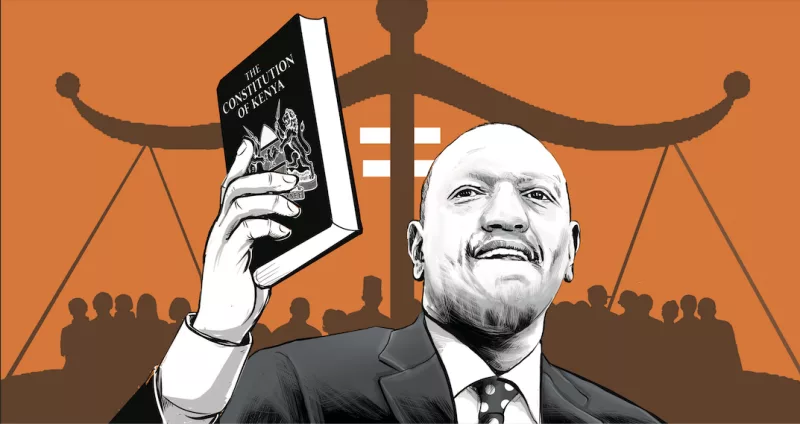
This hyper-centralised executive, born in the first decade ofindependence,, remains the root of our most persistent ills, top among them, corruption, institutional capture, human rights abuses and executive overreach. In an era of heightened political and rights awareness, its continued existence is an affront to the very constitution we claim to uphold.
The imperial presidency was not an accident. Kenya’s 1963 independence constitution was deliberately balanced: a parliamentary system with a prime minister, a ceremonial governor-general who represented a separate head of state, a bicameral legislature and regional governments (majimbo).
In the year of Kenya’s independence, Queen Elizabeth was the Head of State, Jomo Kenyatta was the Prime Minister, Sir Malcolm MacDonald was the Governor General and Major General Ian Freeland was Kenya's commander-in-chief.
Perhaps Kenyans did not countenance the folly of concentrating all those powers in the presidency when Kenya became a republic in 1964, but from that time until 1969, Jomo Kenyatta’s government rammed through 10 swift amendments. These dismantled the Senate, abolished regionalism, fused head-of-state and head-of-government powers into an executive presidency, and made constitutional change easier. The Imperial Presidency was thus entrenched.
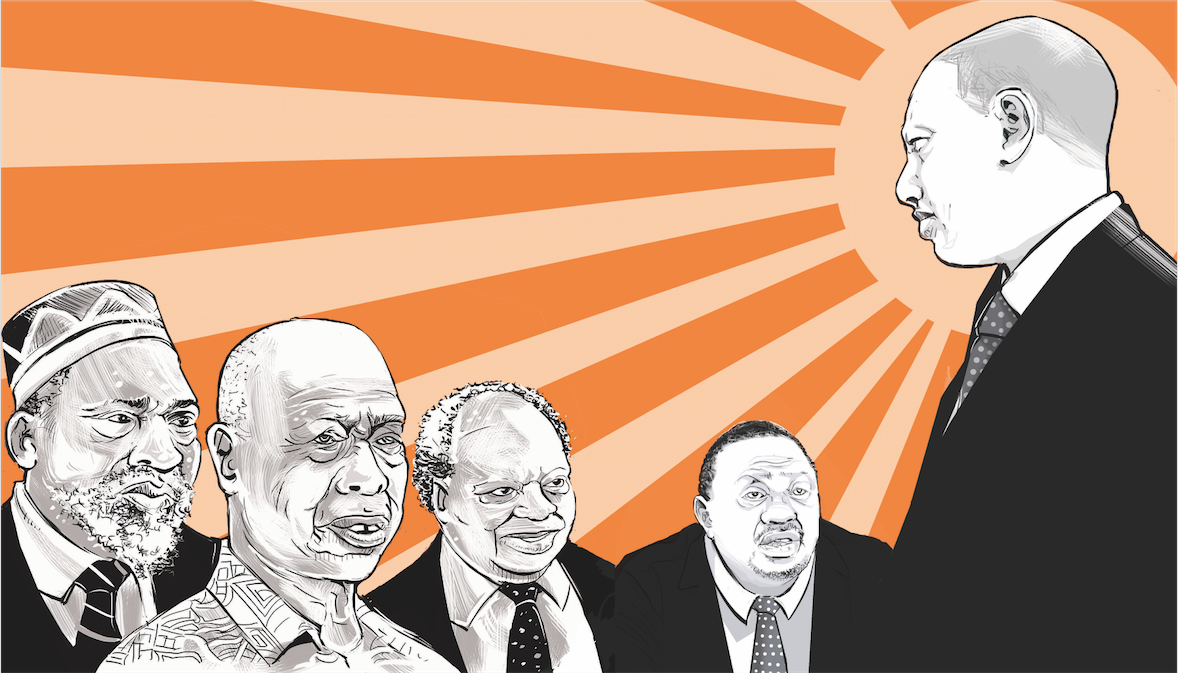
By 1969 the document had been consolidated into a new framework that placed near-absolute authority in one man. Daniel arap Moi inherited and perfected this state machinery from 1978, ruling as both politician and de facto monarch until 2002. The kitchen cabinet, patronage networks and a subservient parliament and judiciary completed the architecture of unaccountable power.
The 2010 constitution was supposed to bury this monster. Devolution, a Bill of Rights, an independent judiciary and term limits were hailed as revolutionary. Yet the political class, in the Naivasha Accord of 2005, ensured the presidency retained its imperial core: the president remains head of state, head of government and commander in chief of the defence forces.
Executive authority is still vested overwhelmingly in one directly elected politician. The hybrid parliamentary model demanded by Kenyans at the Constitution of Kenya Review Commission (CKRC) hearings was quietly discarded.
That public verdict, gathered in every constituency between 2001 and 2002, was unambiguous. “Everyone thinks that the president has too many powers,” the CKRC reported. Citizens called for a ceremonial president, a prime minister answerable to Parliament, genuine devolution and mechanisms to prevent any single individual from dominating the state. The political elite listened just enough to win legitimacy, then engineered a compromise that preserved their own access to the ultimate prize.
Sixteen years on, the failures are glaring. Grand corruption scandals such as NYS, Eurobond, Covid-19 medical supplies and more recent procurement sagas continue to drain billions while the presidency sits at the apex of patronage.
Police brutality during protests, selective prosecution of opponents and the weaponisation of state agencies against critics all flow from a single source: a president who controls appointments, budgets, security and the pardon power.
In the age of rights awareness, young Kenyans have taken to the streets and social media demanding accountability. Yet the system still treats dissent as a threat to be crushed rather than a democratic right to be protected.
This is structural betrayal. Article 1(2) of the 2010 constitution is crystal clear: “The people may exercise their sovereign power either directly or through their democratically elected representatives.” The president can never wield direct sovereign power. It is delegated to him. Kenya is a sovereign republic.
Sovereignty is not a slogan; it is a living principle derived from the general will of the people.
Concentrating the roles of president, commander-in-chief and head of government in one partisan politician directly contradicts that principle. It reduces the people’s direct sovereign voice to a five-year ritual at the ballot box, after which one individual wields powers once reserved for monarchs and colonial governors.
The CKRC process captured the people’s will: they rejected the imperial model. The 2010 compromise through the Committee of Experts failed to honour it fully. In this new age of political consciousness, fuelled by Gen Z, social media and a judiciary that has occasionally pushed back, we must finish the job.
It is time to delink these three roles from a single individual. A ceremonial head of state, an elected prime minister as head of government accountable to parliament, and a professional military command structure insulated from partisan control would align governance with the spirit of our constitution and the expressed will of Kenyans.
The imperial presidency was designed for control, not service. It has failed Kenya for six decades. The sovereign people who spoke clearly in 2001–2002, and who continue to speak through protests, court petitions and digital activism, deserve better. The time to dismantle it is now. Sovereignty is not delegated forever; it can, and must, be reclaimed directly.
Social impact adviser, social consciousness theorist, trainer and speaker, agronomist consultant for golf courses and sportsfields and author of 'The Gigantomachy of Samaismela' and 'The Trouble with Kenya: McKenzian Blueprint'