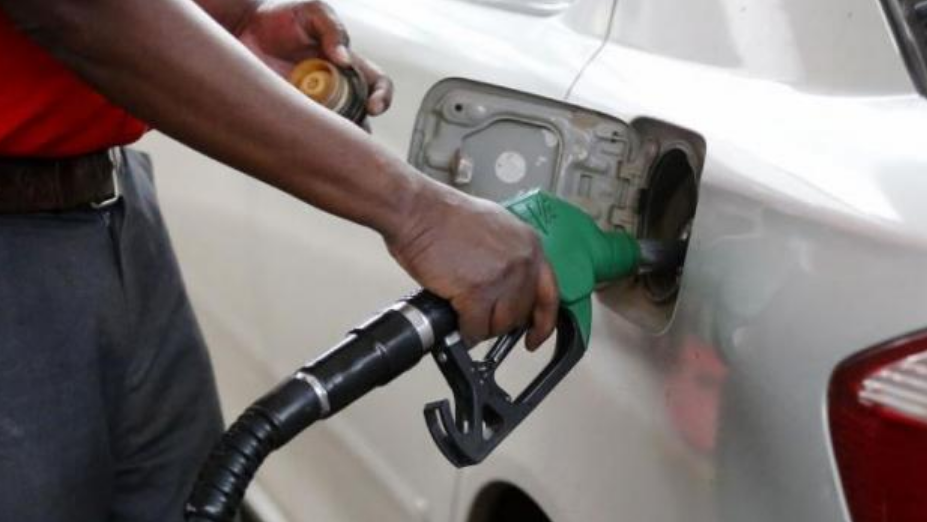
 Fuel pump/FILE
The Energy and Petroleum Regulatory Authority (EPRA) has revised the maximum retail pump prices for petroleum products across Kenya, with the new rates taking effect from May 19, 2026, to June 14, 2026.
“The Energy and Petroleum Regulatory Authority (EPRA) has recalculated the maximum retail pump prices that will be in force from 19th May 2026 to 14th June 2026 following a petition by public transport sector operators on the need to minimise the risk of motor fuel adulteration that may arise due to the big price differential between Diesel and Kerosene.”
Under the latest review, diesel prices in Nairobi have been reduced by Sh10.06 per litre. Kerosene has increased sharply by Sh38.60 per litre. Super petrol remains unchanged in the new pricing cycle.
In Nairobi, motorists will now pay Sh232.86 per litre for diesel, down from the previous rate. Kerosene will retail at Sh191.38 per litre. Super petrol remains at Sh214.25 per litre.
Across other major towns, the revised prices show similar adjustments, with variations reflecting transport and distribution costs.
In Mombasa, super petrol will retail at Sh211.09, diesel at Sh229.58 and kerosene at Sh188.09 per litre. In Nakuru, super petrol will cost Sh213.15, diesel Sh232.27 and kerosene Sh190.81.
Eldoret will see super petrol priced at Sh213.92, diesel at Sh233.09 and kerosene at Sh191.63 per litre. Kisumu will match closely, with super petrol at Sh213.91, diesel at Sh233.08 and kerosene at Sh191.63.
In Siaya, super petrol will retail at Sh214.10, diesel at Sh233.30 and kerosene at Sh191.84 per litre. Meru will record higher prices, with super petrol at Sh218.89, diesel at Sh237.85 and kerosene at Sh196.35.
Isiolo will see super petrol at Sh218.67, diesel at Sh237.59 and kerosene at Sh196.11 per litre. Nyeri will have super petrol at Sh216.12, diesel at Sh234.87 and kerosene at Sh193.38.
EPRA says the revision follows concerns raised by public transport operators over pricing gaps that could encourage fuel adulteration. The regulator notes that stabilisation mechanisms have been adjusted in the current cycle.
The authority also indicates that taxes and levies remain a key driver of final pump prices. These include excise duty, VAT, road maintenance levy and petroleum development charges.
The pricing structure reflects a balance between market conditions, taxation and sector concerns. EPRA maintains that monthly reviews will continue as required, with future adjustments dependent on global oil trends and domestic market dynamics.