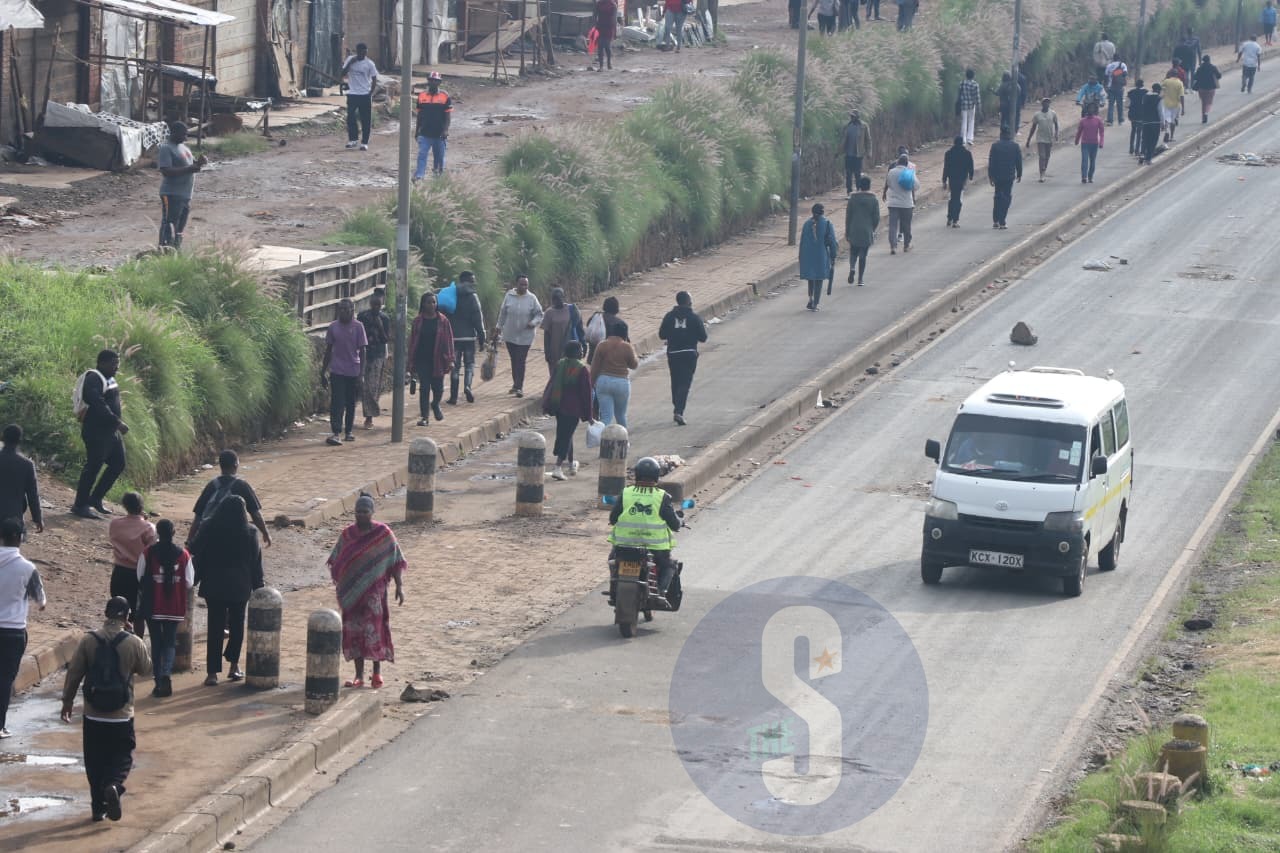
Limited public transport services were observed across different routes on Tuesday as the nationwide public transport strike entered its second day, with many commuters forced to walk to their destinations.
At the same time, all major roads leading into the city remained operational, with the Kenya Red Cross reporting “no reports of major disruption or traffic snarl-ups” despite the ongoing strike and the aftermath of yesterday’s protests.
“Most schools around the city also remained closed, with learners advised to stay at home due to safety concerns linked to the continued transport disruption,” the organisation said.
In a statement shared on social media, the Kenya Red Cross said it continues to monitor the situation.
In Nairobi, sections of the busy Thika Superhighway recorded light traffic flow, a rare scene on one of the country’s busiest roads.
Large stretches of the highway remained clear for hours as some commuters struggled to find transport.
Some passengers were forced to walk long distances after failing to secure transport.
The strike has been fueled by growing frustration among PSV operators over the sharp increase in fuel prices, which they said has made business operations difficult.
The strike follows Monday’s protests over the recent fuel price hike, which disrupted transport operations in several parts of the city and left many commuters stranded as fares increased sharply during the morning rush hour.
During the demonstrations, hundreds of passengers waited for hours at bus stages while others opted to trek long distances after public service vehicle operators either withdrew services or hiked fares dramatically.
Motorists and operators under the Matatu Owners Association (MOA) vowed to maintain pressure against rising fuel costs, even as disruptions continue across parts of the country.
President Albert Karagacha said the movement would not back down, arguing that recent fuel price increases and taxation policies were hurting both operators and ordinary Kenyans.
“We won’t bow down,” Karagacha said, defending the decision to take industrial action.
The transport sector has continued to pile pressure on the government over fuel pricing and taxation policies, warning that the rising cost of operations is affecting both operators and consumers.