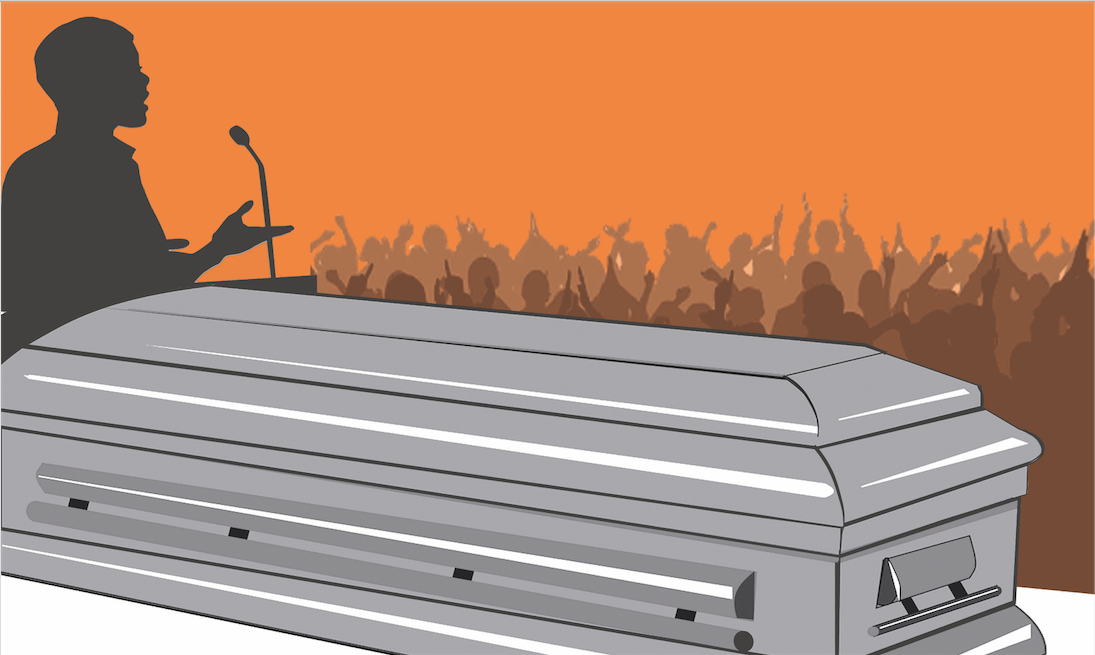
In Kenya, funerals have turned into political events. What used to be a time for mourning and coming together is now full of speeches and campaigns. Funerals, once focused on respect and healing, are now often interrupted by politicians seeking to win support or outdo one another.
Politicians often show up to funerals with big convoys, security and cheering crowds. Many hardly know the family or the person who died. Once they get the microphone, they use the funeral to talk about politics, settle political scores and attack their rivals. People who came to mourn end up caught in the middle of these political fights. After making their speeches, the politicians usually leave before the funeral is even over.
This makes us ask hard questions. What happened to respecting the dead? Why do we let politicians take over these moments?
One reason this happens is that funerals are expensive, and many families struggle to pay for them. Politicians take advantage of this by offering donations, but these often come with strings attached. They expect to speak and be listened to. Families feel they cannot say no because they need the help. As a result, funerals lose their real meaning and become just another place for politics.
But there are ways we can break this cycle. Communities should continue to come together for fundraising or through mutual aid groups, supporting grieving families without relying on politicians. If neighbours and friends contribute what they can, even small amounts, it helps to share the burden together. This kind of support is grounded in honest care and not in the hope of winning votes or influence, and can help restore the true spirit of unity and respect to our funerals.
It’s hard not to notice the irony. These politicians who take over funerals are rarely there to help families afterwards. They are missing when widows and widowers are struggling or when students have been sent home because of school fees arrears. They only show up to talk, then disappear, and may only come back in the next moment of grief.
But things can be different. This year, when the son of former senator Johnstone Muthama and current Senator Agnes Kavindu died, the family said there would be no political speeches at the funeral. And it was like that. This was a strong and welcome choice. It reminded people that funerals should be about respect and support, not political wars.
It also showed something uncomfortable. Wealthier families can keep politics out of funerals by making them private or issuing strong warnings that would be respected. Ordinary Kenyans, who often struggle with money, cannot do this as easily and are more likely to be used by politicians during times of grief.
Kenya’s constitution clearly speaks to human dignity. Article 28 affirms that every person has inherent dignity and the right to have that dignity respected and protected; a right that should not be extinguished upon death.
Equally, Chapter Six on leadership and integrity demands ethical conduct, morality and respect from public officers. Turning funerals into campaign platforms violates social decency and the moral spirit upon which public leadership is meant to stand.
With elections coming up, using funerals for politics will probably get worse. But we need to ask whether we should keep letting politics take over these moments. Certainly not. Funerals should be about remembering, healing and respect. We must protect the dignity of our departed kin.
Programme Manager for Political Accountability in State Institutions at the Kenya Human Rights Commission