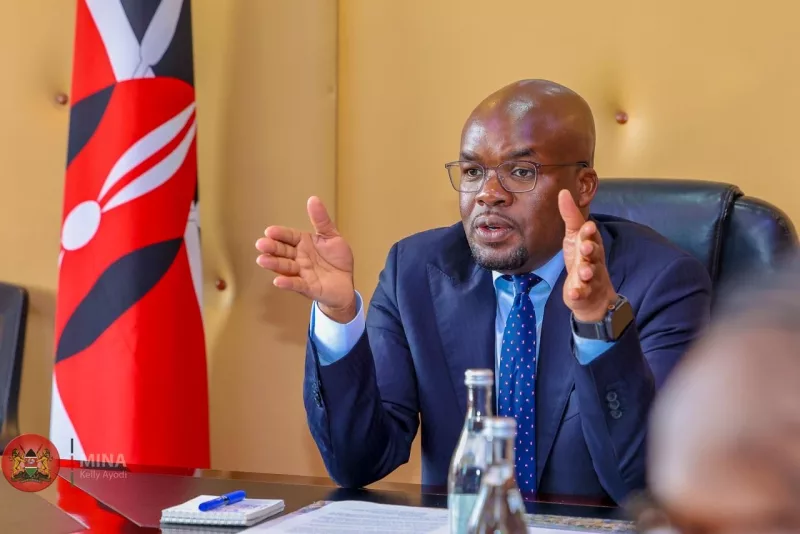
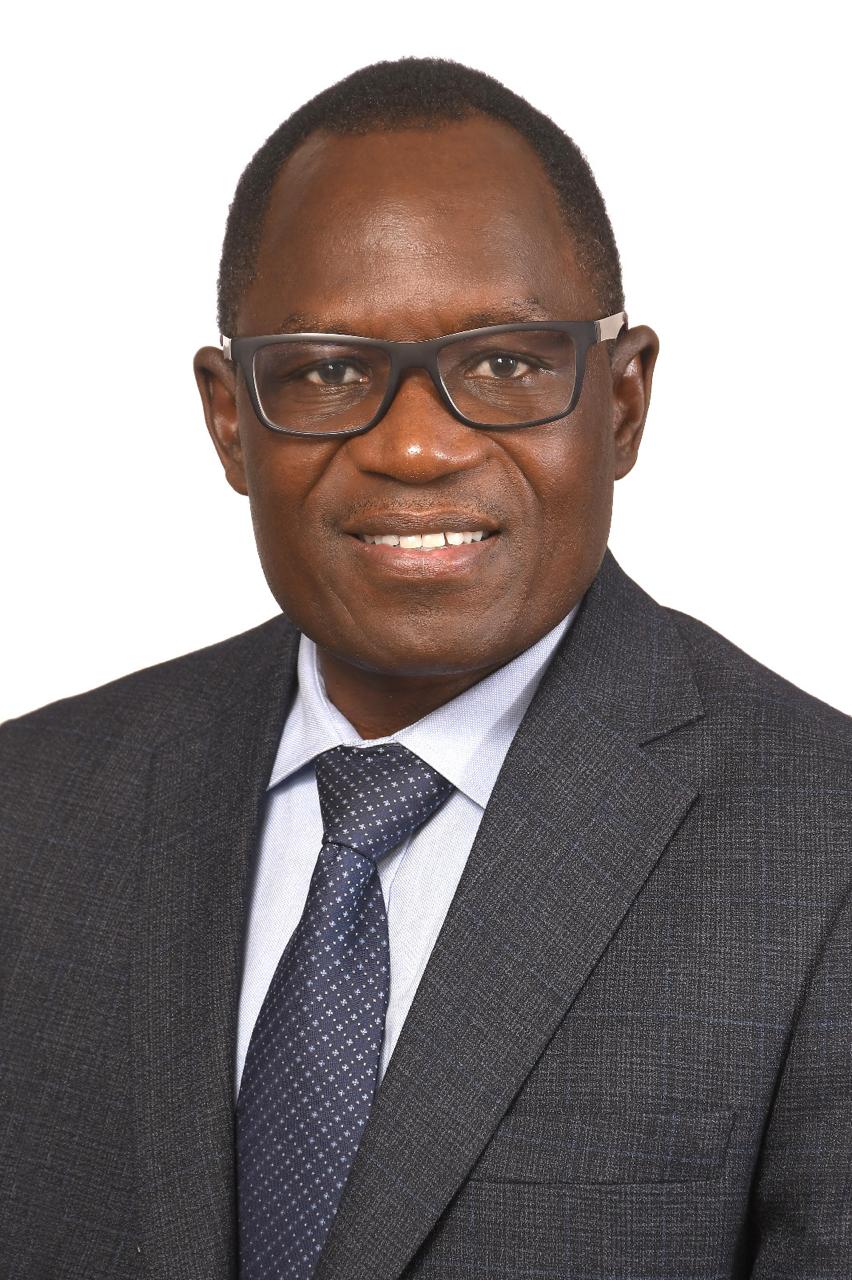
 Stephen Isaboke, Principal Secretary for Broadcasting and Telecommunications in the Ministry of Information, Communications and the Digital Economy./HANDOUT
In today’s digital age, we are experiencing a shift in how we share and receive information. While we have more data at our fingertips than ever before, it has become increasingly complex for the public to tell the difference between verified truth and sophisticated digital falsehoods.
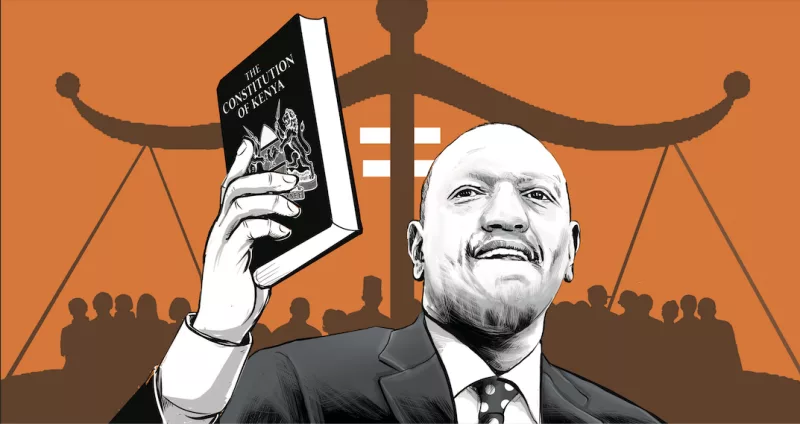
This challenge was underscored during President William Ruto’s official visit to Rome in April 2026. Addressing the Kenyan diaspora, the President cautioned against relying on social media as a primary news source, noting that digital propaganda is systematically used to distort Kenya's development progress. He asserted that a vast majority of online narratives are driven by "fake news" and deliberate disinformation.
The President identified these distorted narratives as weaponized tools for political mobilisation designed to engineer public skepticism. "If you go to social media today," he remarked, "you'll think there is nothing good happening in Kenya."
By defining social media as a battlefield of intentional manipulation, he illustrated how digital platforms generate a negative outlook that contradicts the reality of the country's economic transformation.
President Ruto urged the diaspora to prioritize verified information over ungrounded narratives. He reassured the audience that despite organized digital skepticism, the government’s economic agenda remains on course. This warning serves as a critical reminder: in an age of viral falsehoods, information discernment is a core pillar of national security.
This presidential caution underscores a broader strategic reality that anchored the Connected Africa Summit 2026. Addressing delegates in Nairobi, I emphasized that the weaponization of information has transcended being a mere technical glitch; it has evolved into a fundamental threat to our social fabric. When technology is leveraged to create realistic but fake videos—known as deepfakes—it ceases to be a communication hurdle and becomes a direct challenge to national security.
We are entering an era where AI weaponization extends beyond the physical battlefield to include 'information oratory' bots, automated cyberattacks, and generative models designed to undermine our financial markets.
This shift marks the beginning of what Bill Gates described in his recent reflections on The Road Ahead as the transition into an "Artificial Society." Gates argues that "of all the things humans have ever created, AI will change society the most," noting that while it offers immense opportunities, it also creates a world where the stakes for truth are higher than ever before.
The challenge of distinguishing truth from machine-generated fiction is already measurable. According to the McKinsey 2025/2026 AI Trust Maturity reports, a staggering 63% of users are now unable to distinguish between human-generated and AI-generated content. This "trust gap" is the playground where digital munitions are most effective.
Winston Churchill’s 1943 assertion that "the empires of the future are the empires of the mind" predicted a fundamental shift from territorial dominance to power built on knowledge, innovation, and intellectual capital. In the 21st century, global influence is increasingly determined by technological advancements, artificial intelligence, and cultural soft power rather than traditional military conquest.
This issue is especially relevant for Kenya. Recent research shows that over 72% of our citizens are concerned about the spread of unverified news. Our vulnerability is partly due to how much time we spend online; Kenya’s 18.4 million active social media users spend an average of four hours every day on the internet, double the global average.
Because many people feel a trust gap regarding the information they see, these digital platforms can unfortunately become frontlines for cognitive warfare, where confusion is engineered to weaken public resolve. Our goal as a Government is to close this gap by providing accurate, timely, and credible information while hardening our defenses against these digital munitions.
One of the most complex parts of this new technology is what we call the "linguistic blindspot. Most global AI systems are built to understand English, which means they often miss the nuances of our local languages like Swahili and other indigenous tongues. If a harmful message is spread in a local language, global systems might not catch it as quickly as they would in English.
This is why the Government of Kenya believes in digital sovereignty—the idea that we must have the tools and the expertise to protect our own digital borders and our own people in our own languages.
To address these challenges, we are moving from being just users of foreign technology to being leaders in creating it. Our National Artificial Intelligence Strategy (2025–2030) focuses on building technology that understands the Kenyan context. While we leverage AI for healthcare and agriculture, we are simultaneously building a National Cyber-Defense Framework that utilizes AI to detect and neutralize automated threats in real-time—protecting our borders and our people in our own languages
We are supporting this vision with a massive investment in our country's infrastructure, known as the Digital Superhighway, which includes the laying of 100,000 kilometres of fibre optic cable to connect every corner of Kenya.
This expansive network is complemented by the establishment of 1,450 Jitume Hubs in every ward to provide our youth with high-level digital skills, alongside the installation of 25,000 free public WiFi hotspots to ensure that every Kenyan can join the digital economy safely.
The Jitume Hubs are not just for basic literacy; they are being geared to provide our youth with high-level skills in cybersecurity and AI ethics, turning our young population into a digital reserve capable of defending our information ecosystem.
The question I posed at the Summit—"Regulate, Remove, or Rebuild?"—is about more than just rules. It is about building a digital environment that is secure, transparent, and worthy of the public’s trust. By teaching our youth to be creators of technology and by ensuring our laws protect our citizens, we can make sure the Age of AI becomes a time of great opportunity for Kenya.
Mark Twain once said, "Patriotism is supporting your country all the time and your government when it deserves it." Kenya stands at a crossroads where the "empires of the mind" are being built in the silicon of our servers and the spirits of our youth. We are no longer mere spectators in the global digital divide; we are the architects of our own reality. are
By securing our digital borders and empowering our people to distinguish fact from fake, we ensure that our Digital Superhighway leads not to an abyss of confusion but to a future of unshakeable prosperity.
In this information age of connected intelligence, our greatest defence will remain an informed, patriotic, and digitally sovereign citizenry. The truth is our anchor, and together, we Kenyans shall prevail.
Stephen Isaboke is the Principal Secretary for Broadcasting and Telecommunications in the Ministry of Information, Communications and the Digital Economy.