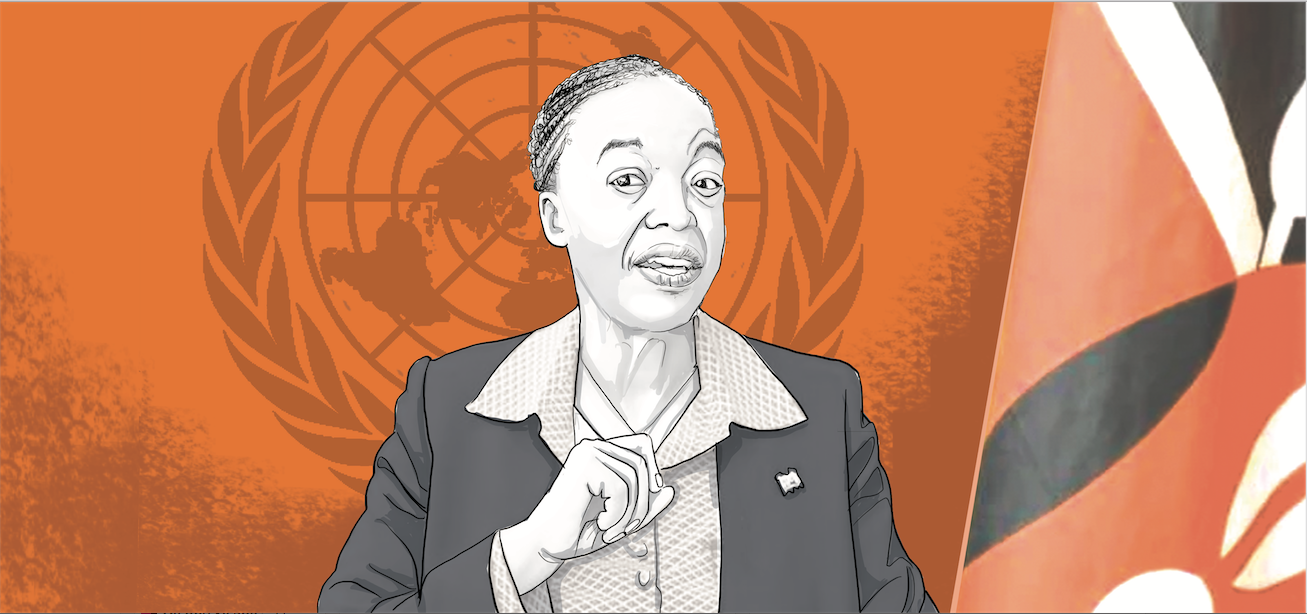
There are people whose public lives appear, from a distance, to have been carefully scripted for greatness. But for those of us who knew Amb Dr Monica Juma before the titles, before the high offices, before the global assignments, her journey has always carried something deeper: discipline, clarity of thought, quiet strength and an uncommon commitment to public service.
I first met Monica at Moi University, where we shared the ordinary rhythm of academic life. We were office mates, colleagues and fellow travellers in an environment that valued ideas, research, teaching and service.
Long before she became a household name in Kenya’s diplomatic and security circles, Juma was already marked by intellectual seriousness. She carried herself with calm focus, listened carefully, spoke with precision and approached every task with the discipline of a scholar.
Moi University was an important chapter in her life. She served as a lecturer in Government and Public Administration and also as Research Director at the Centre for Refugee Studies. Those early years shaped much of what would later define her national and international career: a deep understanding of conflict, forced migration, governance, security and the human cost of unstable states.
From Moi University, Juma's path expanded into the wider world of research and policy. Her work as a researcher in South Africa, including her association with the University of Pretoria, strengthened her reputation as a serious African thinker on peace, security and governance. She was never simply an office holder. She was, and remains, a scholar of the state, a practitioner of diplomacy and a student of Africa’s place in the world.
Our paths crossed again in national service when we were part of the cohort of ambassadors appointed during President Mwai Kibaki’s administration. It was a proud moment for Kenya, and a defining moment for many of us who were called to represent the country abroad. Juma’s appointment as Kenya’s Ambassador to Ethiopia and Djibouti, and Permanent Representative to the African Union, IGAD and UNECA, placed her at the heart of African diplomacy.
In Addis Ababa, she represented Kenya with firmness and intelligence. It was a demanding station, sitting at the intersection of bilateral diplomacy, African Union politics, regional security and multilateral engagement. Monica understood that diplomacy was not just about protocol. It was about protecting national interests, building consensus and helping Africa speak with greater confidence on matters affecting its future.
Her return to Nairobi did not slow her down. If anything, it opened an even larger chapter of public service. She served as Principal Secretary in Defence, Interior and Foreign Affairs, three of the most sensitive pillars of government. These were not ceremonial roles. They required judgment, discretion, stamina and a clear understanding of the machinery of the state.
As Principal Secretary for Foreign Affairs, she helped shape Kenya’s diplomatic posture at a time when the country was increasingly asserting itself regionally and globally. As Principal Secretary for Defence and later Cabinet Secretary for Defence, she carried the weight of national security with the seriousness it deserved. She also served as Cabinet Secretary for Foreign Affairs, where she continued to project Kenya’s voice beyond our borders.
Her appointment as National Security Adviser was another historic milestone. In that role, Juma occupied one of the most sensitive advisory positions in the Republic. It was a fitting recognition of her long experience across diplomacy, defence, intelligence, regional affairs and public policy.
Now, as she takes up her new international assignment as Executive Director of the United Nations Office on Drugs and Crime and Director General of the United Nations Office at Vienna, Kenya once again has reason to be proud. This is not just a personal achievement. It is a national honour. It places a Kenyan woman, an African scholar-diplomat, at the centre of global conversations on crime, drugs, justice, corruption, trafficking and international security.
For those of us who knew Juma from the modest corridors of Moi University, this moment is deeply moving. We have watched a colleague grow into a diplomat, a policy thinker, a Cabinet minister, a national security leader and now a senior United Nations official. Yet through all these transitions, the essence of Monica has remained familiar: disciplined, composed, intellectually grounded and committed to service.
Her story reminds us that public service is not built in a day. It is built through years of preparation, sacrifice, difficult assignments and the courage to serve where duty calls. Juma's journey from academia to diplomacy, from Addis Ababa to Nairobi, and now to Vienna, is a powerful example of what Kenyan excellence can look like on the global stage.
As she leaves one chapter and begins another, I say farewell not with sadness, but with pride. Farewell to a colleague from Moi University. Farewell to a fellow ambassador from the Kibaki-era cohort. Farewell to a distinguished public servant who has carried Kenya’s flag with honour.
And as she steps into this new global responsibility, we wish Amb Dr Monica Juma wisdom, strength and success. May she continue to serve with the same quiet resolve that has defined her remarkable journey.
Kenya salutes her. Africa watches with pride. And those of us who knew her from the beginning can only say: well done, Juma, and may this new chapter be even greater.
Diplomatic and foreign policy expert