 Abdullahı Maalim, a governance and policy expert with 25+ years of experience in public administration, devolution, and institutional reform. /HANDOUT
Before dawn breaks across the dry plains of northern Kenya, Amina – not her real name – is already awake. She ties her youngest child on her back, picks up empty jerrycans, and begins a long walk in search of water.
By sunrise, she has already completed tasks that many would consider a full day’s work. She returns home to prepare meals, tend to livestock, care for elderly relatives, support children going to madrassa and school, and nurse sick family members when illness strikes.
Tomorrow, she will do it all again.
No salary will come at the end of the month. No payslip will recognise her labour. No economic survey will fully capture her contribution.
Yet entire households, communities, and local economies survive because of women like her.
Across Kenya’s arid and semi-arid lands (ASALs), millions of women and girls quietly carry the invisible burden of unpaid care work that sustains daily life. They fetch water and firewood, cook, clean, care for children and older persons, support learning at home, tend livestock, nurse the sick, and hold families together during droughts, displacement, and crises.
It is work that is exhausting, constant, and essential.
But despite its enormous social and economic value, unpaid care work remains largely invisible in national development planning, public budgeting, labour statistics, and economic conversations. This invisibility is one of the most overlooked development challenges facing Kenya today.
In the Frontier Counties region, the burden is even heavier. Communities continue to grapple with recurring droughts, climate shocks, poverty, insecurity, displacement, weak infrastructure, and limited access to essential services.
For many women in pastoralist communities, simple daily tasks consume extraordinary amounts of time and energy. Water points are often kilometres away. Health facilities are sparse. Roads are poor. Access to clean energy remains limited. During prolonged droughts, women must travel even longer distances searching for water and pasture while simultaneously caring for children, elderly relatives, and vulnerable family members.
What appears from the outside to be “normal domestic responsibility” is, in reality, unpaid labour that keeps society functioning.
The truth is that unpaid care work is no longer just a household issue. It is a major economic and development issue.
When women spend most of their productive hours on caregiving and survival responsibilities, they are left with little time for education, income generation, leadership, skills development, or participation in public life.
Economists and development experts now describe this as “time poverty” — a hidden form of inequality that traps many women in cycles of economic exclusion.
The consequences stretch far beyond women alone.
Weak childcare systems directly affect children’s nutrition, health, early stimulation, school readiness, and long-term learning outcomes. In fragile and drought-prone regions, where families already face multiple vulnerabilities, inadequate childcare support further deepens inequality and limits opportunities for children during their most critical developmental years.
For decades, childcare and care work were treated largely as private family matters rather than public development priorities.
That conversation is now beginning to change.
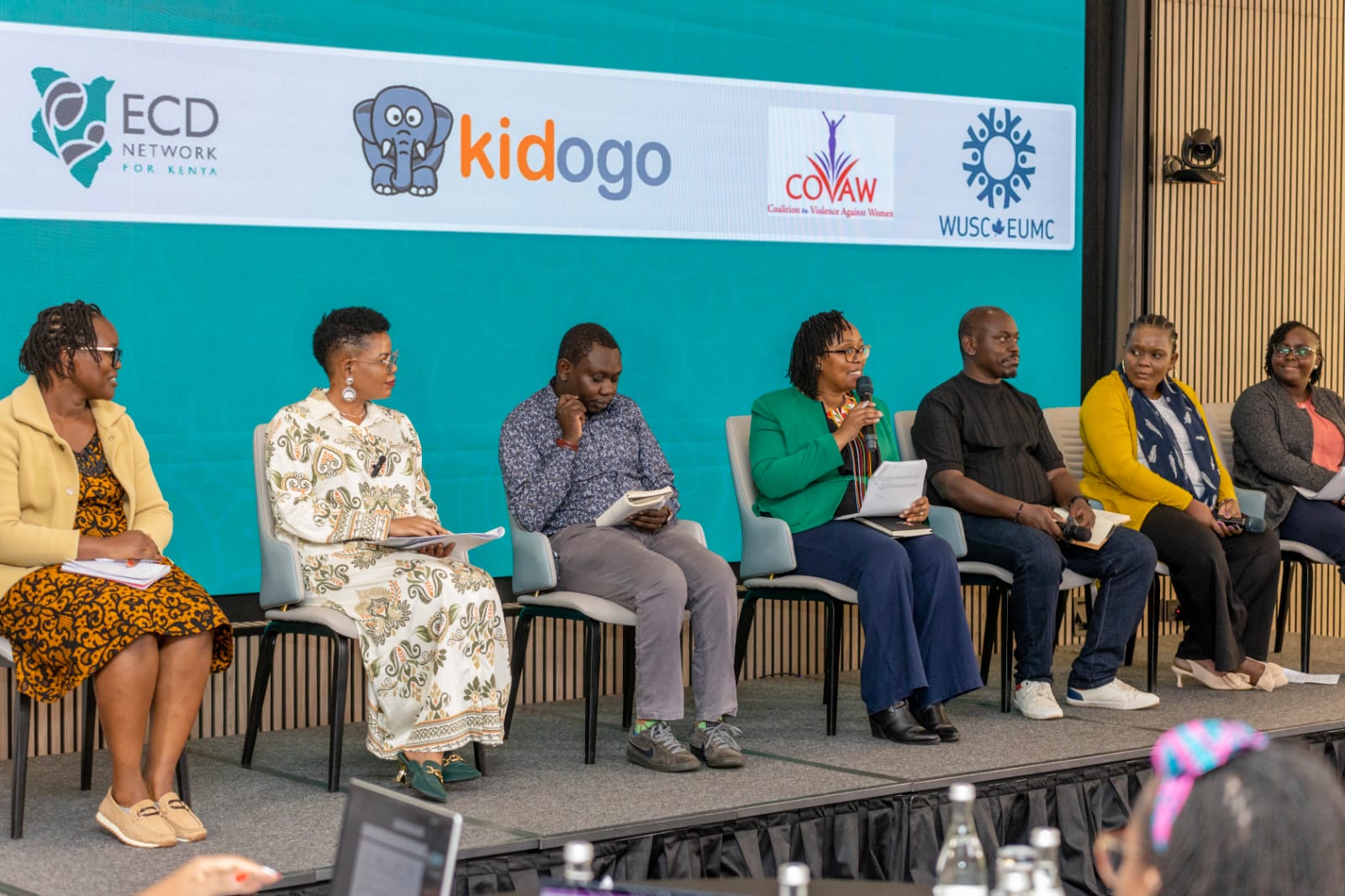
Kenya has already taken important steps through the Constitution of Kenya 2010, Vision 2030, maternal and child health programmes, social protection initiatives, and increasing investment in early childhood development.
Within the Frontier Counties, some promising initiatives are also emerging.
Through the IDRC-funded Care for All Project implemented by a consortium led by Aga Khan University, baseline studies were conducted to better understand the realities and drivers of unpaid care work within ASAL communities.
The findings revealed a complex web of challenges. Climate pressures, poverty, inadequate infrastructure, limited public services, and deeply rooted gender norms combine to place overwhelming caregiving responsibilities on women and girls.
The studies also highlighted how unpaid care work often increases during emergencies and climate shocks, making women the invisible first responders during times of crisis.
In response, community-centred interventions are being implemented to strengthen childcare systems while addressing harmful social norms surrounding caregiving roles.
This includes efforts to strengthen integrated Early Childhood Development (ECD) systems through collaboration with county governments to improve school readiness, nutrition, and coordinated childcare support services.
Women-led organisations such as Isiolo Women Network and Muslim Women Advancement of Rights and Protection have also been instrumental in community sensitisation efforts aimed at encouraging shared caregiving responsibilities and increasing male involvement in childcare and household support.
These conversations are critical because sustainable transformation cannot happen without changing long-held attitudes around gender roles and domestic responsibilities.
Economic empowerment initiatives anchored around women's groups and Village Savings and Loan Associations (VSLAs) are also helping women build livelihoods while strengthening local support systems and community resilience.
At the policy level, encouraging progress is beginning to take shape.
Child protection policies are being developed in Isiolo and Lamu counties. The Frontier Counties Development Council (FCDC) ECD Strategic Plan 2025–2029 provides a broader regional framework for strengthening childcare and early learning systems across the ASAL counties.
Meanwhile, multi-sectoral ECD Technical Working Groups are being established in counties such as Mandera, Garissa, Isiolo, and Lamu to improve coordination between education, health, nutrition, gender, and social protection sectors.
Advocacy platforms including the Pastoralist Parliamentary Group and the Pastoralist Leadership Summit 2024 have further elevated national conversations around childcare, unpaid care work, and investment in ECD systems.
These are important and encouraging steps.
But major gaps still remain.
Childcare systems in many rural and pastoralist communities continue to receive inadequate investment.Care work remains poorly measured within county planning systems and economic statistics. Coordination across sectors is still weak. Climate change and recurring droughts continue increasing the caregiving burden on women.
Most importantly, social attitudes around caregiving responsibilities are evolving far too slowly.
Yet the economic reality is impossible to ignore. No country can sustainably grow while depending on invisible labour that exhausts half its population. No society can fully unlock women’s economic potential while millions remain trapped in unpaid caregiving roles without adequate support systems.
Childcare and unpaid care work must now be recognised for what they truly are: essential social and economic infrastructure. Just like roads, electricity, schools, and hospitals, care systems keep economies functioning. Investments in water infrastructure, clean energy, healthcare, childcare centres, early learning programmes, and social protection are not merely welfare interventions. They are strategic investments in productivity, resilience, gender equality, and national development.
Reducing the burden of unpaid care work is not simply about helping women. It is about strengthening families, improving children’s futures, increasing labour productivity, and building more resilient communities.
If Kenya is serious about inclusive growth, women’s economic empowerment, child wellbeing, and sustainable development in ASAL regions, then childcare and unpaid care work can no longer remain at the margins of policy discussions.
They must become central to the country’s development agenda. Because behind every resilient family, every child who stays in school, and every community that survives hardship, there is often unseen labour holding everything together. And for far too long, that labour has remained invisible.
The writer is a governance and policy expert with 25+ years of experience in public administration, devolution, and institutional reform