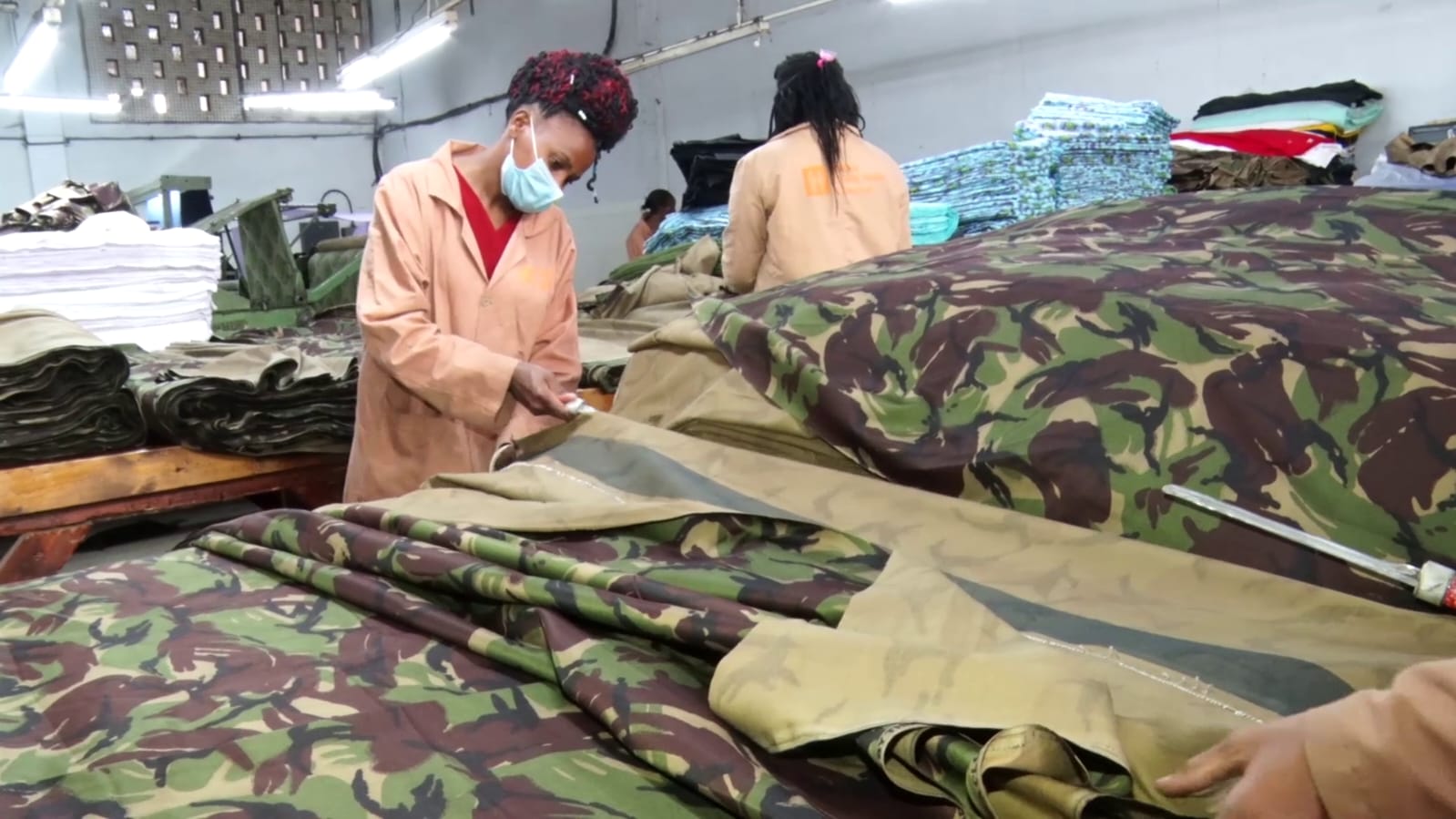
 Lucy Wairimu working on a garment used to make police uniforms at Thika Cotton Mills/ ALICE WAITHERA
Stakeholders in the cotton sector have intensified calls for increased investment in local textile manufacturing.
Farmers and processors said stronger support for the industry would help reduce Kenya’s dependence on imported fabrics while creating jobs and improving farmers’ earnings.
They spoke during a stakeholders’ forum convened by the Agriculture and Food Authority in Mpeketoni, Lamu county.
Farmers said the growing demand for cotton apparel in the coastal region demonstrates the need for the country to strengthen its cotton-to-clothing value chain.
“Cotton clothes are more suitable for our climate because they absorb sweat easily and keep people cool during hot weather. Many people who work outdoors now prefer them because they remain comfortable even after long hours in the sun,” said farmer Mary Mwangi.
The farmers noted that cotton garments have increasingly become popular among school-going children because of their comfort and durability.
They added that local textile industries can provide a ready market for the commodity while reducing the country’s heavy reliance on imports.
Samuel Kabutha, a farmer, said investment in local factories producing uniforms, footwear and other cotton products would help revive the sector, which once supported thousands of households across the country.
“We cannot continue exporting raw cotton and importing finished clothes at high prices while our young people remain unemployed. Setting up more textile factories locally will create jobs and improve incomes for farmers,” Kabutha said.
The stakeholders praised ongoing collaboration between the government and private investors in reviving the cotton sector.
They said the introduction of BT cotton farming has significantly improved production and restored confidence among farmers.
Data from the government and industry players indicate the country currently produces only a fraction of the cotton required by local textile industries, forcing manufacturers to rely heavily on imported lint and fabrics.
According to government estimates, Kenya produces between 5,000 and 30,000 bales annually against demand ranging from 140,000 to more than 200,000 bales.
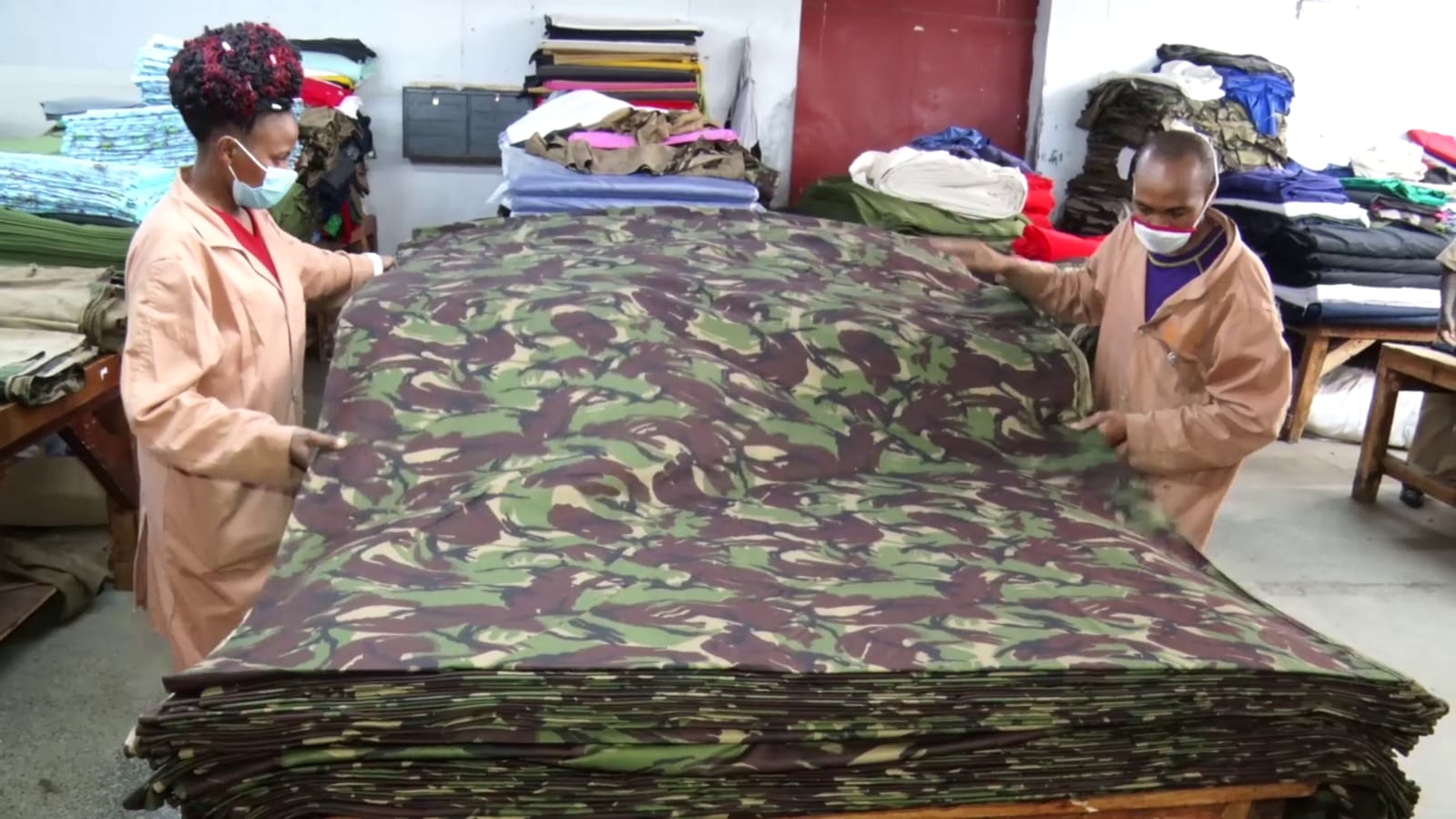 Lucy Wairimu (left), a worker at Thika Cotton Mills, working on a garment used to make police officers uniforms with another worker/ ALICE WAITHERA
The deficit has weakened local manufacturing and contributed to the collapse of several textile mills over the years.
Cheap imports and second-hand clothes, commonly known as mitumba, have also been blamed for crippling the local textile industry and forcing many factories to shut down.
At its peak in the 1980s, Kenya’s cotton industry supported more than 200,000 households and sustained dozens of ginneries and textile factories across the country.
However, liberalisation of the market in the 1990s exposed local industries to stiff competition from cheap imports, leading to massive job losses and a sharp decline in cotton farming.
Recent government interventions have, however, sparked renewed optimism within the sector.
The government has increased distribution of BT cotton and Open Pollinated Variety seeds, modernised ginneries and promoted procurement of locally manufactured fabrics through public institutions.
The government has also partnered with private investors to establish new cotton processing facilities in counties such as Lamu as part of efforts to strengthen local manufacturing and reduce imports.
Cotton farmers in Lamu sold more than 3.5 million kilogrammes of cotton valued at about Sh335 million in 2025 following improved yields and availability of markets through partnerships with textile firms.
AFA chairman Cornelly Serem challenged Kenyans to support local industries by purchasing garments made from Kenyan cotton instead of imported products.
He said the country cannot continue demanding jobs for young people while relying heavily on imported clothes from countries such as China, Turkey and the United Kingdom.
Serem noted that the government has already introduced policies encouraging the use of locally manufactured fabrics in public institutions as part of efforts to grow the domestic textile sector.
His sentiments were echoed by Tejal Dhodhia, CEO of Thika Cloth Mills, who urged schools and politicians to prioritise locally manufactured fabrics when procuring uniforms and campaign materials.
“Supporting local textile industries means creating jobs for our youth, expanding markets for farmers and strengthening the economy. Every locally made uniform or fabric purchased directly supports Kenyan farmers and manufacturers,” Dhodhia said.
The company has constructed a Sh1.2 billion ginnery in Lamu that is expected to create hundreds of direct and indirect jobs.
The plant, located in Mpeketoni, is designed to process up to 20 million kilogrammes of cotton annually, sourced from more than 10,000 local farmers through contract farming.
Dhodhia maintained that increased investment in cotton production, processing and value addition would help position coastal counties as key textile manufacturing hubs while boosting household incomes and contributing to national economic growth.