The first night I slept in my own place, I lay flat on my back staring at the ceiling like I had just unlocked an achievement in life. No curfew. No “umechelewa wapi?” No one asking why I used all the hot water. Just me, my mattress and the sweet, intoxicating silence of independence.
That silence lasted exactly 36 hours. By Monday night, my upstairs neighbour was hosting what sounded like a full-blown ruracio after-party—bass thumping, people laughing like they had just discovered joy for the first time, chairs dragging across the floor. On a Monday.
I remember sitting there in my tiny bedsitter in Kahawa West, clutching my pillow, wondering if this was the freedom I had fought so hard for.
Because, make no mistake, moving out was not a casual decision. It was a mission. At home in Ruiru, I had reached that point many Gen Zs know too well: old enough to crave autonomy, but still under a roof where you are half-adult, half-child, depending on the situation.
I wanted my own space, my own rules, my own life. I wanted to prove something—to myself, mostly. And I did. But no one really tells you that independence in Kenya is not just about paying rent and buying your own unga. It’s a full-contact sport.
Take laundry, for example. Back home, clothes just… got washed. Magically. In my new place, I discovered the politics of shared hanging lines. There was this one mama in the building—let’s call her General Commander of the Clothesline—who had clearly decided that the lines were her ancestral land.
The first time I hung my clothes, she removed them. Not threw them, no, that would be too obvious. She just… relocated them. Subtly. Aggressively. It was my introduction to passive-aggressive warfare, Kenyan apartment edition.
Then there’s water. Ah, water—the great equaliser. Nothing humbles you like waking up early to shower before work, only to find the taps dry because someone filled 10 jerrycans overnight. You start developing survival instincts. You learn to store water like you are preparing for the apocalypse. You become strategic.
And yet, despite all this chaos, there is something undeniably powerful about having your own key. About deciding what to eat (even if it’s Indomie for the third night in a row). About inviting friends over without needing permission, only to realise hosting is expensive and exhausting, and suddenly your parents’ “no visitors” rule starts making sense.
But here is where it gets interesting: my experience is not unique. It’s part of a broader shift happening across Kenya. More Gen Zs are moving out earlier, driven by a mix of ambition, necessity and, let’s be honest, a desire for freedom.
According to recent urban housing trends, young adults are increasingly opting for bedsitters and shared apartments in areas like Roysambu, Kahawa and Rongai—not because it’s easy, but because it feels like a rite of passage.
Still, not everyone agrees it’s worth it. “I moved out at 22 and, honestly, I think I rushed it,” says Patrick Muchomba, 24. “I was excited at first, but the loneliness hit me hard. At home, there’s always someone. Out here, it’s just you and your thoughts, and sometimes that’s a lot.”
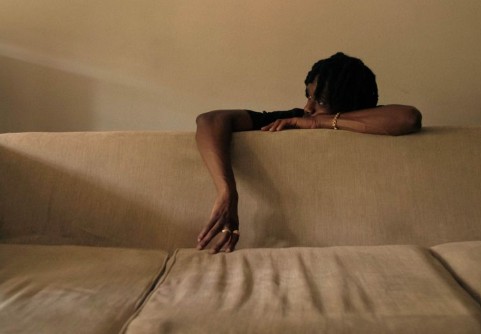
And he’s not wrong. There are nights when the silence comes back, not the peaceful kind, but the heavy kind. The kind that makes you miss the background noise of home: your mum watching TV too loudly, your sibling arguing over nothing, the smell of food you did not have to cook.
On the flip side, others would not trade the experience for anything. “Moving out taught me things I would never learn at home,” says Grace Mwende, 23. “I have become more responsible, more confident. Yes, it’s hard, but it’s mine.”
And that’s the tension at the heart of this whole thing. Moving out is both liberating and destabilising. It’s growth and discomfort wrapped in one. Personally, I have come to see it as a kind of social experiment.
You are thrown into a microcosm of Kenyan urban life—where you negotiate space, noise, resources and personalities. You learn quickly that independence does not mean isolation; it means interdependence with strangers who did not choose you, and whom you did not choose either.
You also start to understand your parents differently. Their rules, their routines, their quiet sacrifices, they begin to make sense in ways they never did before. So, would I do it again? Absolutely.
Not because it’s easy. Not because it’s glamorous. But because it’s real. It strips away the illusion of adulthood and replaces it with something messier, more honest. You do not just move out of your parents’ home; you move into yourself. And sometimes, that comes with a Monday night party you did not ask for.