There was a period through my 20s, 30s and into the beginning of my 40s where some might say I was quite a competent drinker of alcoholic beverages.
Age, the general economy and moving in different circles mean that I no longer drink as much as I used to. However, on occasion, given the right conditions, I can still tie one on like a pro.
During the period that I drank regularly, at least five nights a week, there would be the odd day that I woke up swearing never again, only to find myself back at the bar trying to catch the barman’s attention. Fun times.
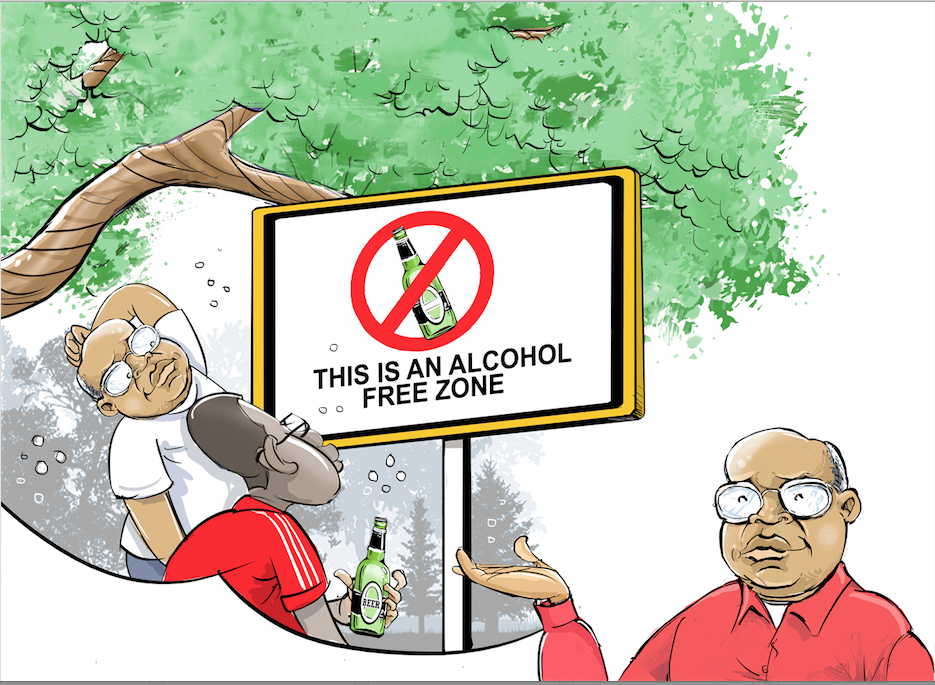
On those days, I might have briefly fantasised about living in a dry town such as Kijabe. Of course, with the work I did, it would have meant a gruelling commute home from work, which would ironically have driven me to drink.
I got to thinking about dry towns after coming across a news item about a Cape Town suburb called Pinelands. The suburb is famous for having remained historically dry for over 100 years due to intense community opposition to retail liquor sales.
However, changing times and what some might call progress mean that Pinelands' status is under threat. A new supermarket currently under construction has applied for an off-consumption liquor licence. In South Africa, such a licence does what it says on the label and authorises a business to sell alcohol for the express purpose of being consumed away from the retail premises.
The suburbs’ residents, led by the Pinelands Ratepayers and Residents Association (PRRA) and local ward councillors, who we call MCAs in Kenya, are mobilising to block the application.
The deadline for the public to submit formal objections to the Western Cape Liquor Authority (WCLA) ended this week on May 6. I guess we will know soon enough how that ends.
The silly thing is that while there are no standalone bottle stores, or what we in Kenya know as "Wines and Spirits" shops, some on-site consumption is already permitted at local restaurants and social clubs in Pinelands. This means people have already found ways around the situation.
In Kenya, as I mentioned, our most famous “dry” town is Kijabe, which also holds the reputation of being the only town in Kenya where no cigarettes are sold
Established as a mission station by the Africa Inland Mission in the early 1900s, the town has maintained its strict Christian-based values for over 100 years.
There are no bars, pubs or entertainment joints within the town boundaries, and local shops do not stock cigarettes.
Investors and traders looking to set up businesses in the area must sign an agreement promising not to engage in the sale of alcohol, cigarettes or other items considered "ungodly" by the local AIC church.
Like Pinelands in Cape Town, individuals seeking to purchase alcohol or cigarettes often go to neighbouring centres. In this case, to places such as Gachiengo, Kimende or Maai Mahiu, which are a few kilometres away along the highway.
Actually, I wonder how the alcohol ban is doing in these post-Covid days, with the delivery industry spurred by the flood of motorcycles in every town. Maybe some kind reader will let me know.
Meanwhile, certain researchers have suggested that while the primary effect of dry towns is indeed making residents travel further to purchase alcohol, these restrictions have several unintended "rebound" effects on public health, safety, and local economics.
For instance, ironically, many studies show that dry towns often have higher rates of alcohol-related traffic fatalities than wet ones.
Also, when access to alcohol is difficult, people often shift from moderate consumption to binge drinking, and residents are more likely to buy in bulk to avoid frequent trips, which can lead to higher home consumption.
So, maybe while dry towns reduce the visibility of alcohol by having no neon signs or bars on every corner, they do not necessarily reduce the prevalence of alcoholism.
Across the globe, many remaining dry towns are transitioning into "moist" jurisdictions, allowing alcohol in restaurants but still banning standalone wine and spirits shops to balance historical tradition with modern economic demand.
It remains to be seen what happens in Pinelands and, for that matter, if Kijabe ever changes its ways.