Not hospitals. Not agriculture. And certainly not our schools…at least not in the way they should. If you look closely, the cracks are not subtle. They are lived daily by the people who depend on these systems the most. In education, the failure is quiet. It does not always look like a collapse. It looks more like a child sitting in class, present but unseen.
Take Munene.
He schools at Kagera Primary School, tucked in the interior of Tharaka Nithi county, not far from the governor’s home, a place you would expect to be seen to be working, simply because of where it sits.
He was the kind of child teachers quickly learn to categorise as hyperactive and distracted. You could almost call him careless. By Class Three, his exercise books told a story his teachers believed was complete: no covers, letters reversed, words trailing off into something that looked almost like a sentence, but never quite coherent.
Red ink filled the margins, but not ticks—just Xs, with comments such as “Try harder” or “See me”.
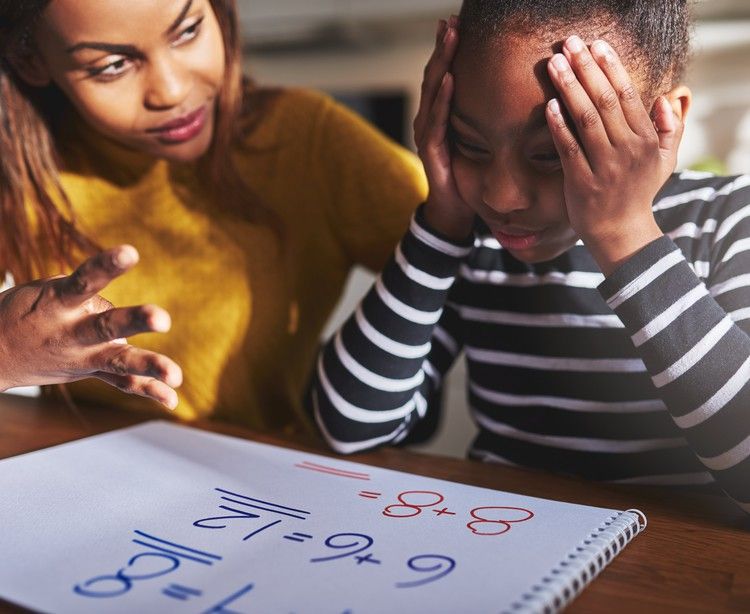
And try he did. At home, Munene would sit longer than anyone asked him to. He would trace letters over and over until the page tore slightly under the pressure. He would whisper words aloud, breaking them into sounds, trying to force them to stay still long enough to make sense. But the more he tried, the more the letters seemed to move.
At school, the class laughed when he was asked to read. Not loudly but just enough. A few snickers, a suggestive glance here and there. The teacher would sigh, sometimes interrupting him mid-sentence to save time. Other times, she would let him finish, but her impatience was visible in the way she tapped the desk.
“Why can’t you just focus?” she would ask, not in the kindest tone.
By the end of the term, Munene understood something no child should have to learn—that effort does not always protect you from humiliation.
So he stopped trying in class. What no one told him, or what no one seemed to know, was that Munene was likely living with dyslexia and dysgraphia. Conditions that affect how the brain processes written language, how it maps sounds to symbols and how it translates thought into writing. Not a lack of intelligence. Not laziness. Not defiance—just difference.
You would think that’s an isolated case. But in many Kenyan classrooms, difference has no language. There is no framework for it, no patience for it and often no real way to even identify it effectively. So it becomes foolishness. It becomes a character flaw and worse still, it becomes the story adults tell about a child until the child begins to tell it about themselves.
Teachers, already overburdened and under-resourced, are not always equipped to recognise these patterns. But more than that, they are not trained to question them. The system rewards speed, neatness and correctness. It does not pause for processing. It does not bend for variation. And bias, even when subtle, is rarely hidden. The quick student is labelled as bright and the struggling one, weak.
One is given more attention, more encouragement and more opportunity to try again, but the other is watched more closely for mistakes, corrected more sharply and often dismissed.
Over time, expectation becomes destiny.
By Class Six, Munene had stopped raising his hand. Not because he had nothing to say, but because saying it felt like stepping into a spotlight he could not control. His grades reflected what everyone had already decided about him, average at best, poor at worst. No one bothered to ask what he learned or understood. In any case, they recommended he repeat the whole grade altogether.
Years later, when he finally encountered the word 'dyslexia', it did not feel like a diagnosis. It felt like a translation of years of confusion, shame and quiet effort that had gone unseen. “I thought I was just stupid,” he said simply.
That sentence carries more than personal pain. It carries systemic failure because Munene is not an exception.
He is one of many children moving through an education system that is not designed to see them. Children whose intelligence is misread because it does not arrive in the expected format. Children who are capable, curious and even brilliant in ways that classrooms do not measure.
And so their potential is not just overlooked; it is actively eroded.
This is the cost of a system that does not work.
Not just in missed grades or poor exam performance, but in the quiet reshaping of identity. In the child who stops trying. In the adult who never fully trusts their own mind. In the talent that never finds expression because it was named incorrectly too early.
We like to believe that failure in school reflects failure in the student. It is a comforting narrative. It absolves the system. But if we are honest, the pattern is too consistent to ignore. The problem is not that some children cannot learn.
It is that our system does not know how to teach them.