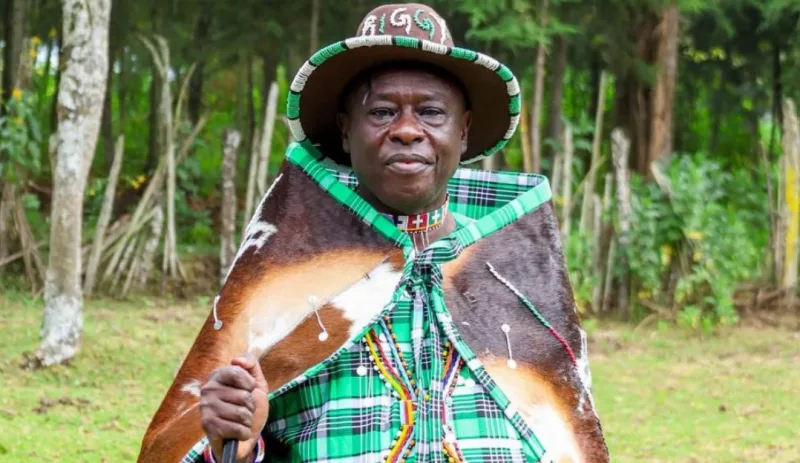
Cooperatives CS Wycliffe Oparanya has called for an immediate ceasefire within ODM, warning that escalating internal feuds and what he described as ‘friendly fire’ are now complicating President William Ruto’s re-election strategy.
He expressed concern that rising public confrontations and deepening divisions within ODM risk not only weakening the party’s internal cohesion but also undermining the broad-based political arrangement led by Ruto.
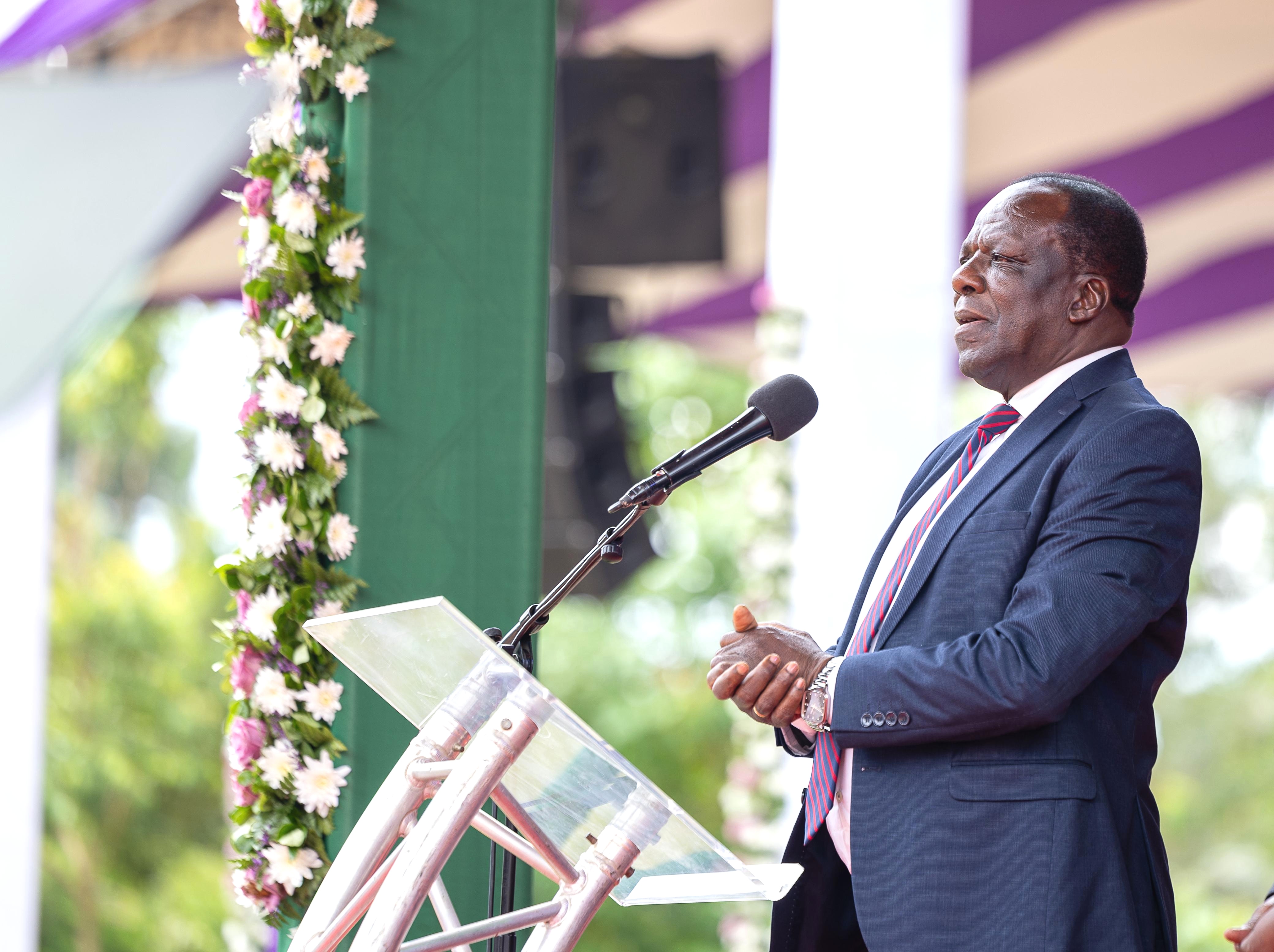
Oparanya spoke at the weekend in Busia.
The CS took issue with what he termed a growing tendency among senior ODM leaders to push for the removal or political isolation of members holding dissenting views.
He argued that such actions were creating confusion at the grassroots and making it harder for leaders aligned with the government to sell the emerging political narrative ahead of the 2027 general election.
“We are making a mistake as ODM leaders. This thing of removing people from the party makes our work very difficult. It is making our work of campaigning for the President very difficult,” Oparanya said.
His comments come against the backdrop of ODM’s recent internal resolutions that saw the removal of senior officials perceived to be critical of the party’s evolving relationship with the Kenya Kwanza administration and its engagement with the ruling UDA.
Among those affected were secretary general Edwin Sifuna and deputy party leader Godfrey Osotsi.
While Osotsi did not publicly contest his removal, Sifuna has since moved to the Political Parties Disputes Tribunal, challenging the decision and setting the stage for a legal and political showdown within the party’s top ranks.
Oparanya, a former deputy party leader of ODM, acknowledged that the internal shake-up has already begun to reverberate beyond party headquarters, especially in regions where the affected leaders command significant political influence.
He said in Western Kenya, where he hails from alongside Osotsi and Sifuna, the removals have triggered difficult questions from supporters who are struggling to understand the party’s internal direction.
“If you go to the ground, you are confronted with questions on why so-and-so has been removed from the party. I am asked difficult questions on the ground, questions for which I have no answers because I am not in the leadership of ODM,” he said.
According to Oparanya, the growing intolerance for dissent within the party risks eroding ODM’s bargaining power at a time when political realignments are accelerating ahead of 2027.
He warned that continued infighting could also confuse supporters who have traditionally viewed ODM as a broad-based political movement accommodating diverse opinions.
The former Kakamega governor urged the party’s top leadership to embrace dialogue and restraint, cautioning against what he termed high-handed approaches to internal disputes.
“I want to plead with those in leadership to stop this rampant removal of people,” he said, adding that unity and tolerance were essential if the broader political coalition was to remain stable and effective.
The Star has also established that Oparanya has convened a meeting of elected leaders scheduled for Monday, aimed at charting a way forward amid the escalating tensions.
The meeting is expected to focus on the region’s political direction, the state of ODM unity, and the evolving national landscape as alliances begin to take shape ahead of the next election cycle.
The latest intervention by Oparanya comes at a time when ODM factions continue to clash over the party’s cooperation with the Kenya Kwanza administration, as well as the emergence of the Linda Mwananchi movement, which has attracted a number of leaders critical of the so-called broad-based political arrangement.
Observers say the internal wrangles reflect deeper ideological and strategic divisions within ODM over whether to fully cooperate with the government or maintain a more oppositional posture.
Oparanya also extended his criticism to Parliament, arguing that internal political intolerance has now spilt over into legislative operations, where some Members of Parliament have faced disciplinary action or suspension.
“Even in Parliament, they are removing some people, and we are on the homestretch,” he said, referring to the heightened political activity as campaigns for 2027 begin to take shape.
In recent months, MPs Antoney Kibagendi (Kitutu Chache South) and Wanami Wamboka (Bumula) have been suspended from parliamentary duties over separate allegations. Kibagendi was accused of making controversial remarks during a television interview questioning the independence of Parliament, while Wamboka faced allegations of intimidating witnesses appearing before a committee he chairs. Kibagendi has since been reinstated after serving his suspension.
Political analysts argue that Oparanya’s remarks signal growing anxiety among senior ODM-aligned figures who are increasingly concerned that prolonged internal disputes could weaken the party’s grassroots structures.
They further warn that continued fragmentation within ODM could complicate President Ruto’s efforts to consolidate political support across opposition strongholds, especially in regions where ODM has historically commanded significant influence.
As political realignments intensify, Oparanya’s call for restraint highlights the delicate balancing act facing ODM leaders as they navigate internal dissent, shifting alliances, and the early manoeuvres of a highly competitive 2027 electoral cycle.