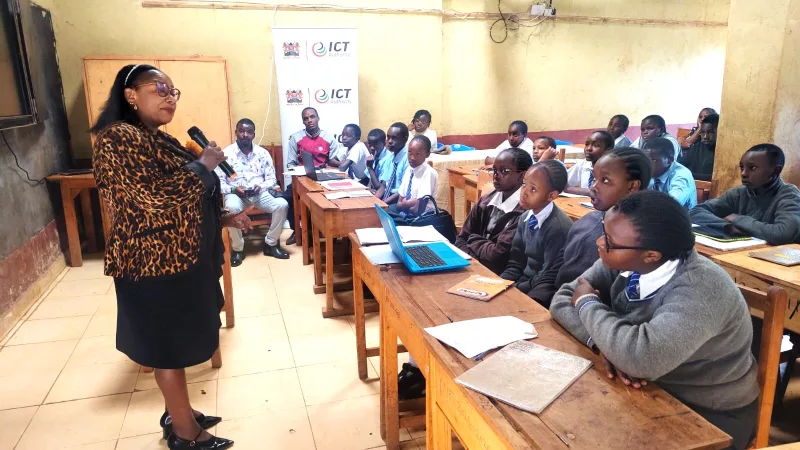
 Central region deputy regional commander David Wambua during a community sensitisation forum in Murang'a town /ALICE WAITHERA
A surge in crime, rising cases of sexual and gender-based violence and growing pressure within families have triggered concern across the Central region, with leaders warning of a slow breakdown of the social fabric.
Security agencies and community stakeholders say the worrying trends reflect deeper societal problems, including rampant substance abuse, economic hardship and untreated mental health struggles that are increasingly spilling into homes and communities.
Deputy regional commander David Wambua said fear and silence among residents continue to frustrate efforts to curb crime, calling for stronger cooperation between police and the public.
“We want to fight crime together with members of the public. Without them, we cannot succeed,” he said.
Wambua said alcoholism remains one of the region’s biggest challenges, often fuelling domestic violence, neglect, crime and family breakdown.
He also raised concern over a growing number of suicide cases, particularly among men, linking the trend to financial stress, depression, and substance abuse.
A recent report by Nacada showed more than 500 Kenyans die by suicide every year, with the Central region accounting for a significant share of the cases.
The report further indicated the region records some of the country’s highest alcohol consumption levels, with nearly 20 per cent of adults engaged in harmful drinking.
Nacada representative David Maina said alcohol and drug abuse remain at the centre of many social problems affecting communities.
“Many criminal cases begin with substance abuse. People neglect their families and eventually turn to crime to sustain their habits,” he said.
Data from the Kenya National Bureau of Statistics shows more than 40 per cent of domestic disputes in Kenya are linked to alcohol and drug abuse, further weakening family structures and exposing children to neglect and crime.
Peter Ouko, founder of Crime Si Poa, said correctional facilities are increasingly recording sexual offences as the most common crimes among inmates.
“Cases involving rape and defilement are rising sharply, alongside incidents of gender-based violence,” he said.
Ouko, a former offender who transformed his life after serving a prison sentence, now runs community mentorship and awareness programmes aimed at steering young people away from crime.
He said while offences such as mugging, robbery and snatching remain common, the sharp rise in sexual offences points to a deeper moral and social crisis that requires both stricter enforcement and public education.
Instant Analysis
The rising wave of crime, gender-based violence and suicides in Central Kenya points to a deeper social crisis that policing alone cannot solve. Behind the statistics lies a dangerous mix of economic pressure, widespread alcohol and drug abuse, untreated mental health struggles and weakening family structures. The shift from petty crime to sexual offences also signals growing moral and psychological distress within communities. While authorities are intensifying security operations, the crisis exposes gaps in social support systems, rehabilitation and public awareness. Unless tackled through a coordinated response involving families, schools, churches, health experts and law enforcement, the social fabric risks further deterioration.
 Crime Si Poa founder Peter Ouko during a community forum in Murang'a town /ALICE WAITHERA