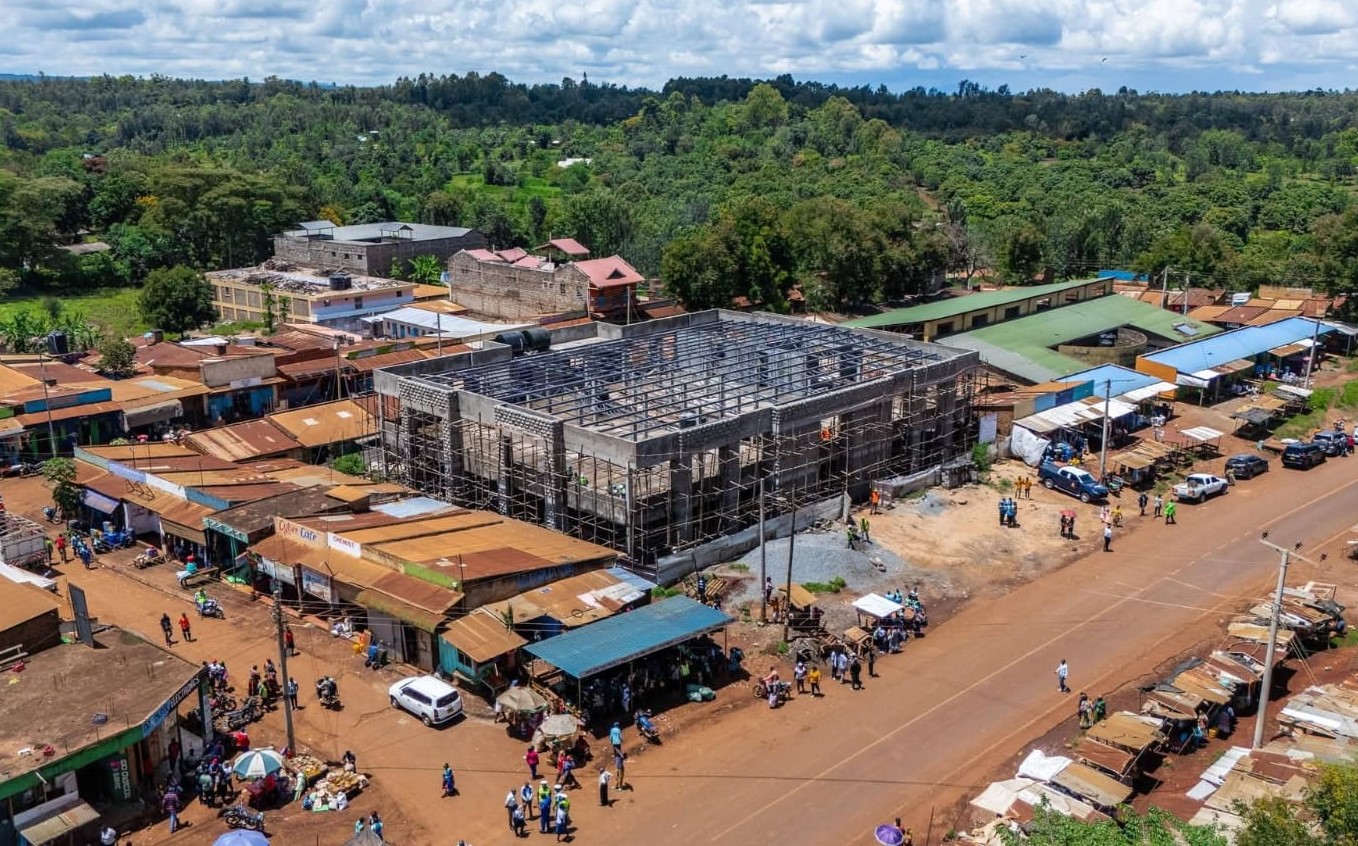
 The Sh60 million Karurumo market that is under construction in Embu County/ ALICE WAITHERA
 The Sh60 million Karurumo market in Embu county is expected to significantly reduce post-harvest losses that have long plagued mango farmers in the region once completed.
It will offer traders and producers modern storage and trading facilities in one of the country’s top fruit-producing zones.
The two-storey Economic Stimulus Programme (ESP) market under construction in Runyenjes constituency is now more than 90 per cent complete and is set to provide a structured marketplace for traders who have for years operated on the Embu–Ishiara road.
Market chairperson Joseph Njagi said the facility will be a game changer for farmers and traders, particularly during mango season when large volumes of produce go to waste due to lack of proper storage and reliable market access.
“Every mango season, farmers incur huge losses because they lack a proper market and preservation facilities, but this modern market with cold storage will help reduce wastage and improve prices for our produce,” he said.
Embu is ranked among the leading mango-producing counties, supplying both local and export markets, but farmers have consistently struggled with post-harvest losses due to inadequate preservation systems, weak aggregation infrastructure and limited value-addition facilities.
The modern market is expected to address those gaps through the installation of cold storage facilities and dry storage areas designed to preserve mangoes and other fresh produce for traders from Runyenjes and neighbouring Mbeere North.
Njagi said mangoes often rot on farms despite demand from buyers coming from distant markets including Tanzania, Uganda and Mombasa, noting that available buyers have not been sufficient to absorb all produce during peak season.
He said the new facility is expected to attract more buyers and improve uptake by providing a centralised, hygienic and better-organised trading point.
 A trader hawks cabbages in Karurumo area, Embu county/ ALICE WAITHERA
Beyond mangoes, the market will also support trade in tomatoes, watermelons, and other horticultural produce widely grown in the area, with farmers expected to benefit from reduced spoilage and improved bargaining power.
The chairman said the expanded market will also ease congestion for traders who have been forced to operate by the roadside after outgrowing the previous single-storey facility.
“The old market had become too small and traders, especially women selling vegetables, had spilled onto the roadside, exposing them to accidents and poor working conditions,” he said.
Traders say the new facility will transform business operations by providing safer and more organised working spaces while attracting more customers and investors to the area.
Esther Muthoni, a trader at Karurumo, said operating from the roadside has exposed traders to constant danger from passing vehicles and limited their ability to expand their businesses.
She said moving into the new market will provide a safer environment and more room for both existing and new entrepreneurs.
Besides trading stalls, the market will include several social and economic support amenities aimed at improving trader welfare and expanding opportunities for small businesses.
These include table banking rooms for women’s groups, a kitchen, a social hall, modern sanitation amenities, an ICT hub to enhance digital access, and a breastfeeding room for nursing mothers.
The market is also strategically located near a local institution with an estimated 4,000 students residing in the area, a population expected to boost demand for fresh produce and strengthen daily business activity.
Karurumo market is one of 12 fresh produce markets currently under construction in Embu county as part of the government’s wider strategy to modernise agricultural trade infrastructure and improve market access for farmers.
Once operational, the facility is expected to serve as a regional aggregation and trading hub for produce from Runyenjes, Mbeere North, and neighbouring areas, strengthening Embu’s position in Kenya’s horticultural value chain.
Nationally, the government has intensified investment in modern market infrastructure through programmes under the State Department for Housing and Urban Development and the Economic Stimulus Programme, with more than 400 modern markets at various stages of construction.
The markets are part of the Kenya Kwanza administration’s plan to modernise informal trade spaces, improve food handling standards, support value chains, and create dignified working environments for traders.