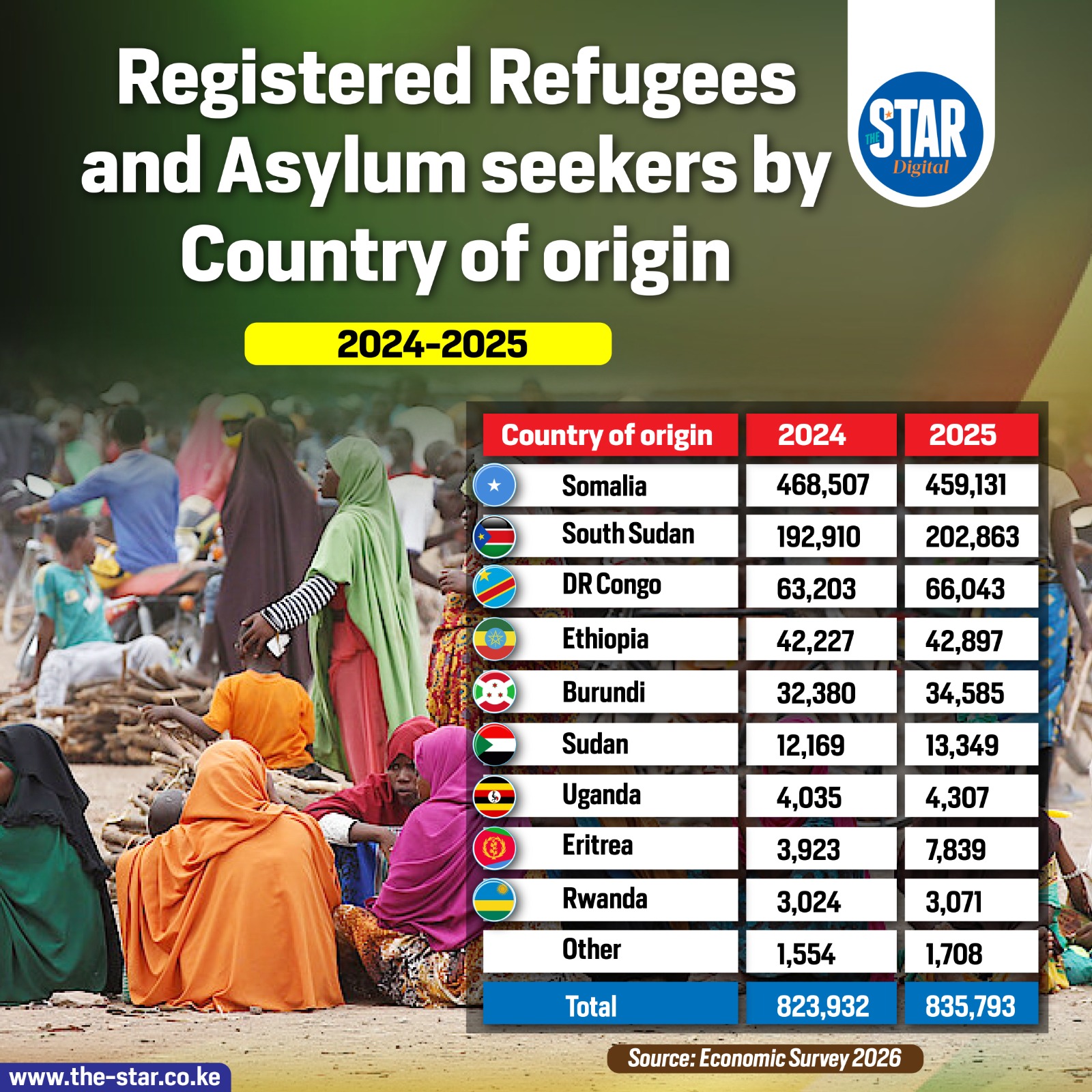
The population of registered refugees and asylum seekers is witnessing a steady upward trend, climbing from 823,932 in 2024 to a projected 835,793 by 2025. This growth highlights the persistent humanitarian pressures within the region, driven largely by ongoing displacement from neighboring nations.
Somalia remains the primary country of origin for the majority of these individuals. Although the numbers are expected to see a slight decrease from 468,507 in 2024 to 459,131 in 2025, Somali nationals still account for more than half of the total registered population.
In contrast, South Sudan is seeing a notable surge, with figures rising from 192,910 to 202,863 over the same period, marking it as the second-largest group.
Several other nations are also contributing to the rising totals. The Democratic Republic of Congo is projected to see an increase to 66,043, while Ethiopia and Burundi maintain steady figures at 42,897 and 34,585, respectively. Notably, the number of individuals from Eritrea is expected to nearly double, jumping from 3,923 to 7,839 within a single year.
Smaller but consistent populations continue to arrive from Sudan, Uganda, and Rwanda, all of which show incremental increases heading into 2025. This collective data underscores a complex landscape of migration where, despite minor fluctuations in specific demographics, the overall demand for asylum and refugee registration remains on a clear trajectory of growth. As the total figure nears the 836,000 mark, the regional focus remains firmly on managing these shifting populations.