Kenya and China are going to great lengths to bridge the languages of the two nations, embedding them at the heart of their growing ties.
At first glance, a Tang dynasty verse about a quiet moon hanging over a mountain river may seem worlds apart from a Kenyan praise poem celebrating rain, harvest and community.
But inside a packed auditorium at the University of Nairobi this week, those worlds did more than meet — they began to speak to each other.
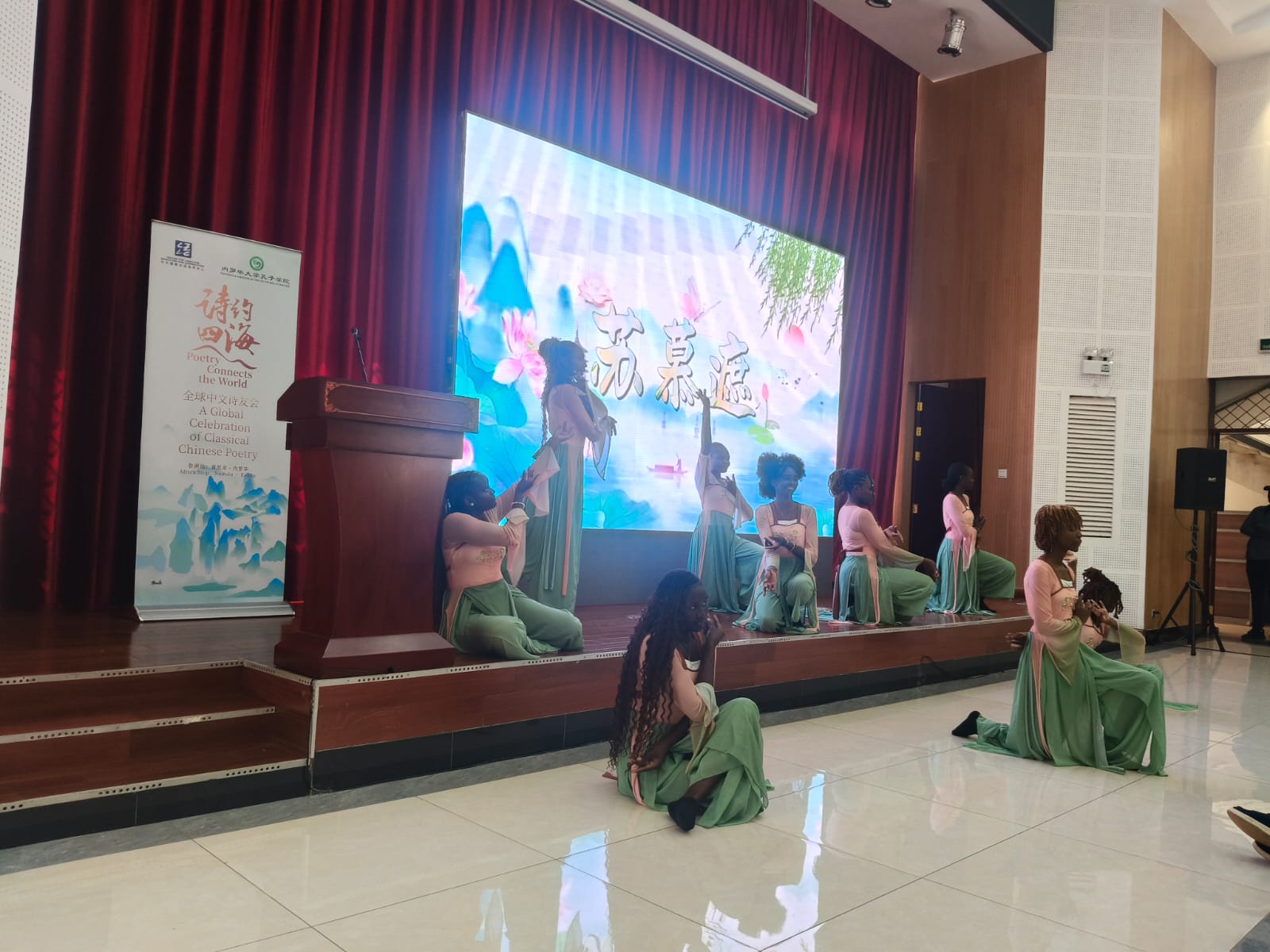
The occasion was the 2026 “Poetry Connects the World” – A Global Celebration of Classical Chinese Poetry, Africa Stop: Nairobi, organised by the Confucius Institute at the University of Nairobi.
Held under the theme “Heaven, Humanity, Mountains and Water”, the event brought together students, lecturers and cultural officials in what emerged as more than a literary gathering.
The meeting became a subtle but significant display of growing cultural diplomacy between Nairobi and Beijing.
Learners took part in making ‘Cha’ — Chinese tea — and pieced together artworks portraying a blend of Kenyan and Chinese culture.
In Kenya, poetry has traditionally thrived through performance, mostly in song, storytelling and communal recitation during special events.
But on this quiet Thursday afternoon, scholars brought to light the tightly structured and image-rich poetry of classical Chinese masters.
Li Bai and Du Fu, who initially appeared distant, were brought closer to home.
UoN students showcased their talent, speaking fluent Mandarin with a confidence that made them sound almost native.
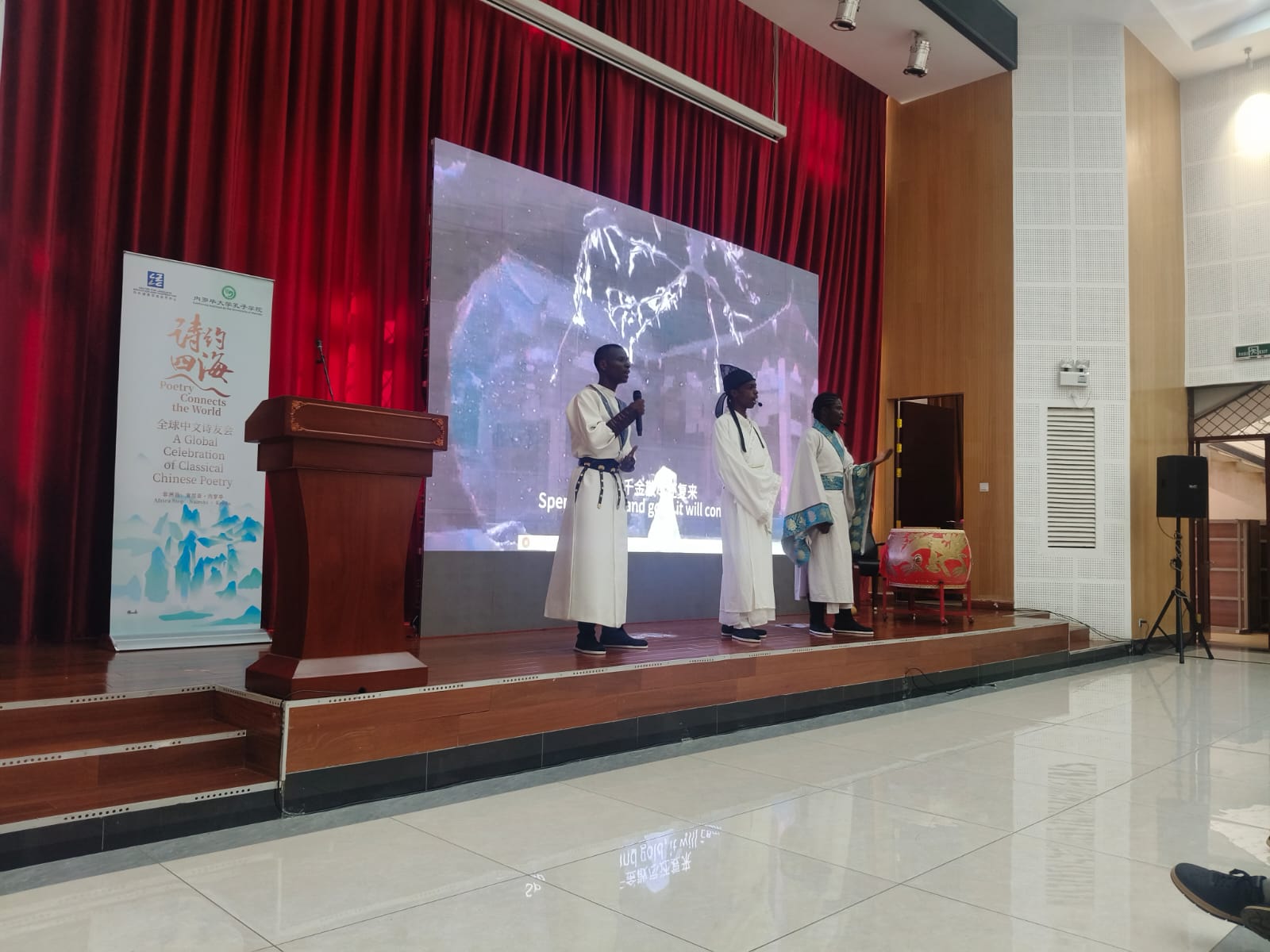
A three-member UoN band performed Chinese poet Li Bai’s Qiangjinjiu — translated as “Invitation to Wine” or “Please Drink” — a lyrical work from the Tang Dynasty.
Li Bai is regarded as one of the greatest poets in Chinese history, and the students recreated the emotional depth of his struggles, which led him to seek solace in drinking with friends.
Short clips of Confucius Institute students reciting famous poetry lines were also showcased, with some participants receiving prizes.
Speakers at the forum argued that the emotional and philosophical threads running through Kenyan and Chinese poetic traditions are remarkably similar.
Dr Mercy Kathina, a UoN poetry scholar and Confucius Institute protégé, drew parallels between the two traditions during her presentation.
She noted that Du Fu’s restrained lament about a nation in ruins — such as the line, “The nation is broken, yet mountains and rivers remain” — reflects the same anxieties over identity and cultural disruption explored in Okot p’Bitek’s Song of Lawino.
Where the Chinese poet turns inward with quiet reflection, p’Bitek confronts the crisis directly and defiantly.
Yet both, Kathina said, speak to the enduring human struggle over memory, belonging and foreign influence.
The comparative approach reflects broader efforts to deepen literary and intellectual exchange between Nairobi and Beijing.
For years, the Confucius Institute at UoN has primarily served as a centre for Mandarin language instruction.
But recent achievements by its students at the 25th Chinese Bridge Chinese Proficiency Competition point to its growing influence.
In the competition, UoN students secured top-four positions nationally, signalling an expanding engagement that goes beyond simply acquiring a new language.
Speakers suggested that Mandarin is increasingly becoming a gateway into Chinese literature, philosophy and cultural thought.
One of the clearest signs of expanding ambitions came from officials at the Kenya Literature Bureau (KLB).
They revealed plans to distribute translated Chinese literary works more widely across the country.
“We have plans to distribute the Governance of China series by President Xi Jinping to all national libraries in Kenya. We have translated them into Kiswahili,” a KLB representative said.
The official added that there were also plans to introduce translated Chinese poetry at lower levels of learning to encourage greater uptake of Mandarin among Kenyan students.
“The language is growing and we need Mandarin books so that students can take the language to the next level,” the official said.
Such ambitions mark a potentially significant shift in Kenya’s cultural and educational landscape.
Translating classical Chinese poetry — known for its strict tonal patterns, structured symbolism and deeply philosophical themes — for younger Kenyan learners would represent a new phase of cultural integration between the two countries.
It would move engagement beyond infrastructure deals and diplomatic ceremonies, paving the way for shared stories, literature and cultural memory.
University of Nairobi Vice Chancellor Prof Margaret Hutchinson, in a speech delivered on her behalf by Prof Jack Odhiambo, Dean of the Faculty of Arts, described poetry as a powerful bridge between societies and generations.
“Poetry becomes more than art — it becomes a bridge of wisdom, carrying cultural memory and human aspiration across generations and continents,” she said.
She noted that the event coincides with the 2026 China–Africa Year of People-to-People Exchanges, as well as 70 years of diplomatic relations between China and African nations.
Also present was Prof Peter Wasamba, one of Kenya’s leading scholars of African oral literature, alongside UoN lecturers and KLB officials.
Their presence underscored Nairobi’s growing role not merely as a consumer of Chinese cultural exports, but as an active participant in interpreting and localising them.
With Mandarin verses mingling with Kiswahili proverbs and African oral traditions, Kenya-China ties appear to be developing a new language of cultural connection.