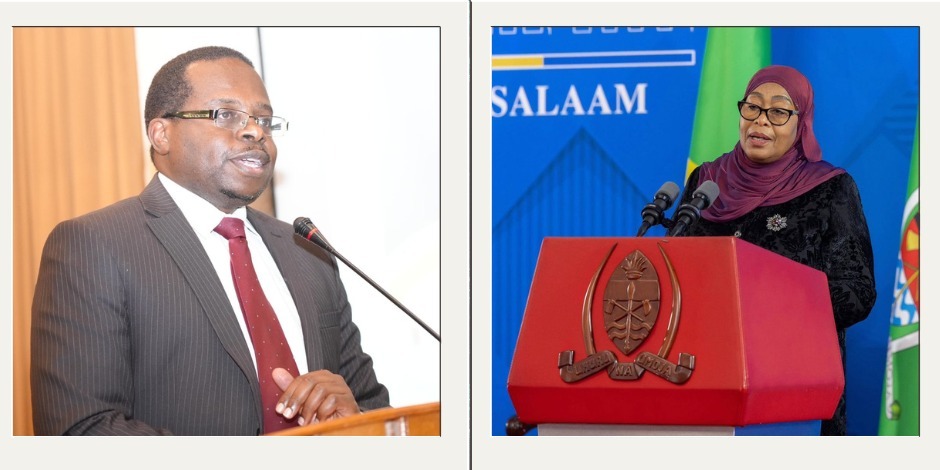
 A photo collage of LSK president Charles Kanjama and Tanzania President Samia Suluhu/HANDOUT
Law Society of Kenya (LSK) President Charles Kanjama has raised concerns over recent remarks by Tanzania President Samia Suluhu, warning that proposals for coordinated regional action against youth-led civic expression risk undermining constitutional freedoms.
In a statement shared on Wednesday, Kanjama said Kenya’s Constitution guarantees fundamental rights that cannot be limited through political direction or regional alignment.
“The Constitution of Kenya is unequivocal. It guarantees freedom of expression, association and peaceful assembly under Articles 33, 36 and 37,” Kanjama said.
“These are not concessions from the State; they are protected rights that form the foundation of democratic governance.”
His remarks follow comments by Suluhu calling for closer cooperation between Tanzania and Kenya in addressing incidents of unrest involving young people.
She said instability in one country has direct implications for neighbouring states and urged joint action to maintain order.
“There is no need to disagree, fight or celebrate the wrongdoings happening in our region. When that happens in Kenya, it concerns Tanzania, and we must end it,” Suluhu said.
She added that both governments should take a firm stance on what she described as indiscipline among some youth groups, including those involved in cross-border activities.
Kanjama, however, cautioned that such an approach could conflict with constitutional protections and regional commitments to human rights.
“Demands for accountability, transparency and respect for human rights cannot be characterised as disorder. They are an essential feature of constitutional democracy,” he said.
The LSK further cited Articles 27, 28 and 29 of the Constitution, noting that they safeguard equality, dignity and freedom from cruel, inhuman or degrading treatment.
“These safeguards are absolute,” Kanjama said.
“Kenya’s legal framework does not permit the use of force, coercion or punitive measures against citizens for the peaceful exercise of their rights.”
Suluhu had indicated that discussions with President William Ruto included how to handle youth groups accused of disruptive conduct across borders, stressing the need for firmness in enforcing order.
Kanjama said any attempt to suppress civic space would face institutional resistance through legal and civic mechanisms.
“The Law Society of Kenya rejects any proposition that fundamental freedoms may be curtailed through executive direction, political convenience or regional alignment,” he said.
He added that constitutional rights are not negotiable and must be upheld consistently, regardless of prevailing political considerations.
The LSK also called on governments within the East African region to prioritise dialogue when engaging citizens.
“The appropriate response to citizen engagement is dialogue, not deterrence,” Kanjama said.