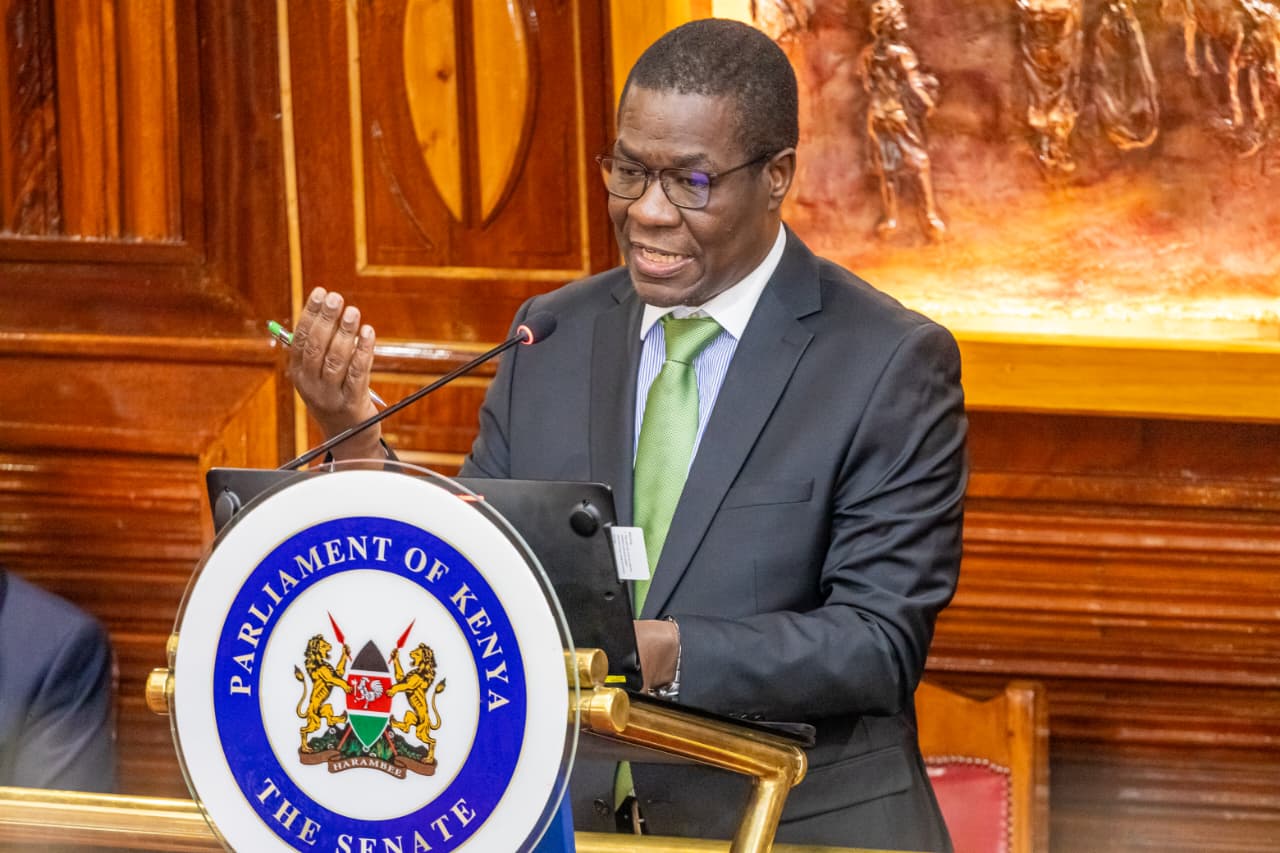
 Energy CS Opiyo Wandayi appearing before Senate plenary on Wednesday, May 6, 2026/HANDOUT
Kenya is set to begin commercial oil production for the first time before the end of the year, with output from the South Lokichar fields in Turkana expected to start at about 20,000 barrels per day and gradually rise to 50,000 barrels, Energy Cabinet Secretary Opiyo Wandayi has said.
Wandayi told the National Assembly on Wednesday that the country had completed key preparatory processes and is now on course to transition from pilot to full commercial production, marking a significant milestone in Kenya’s energy sector.
“For the first time, Kenya is going to commercially produce oil. Before the end of this year, we shall begin production from South Lokichar, starting at about 20,000 barrels per day and progressing to some 50,000 barrels,” he said.
The CS, however, cautioned that the scale of production remains below the threshold required to sustain a domestic oil refinery, stressing that any investment in refining infrastructure must be guided by economic viability.
“Refinery business is a matter of commercial logic. It must make commercial sense for one to undertake a refinery,” Wandayi said.
He explained that previous plans to revive or establish a refinery had been shelved after feasibility assessments showed that the economics did not support such an investment under current production levels.
“The refinery in Mombasa was found not to make business sense due to the prevailing economics,” he said.
According to Wandayi, petroleum economists estimate that a refinery would require between 100,000 and 500,000 barrels per day to operate sustainably, far above Kenya’s projected output in the initial phases of production.
The government has instead prioritised upstream production and export readiness, while exploring regional integration opportunities with neighbouring oil-producing countries to enhance viability in the future.
Kenya discovered commercially viable oil deposits in Turkana over a decade ago, with early pilot exports conducted under the Early Oil Pilot Scheme.
However, the transition to full commercial production has faced delays linked to infrastructure, financing and regulatory approvals.
Wandayi said recent progress had been made in unlocking key bottlenecks, including agreements on field development plans and investor engagement.
“I was in Turkana recently engaging stakeholders and we are confident that the remaining processes are being finalised to enable production within the set timelines,” he said.
The South Lokichar Basin remains Kenya’s most significant oil asset, with ongoing development expected to position the country as a modest but strategic player in the regional petroleum market.
The announcement comes amid renewed government focus on monetising natural resources as part of efforts to boost revenue, reduce reliance on imports and strengthen the country’s balance of payments.
Kenya currently relies heavily on imported refined petroleum products, with local refining capacity remaining dormant following the closure of the Mombasa refinery years ago.
Wandayi said the government will continue to assess the feasibility of downstream investments, including refining, based on future production volumes and regional demand dynamics.
The projected ramp-up to 50,000 barrels per day is expected to provide an initial revenue stream while laying the groundwork for further exploration and development.