 Civil society groups push World Bank to end factory farming and instead invest in smallholder agriculture /FILE
Civil society groups are urging the World Bank to shift livestock funding towards smallholder farming, warning industrial systems threaten Africa’s food security and sustainability.
They are increasing pressure on the World Bank Group to shift financing away from industrial livestock production and redirect it towards smallholder-led, climate-resilient farming systems, arguing that Africa’s food security depends on inclusive rather than factory-based models.
The campaign, backed by more than 30 organisations across 25 countries, is questioning the continued flow of public finance into large-scale industrial livestock systems, commonly referred to as factory farming.
Critics argue that while these systems are designed to maximise output, they carry long-term environmental, social and public health risks that are often underappreciated in investment decisions.
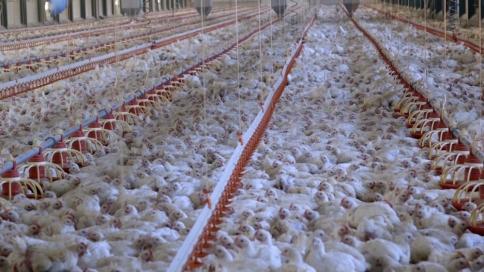
Factory farming typically involves high-density rearing of animals such as poultry, pigs and cattle under controlled conditions, with reliance on commercial feed, routine antibiotic use and intensive production systems.
According to World Animal Protection, while these systems increase output of meat, milk and eggs, they also concentrate risks.
Recent figures show the World Bank Group invested about Sh180 billion ($1.4 billion) in industrial livestock production between 2023 and 2024.
Its private sector arm, the International Finance Corporation (IFC), is also reported to have approved 38 projects worth nearly Sh260 billion ($2 billion) between 2020 and 2025.
Sub-Saharan Africa accounts for a significant share of this financing.
A 2023 report by the Stop Financing Factory Farming Campaign found the region received 22 of 62 livestock-related projects in developing countries, representing about 42 per cent of total investments.
Critics argue that this trajectory risks entrenching an industrial model that may not align with Africa’s predominantly smallholder-based agricultural systems.
Sally Kahiu of World Animal Protection says the continent’s food future should prioritise local systems rather than large-scale consolidation.
“Africa’s food future depends on strengthening local farming systems. We need to invest in approaches that protect the environment, improve soil health and help farmers adapt to climate change,” she said.
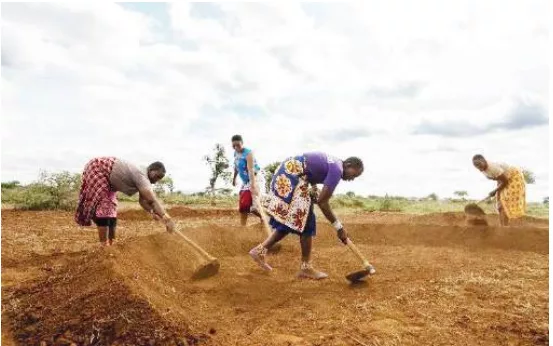
Kahiu pointed to agroecology as a viable alternative, describing it as a system that integrates crops and livestock, reduces reliance on synthetic inputs and strengthens ecological balance.
However, she warned that the expansion of industrial livestock systems could marginalise small-scale producers, who remain central to food production across Kenya and much of Africa.
“Most of our food is produced by smallholder farmers who keep a few animals and grow crops on relatively small pieces of land. These systems are diverse, resilient and rooted in local knowledge,” she said.
According to Kahiu, the main risk lies not only in production methods but in market structure. Large-scale producers, she argues, tend to dominate supply chains, pricing and distribution, leaving smallholders with limited bargaining power.
She said although factory farming is not yet dominant in Kenya, its early signs are visible, particularly in intensive poultry and pig production around urban centres.
“These are high-density operations with controlled feeding and standardised breeds. The term ‘factory farming’ may not always be used, but the model is emerging,” Kahiu said.
She said while industrial systems are often justified on the basis of higher output, their efficiency is more complex when resource use is considered.
“They may have advantages in consistency and scale, but they also consume significant water, land and feed resources,” she said.
In contrast, smallholder systems tend to rely more on local inputs and diversified production, though they face constraints in market access and profitability.
Public health concerns are also central to the debate.
Kahiu warned the widespread use of antibiotics in livestock production raises the risk of antimicrobial resistance, already recognised as a growing global health threat.
She also pointed to environmental risks, particularly where waste management systems are weak.
“In areas with intensive livestock production, manure runoff can affect water sources. Inconsistencies in waste management create environmental and public health risks,” she said.
While Kenya has existing legal frameworks on animal welfare, including the Prevention of Cruelty to Animals Act, enforcement remains limited by institutional capacity constraints.
At the same time, the World Bank Group has indicated plans to expand agribusiness investments significantly by 2030, even as the IFC reviews its environmental and social standards—an exercise campaigners see as a critical opportunity to reset priorities.
Opeyemi Elujulo of the Youth in Agroecology and Restoration Network argues that current financing patterns overlook more sustainable alternatives.
“Community-led and sustainable farming systems receive very little funding, yet they have huge potential to improve food security and create jobs,” he said.
Kahiu believes Kenya still has policy space to chart a different agricultural path anchored in agroecology, stronger regulation and better market support for smallholders.
She argues that with clear policy direction, enforcement and investment in sustainable practices, the country can avoid over-reliance on industrial livestock systems while strengthening food security.
As global financing decisions increasingly shape agricultural models in Africa, the central question remains whether future food systems will prioritise scale and efficiency, or resilience and inclusivity.