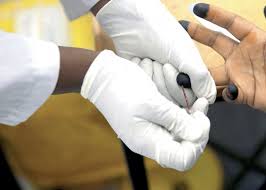
An 18-year-old boy is living in denial after testing positive for HIV.
A Form Four student, he does not know how to tell his mother. He does not know where to keep his medication. And he does not fully understand how he got here.
He had quietly begun having sex with older men some of whom gave him money. No one had spoken to him about the risks.
For Peter Njane, this is not an isolated case.
“It really touched me,” he says.
“This was a bright student in a national school. He had his whole life ahead of him. But he didn’t even understand the risks he was exposed to.”
Njane, who has spent more than a decade advocating for the health and rights of men who have sex with men (MSM), says such stories are becoming increasingly common and dangerously invisible.
He recalls another case: a university student forced to drop out after coming out to reveal to to his mother that he was gay.
“The boy had nowhere to go. His education stopped. He kept asking himself, why did I say it?” Njane says.
In yet another instance, a married man was blackmailed by a male partner he met online, forced to pay thousands of shillings to keep his secret from his family.
These are lives lived in the shadows; marked by fear, stigma, and silence.
And experts say that silence is fueling new HIV infections.
According to the 2025 Kenya AIDS progress report by the National Syndemic Diseases Control Council, key populations including MSM, sex workers, people who inject drugs, and transgender persons account for about 14 percent of new HIV infections.
Among them, MSM remain one of the most affected groups.
HIV prevalence among MSM stands at 19.1 percent, more than six times higher than the national average of 3 percent.
The report shows that new infections have been rising since 2018, reversing earlier gains in the fight against HIV.
Globally, the pattern is similar. Data from HIV.gov shows that MSM accounted for 67 percent of new HIV infections in the United States in 2022, highlighting a persistent and widespread vulnerability.
But in Kenya, experts say the drivers go beyond behavior, they are deeply structural.
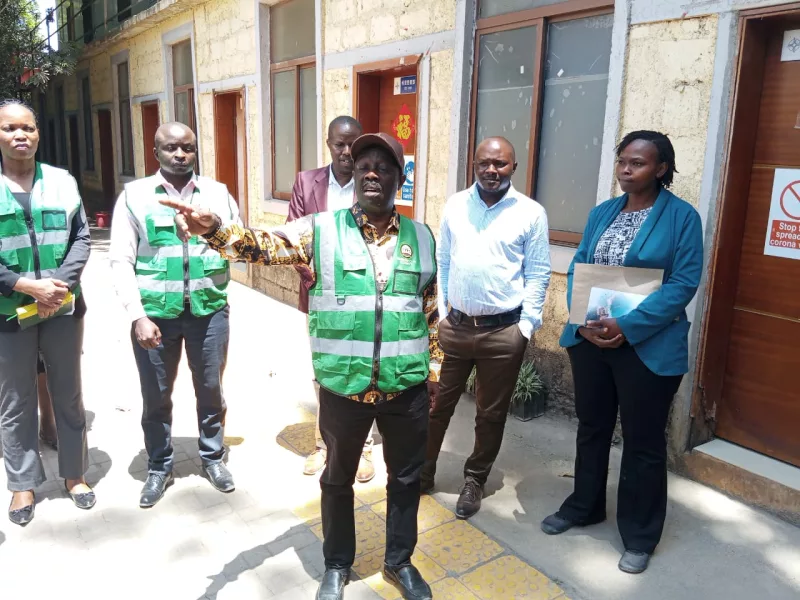
Njane who is the Executive Director of Ishtar, a community based organization that advances sexual health rights of men who have sex with men links the rising infections to a mix of stigma, discrimination, and criminalization.
“Many MSM experience rejection from family, friends, and even healthcare providers,” he says. “Some are shouted at or turned away from facilities the moment their sexual orientation is suspected.”
The result is predictable: many avoid testing, delay treatment, or drop out of care altogether.
Fear of exposure also forces many into secrecy where prevention messages rarely reach them.
Self-stigma, Njane adds, is just as damaging.
“They begin to hate themselves because of the environment they are in. That silence becomes dangerous.”
Social media has introduced new risks, including blackmail and exploitation, further pushing MSM underground.
Health experts say the tools to prevent HIV exist but are not reaching those who need them most.
Dr. Samwel Kinyanjui of the AIDS Healthcare Foundation points to a combination of prevention strategies: condoms, lubricants, Pre-Exposure Prophylaxis (PrEP), and newer long-acting injectable options.
“These are effective tools, especially for high-risk populations,” he says. “But access and uptake remain uneven.”Government data shows that PrEP use has increased significantly from just over 18,000 users in 2019 to more than 161,000 in 2024.
However, nearly 60 percent of new users come from the general population not key populations like MSM.
This mismatch, experts warn, reflects a failure to adequately target those at highest risk.
At the same time, other prevention efforts are declining. Voluntary medical male circumcision dropped by nearly 70 percent over five years, largely due to reduced donor funding.
Even condom distribution, long a cornerstone of prevention faces challenges in consistent access and targeted delivery.
Beyond healthcare gaps, experts point to laws that criminalize same-sex relations as a major barrier.
Such policies, they argue, drive vulnerable populations away from essential services.
“Criminalization is not helpful from a public health perspective,” says Kinyanjui. “It pushes people into hiding instead of bringing them into care.”
He warns that the impact extends beyond MSM communities.
“These are not isolated groups. People have families, partners. Infections do not remain contained.”
Globally, the World Health Organization estimates that MSM are 26 times more likely to acquire HIV than the general population largely due to structural barriers such as stigma, discrimination, and criminalization.
Behind the statistics are disrupted lives.
Young people dropping out of school. Families breaking apart. Individuals trapped in cycles of secrecy and fear.
For many, seeking help is not just difficult, it is dangerous.
And yet, experts insist this crisis is preventable.
There is growing consensus on what needs to change.
First, targeted outreach must be strengthened by ensuring MSM have safe, stigma-free access to testing, treatment, and prevention tools.
Community-led organizations, such as those working directly with MSM, are seen as critical in bridging trust gaps.
Second, healthcare systems must become more inclusive. Training providers to offer non-discriminatory services could significantly improve uptake and retention in care.
Third, scaling up prevention tools including PrEP and long-acting injectables among high-risk populations is essential.
Finally, addressing stigma both in communities and institutions remains central.
“Tolerance is key,” Njane says. “We must create an environment where people can seek services without fear.”
Kenya has made notable progress in its HIV response. Today, about 87 percent of people living with HIV are on treatment, and new innovations including injectable therapies are improving adherence.
President William Ruto has reaffirmed the country’s commitment to ending AIDS as a public health threat by 2030.
But experts warn that progress will stall unless the needs of key populations are addressed.
For the 18-year-old boy, the future remains uncertain, shaped by fear, silence, and unanswered questions.
Until stigma is confronted, services are made accessible, and policies align with public health realities, the country risks losing ground in a fight it once appeared to be winning.