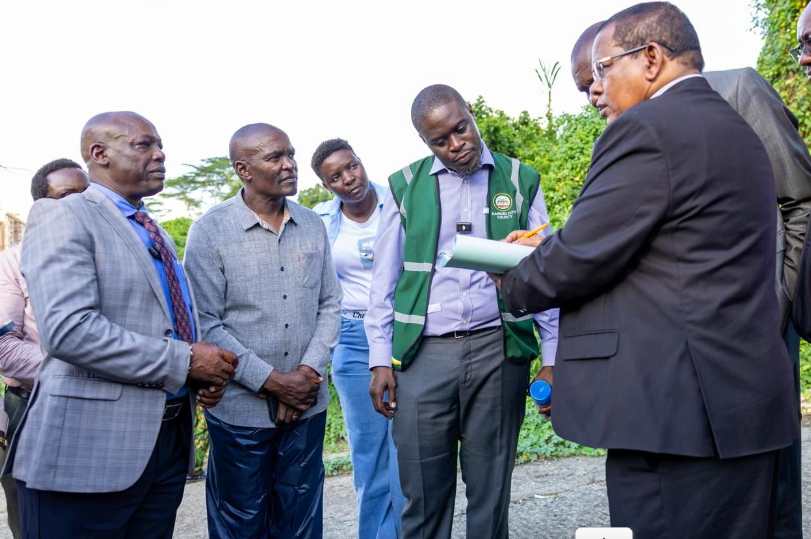
Nairobi Governor Johnson Sakaja and the multi-agency team.
Authorities have resolved to rehabilitate Nairobi Dam, abandoning earlier plans to decommission it.
The move by Water Resources Authority, the Nairobi Rivers Commission and Nairobi county government follows a renewed push to restore the capital’s environment and avert a potential disaster.
The decision follows growing concern over the dam’s deteriorating condition, with a multi-agency team citing severe pollution and poor waste management as major obstacles to restoration efforts. Constructed in 1953 for recreation and flood control along the Ngong River, the dam has over the years been degraded by sewage discharge, encroachment and informal settlements.
The Water Resources Authority had initially proposed decommissioning the dam to restore its ecological integrity, but authorities have now opted for rehabilitation as part of wider efforts to revive Nairobi’s environment.
A technical meeting convened on April 15 by WRA chief executive Mohamed Shurie brought together key agencies overseeing the Nairobi River Basin regeneration and riparian enforcement to review the dam’s status and chart a way forward.
The Nairobi Rivers Commission said engineers are finalising a rehabilitation plan expected within days, signalling a shift towards urgent intervention.
In recent months, the dam has emerged as a major safety concern. During heavy rains, authorities warned of a possible breach, prompting evacuation notices for residents in downstream areas including Kibera, Nyayo Highrise, Dam Estate, Lang’ata, Nairobi West and Madaraka.
The warnings followed rising water levels that threatened to overflow weakened embankments, with the WRA cautioning of imminent flood risks.
At least 33 people were reported to have died in Nairobi during the rains, underscoring the urgency of intervention. Earlier assessments by Nairobi Governor Johnson Sakaja highlighted structural weaknesses.
This includes blocked spillways and compromised embankments, raising fears of a potential disaster if corrective measures are not taken.
Proposed interventions include clearing downstream obstructions, conducting geotechnical tests on the embankment, and enforcing a 30-metre riparian buffer zone to protect the dam and surrounding communities.
Authorities have also intensified enforcement against encroachment on riparian land, with the WRA issuing eviction and demolition notices to structures built within restricted zones.
The agency has maintained that no institution will be exempt from compliance as it moves to restore order along Nairobi’s waterways.
The rehabilitation of Nairobi Dam now forms part of a broader multi-agency effort to clean up the Nairobi River Basin, improve environmental management and enhance the city’s resilience to climate-related risks.
Even so, the success of the plan will depend on sustained enforcement, proper waste management and coordination among agencies.
This is as authorities race to prevent a recurrence of the flood threats that have repeatedly placed thousands of residents at risk.
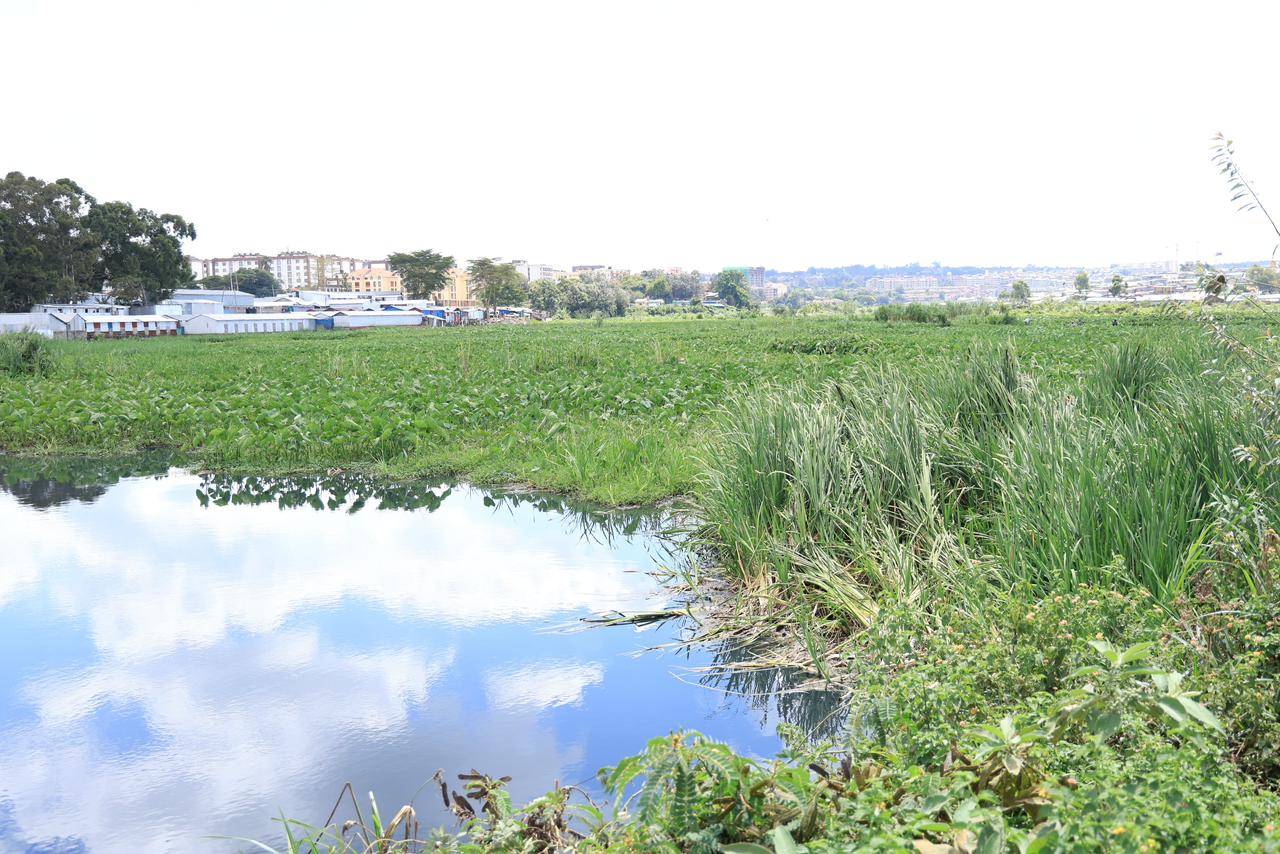
A section of the Nairobi Dam./HANDOUT