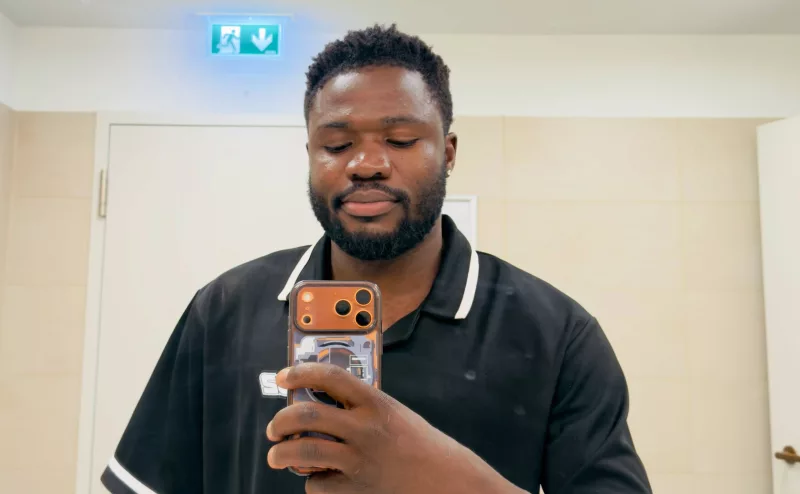
In today’s digital age, it’s common to see couples share their lives not just through conversations but through their devices. Smartphones, with their constant connectivity, have become an extension of our personal lives, offering access to everything from text messages to emails, social media accounts, and even private photos. But this convenience has sparked a debate: Should partners be able to access each other’s phones?
Let’s dive into the complexities of this question, exploring the different perspectives and potential implications of sharing access to such a private space.
The Case for Sharing Access: Trust or Transparency?
Some argue that giving your partner access to your phone is a sign of trust and transparency. It can be seen as a way of saying, "I have nothing to hide." For many couples, this is a simple way to keep the lines of communication open and eliminate any suspicions of infidelity or secrecy.
For instance, partners who share their phones may freely borrow each other’s devices to look up something or to share a funny meme, without feeling uncomfortable or worried about their privacy being breached.
In the digital age, the lines between personal and shared spaces are blurry. People often use their phones for work, socializing, and entertainment, making them integral to nearly every aspect of life. If couples are working as a team, sharing access to these tools can seem like a natural extension of their relationship, helping them stay connected and engaged.
The Dark Side: Is It an Invasion of Privacy?
On the flip side, others believe that having access to a partner’s phone crosses a boundary and invades privacy. Just because you're in a relationship doesn’t mean you have to share everything, and that includes your phone.
Phones contain private conversations with friends, colleagues, and family, along with personal interests, memories, and even things that partners might not want to share right away.
READ TOO: Sam West- Your spouse should have access to your phone
Accessing someone’s phone without their consent can be seen as a violation of trust, even if done with good intentions.
Privacy is a fundamental aspect of any healthy relationship. Everyone deserves a personal space, even if they are in a committed partnership. It’s important to ask yourself: If your partner asked to access your phone, would you feel comfortable? Would you feel like they trusted you, or would you feel like your boundaries were being disrespected?
Can Trust Be Repaired?
Trust is often cited as the cornerstone of any healthy relationship. But what happens if a partner takes it upon themselves to look through the other's phone without permission? Can trust be repaired after this breach?
While some couples may be able to talk through this issue and come to an understanding, for others, the damage may be irreversible.
There’s something inherently intimate about what we keep on our phones, the memes that make us laugh, the private conversations we have, the photos we keep close. When a partner accesses that private space, it can create feelings of betrayal and insecurity.
What’s Healthy, What’s Not?
The key to navigating this issue lies in healthy communication and boundary-setting. Rather than automatically assuming access to each other’s phones, partners should have an open conversation about what feels comfortable for each of them.
This is where mutual respect comes into play. Some couples may agree to share their passwords or allow each other to use their phones for practical reasons (like looking something up), while others may choose to keep their devices completely private.
Boundaries may look different for each couple, but they should always be grounded in mutual respect. The idea isn’t to control or monitor one another but to find a balance between transparency and privacy that works for both individuals.
Also Read:
Can Technology Ruin Trust?
With social media and messaging apps, it's easier than ever for people to hide things from their partners. “Private” chats, deleted messages, and apps designed for secrecy (like vault apps) have made it possible for some individuals to engage in behaviors that might not be aligned with the values of their relationship.
So, where does this leave couples? Is it necessary to invade each other’s privacy in an attempt to preserve trust?
Perhaps a better approach is to focus on creating a strong foundation of open communication and emotional security, rather than policing each other’s devices. At the end of the day, it’s not about checking someone’s phone but about fostering a connection based on honesty, respect, and emotional safety.
Phones or Trust, What Matters More?
The question of whether partners should have access to each other’s phones is more than just a matter of digital privacy, it’s a reflection of the values each person holds in their relationship. For some, sharing access is an expression of closeness and mutual trust; for others, it’s a potential violation of their personal space.
The bottom line? Trust can’t be built through checking passwords or tracking messages. It’s about creating a space where both partners feel safe and respected, both online and offline. So, before you grab your partner’s phone to check their messages, maybe take a step back and ask yourself: is this about trust, or is it about control?
In relationships, as in life, the best foundation is one built on understanding and respect—because that’s the only password that really matters.