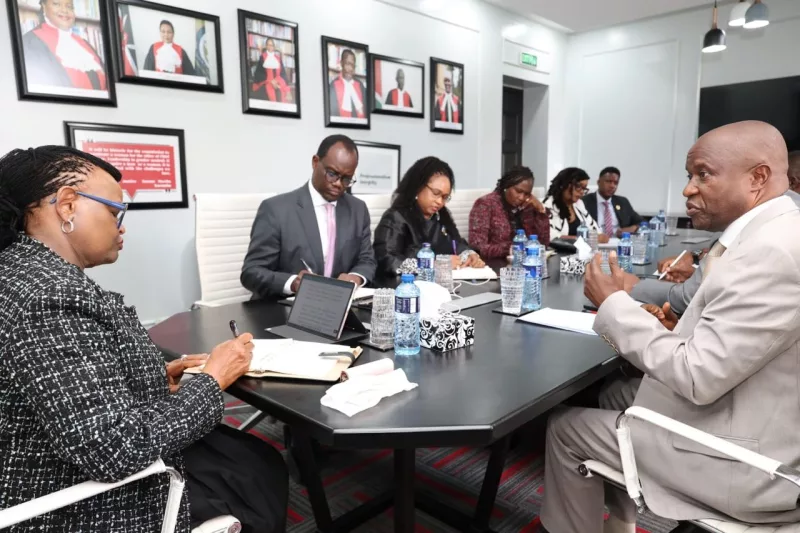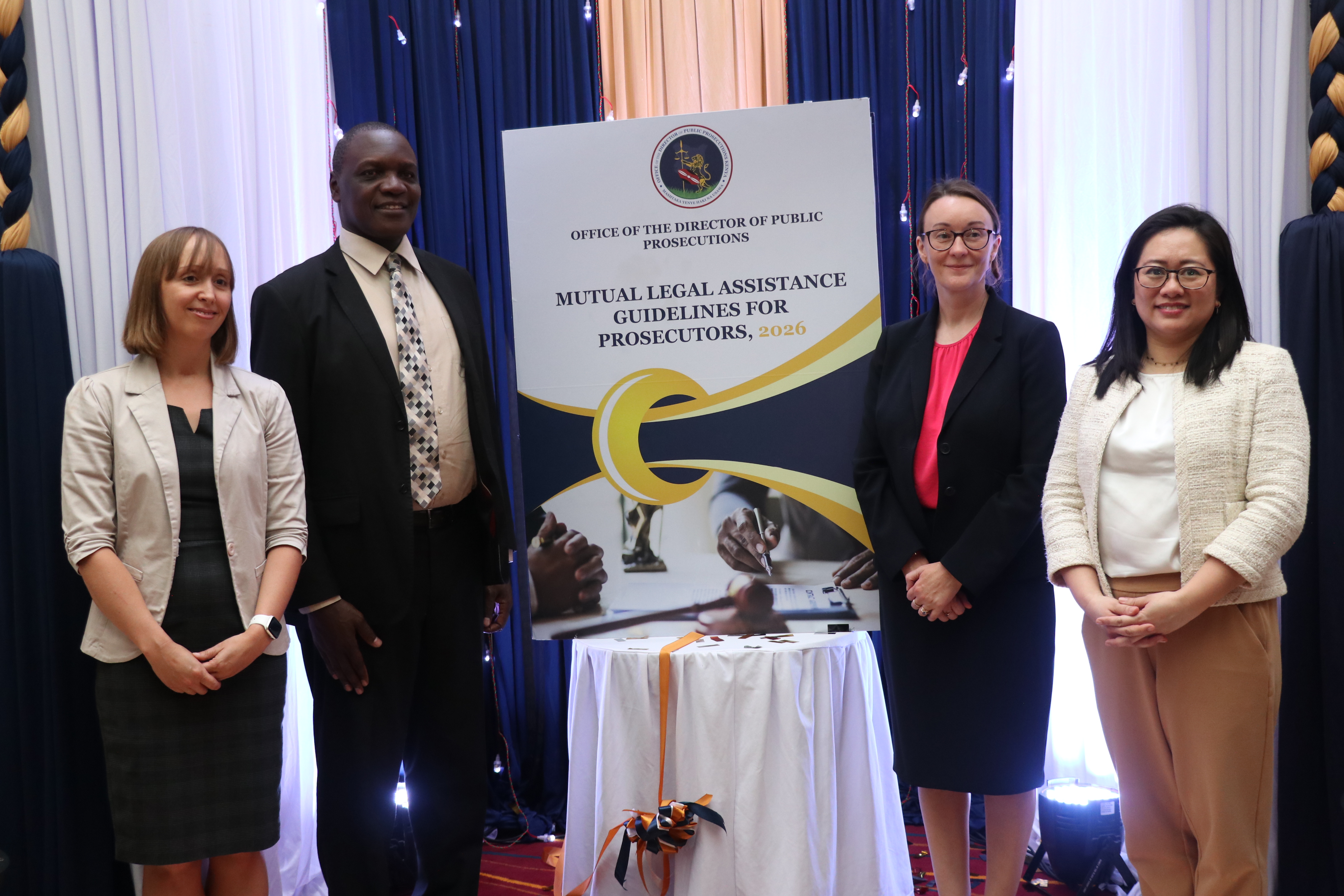
The Office of the Director of Public Prosecutions has launched a set of guidelines on Mutual Legal Assistance, marking a step in Kenya’s efforts to prosecute crimes that cross national boundaries.
The event, held on Friday, April 10, 2026, in Nairobi, brought together senior legal authorities and international partners to address the growing complexity of cross-border criminal enterprises.
The guidelines provide a structured legal framework for Kenyan prosecutors to collaborate with foreign jurisdictions in the pursuit of justice.
Historically, transnational cases—ranging from human trafficking and terrorism to high-level corruption—have faced procedural challenges and a lack of clear protocols for international cooperation.
The framework seeks to address these challenges by standardising how evidence is gathered, witnesses are examined and assets are recovered across borders.
Partners at the event said the guidelines offer a legal response to transnational organised crime, corruption and human trafficking, noting that criminal enterprises are increasingly using global connectivity to facilitate illicit activities.
During a keynote address delivered by Secretary of Prosecution Services Alloys Kemo on behalf of Director of Public Prosecutions Renson Ingonga, emphasis was placed on legal certainty.
“These guidelines provide the essential legal framework between Kenya and other countries in handling transnational matters, ensuring that our pursuit of justice is not hindered by procedural ambiguities,” Kemo stated.
He said the document governs the processes of receiving and processing requests, including timelines intended to ensure legal assistance is timely and procedurally sound.
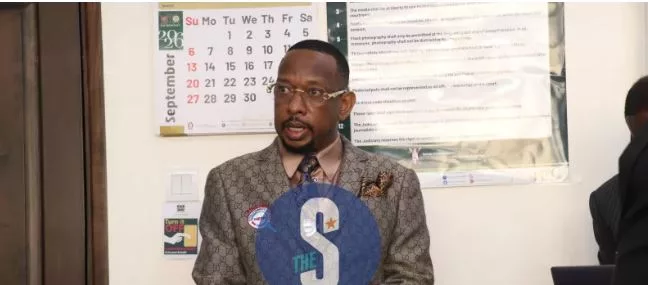
Senior Deputy Director of Public Prosecutions Vincent Monda, while outlining the framework, said the guidelines are designed to ensure cases are not stalled because a suspect or piece of evidence is outside the country.
"You can have a mutual legal assistance request to identify and locate persons for purposes of taking evidence," Monda explained.
"So some of us have come across files with a pending note of arrest of accused persons... The officer will simply tell you, 'I have all the information. I am only missing the accused. The accused is out of jurisdiction.' If you have such files, MLA is here for us."
One of the measures highlighted during the launch is the formalisation of remote testimony.
The guidelines allow witnesses to be examined via video link from countries such as the United Kingdom or the United States, allowing proceedings to continue without the costs associated with international travel.
"So if you have a witness who's out of jurisdiction, don't keep your file and say we know we can't get them from where they are to here," Monda noted.
"We did a lot of witness examinations from the UK. So what does that tell you when you're telling me that my witness is in Busia, but cannot testify, yet she's assisting me getting the witnesses to testify from the UK in London."
The framework also allows law enforcement to request searches and seizures in foreign countries, access international bank records and serve judicial documents through formal channels.
It further provides for tracing, freezing and recovery of proceeds of crime held in foreign accounts.
"MLA can also assist you to get freezing orders to also recovery of assets," the ODPP stated.
"That's why now mutual legal assistance becomes very important to you as a prosecutor... so that you don't just go after the individual, you're also able to recover and dispose of assets."
The launch was supported by the International Institute for Justice and the Rule of Law and the Human Trafficking Institute, among other partners.
Authorities said the guidelines are intended to strengthen Kenya’s role in international efforts against organised crime and economic offences.
Giovanni Broussard, Africa Coordinator at the Global Programmes on Crimes that Affect the Environment, said the guidelines address gaps in handling cross-border crimes.
"For too long, Mutual Legal Assistance has been the weakest link in our collective chain when tackling cross-border crimes. The launch of these guidelines addresses this critical gap, turning a point of vulnerability into a pillar of strength for the prosecution," Broussard said.
The fight against financial crime was also highlighted, with Ethics and Anti-Corruption Commission Chief Executive Abdi Mohamud, in remarks read by Patrick Owiny, describing the framework as a "significant tool that will aid the fight against corruption and economic crimes".
Chief Justice Martha Koome, in remarks delivered by Judge Kanyi Kimondo, said the judiciary supports international legal cooperation aimed at protecting human rights and ensuring accountability.
The Ministry of Foreign and Diaspora Affairs said the guidelines will support coordination among agencies in pursuing cross-border cases.
The Office of the Attorney General also reaffirmed its role in processing requests, as authorities said the framework is expected to enhance cooperation in addressing transnational crime.